


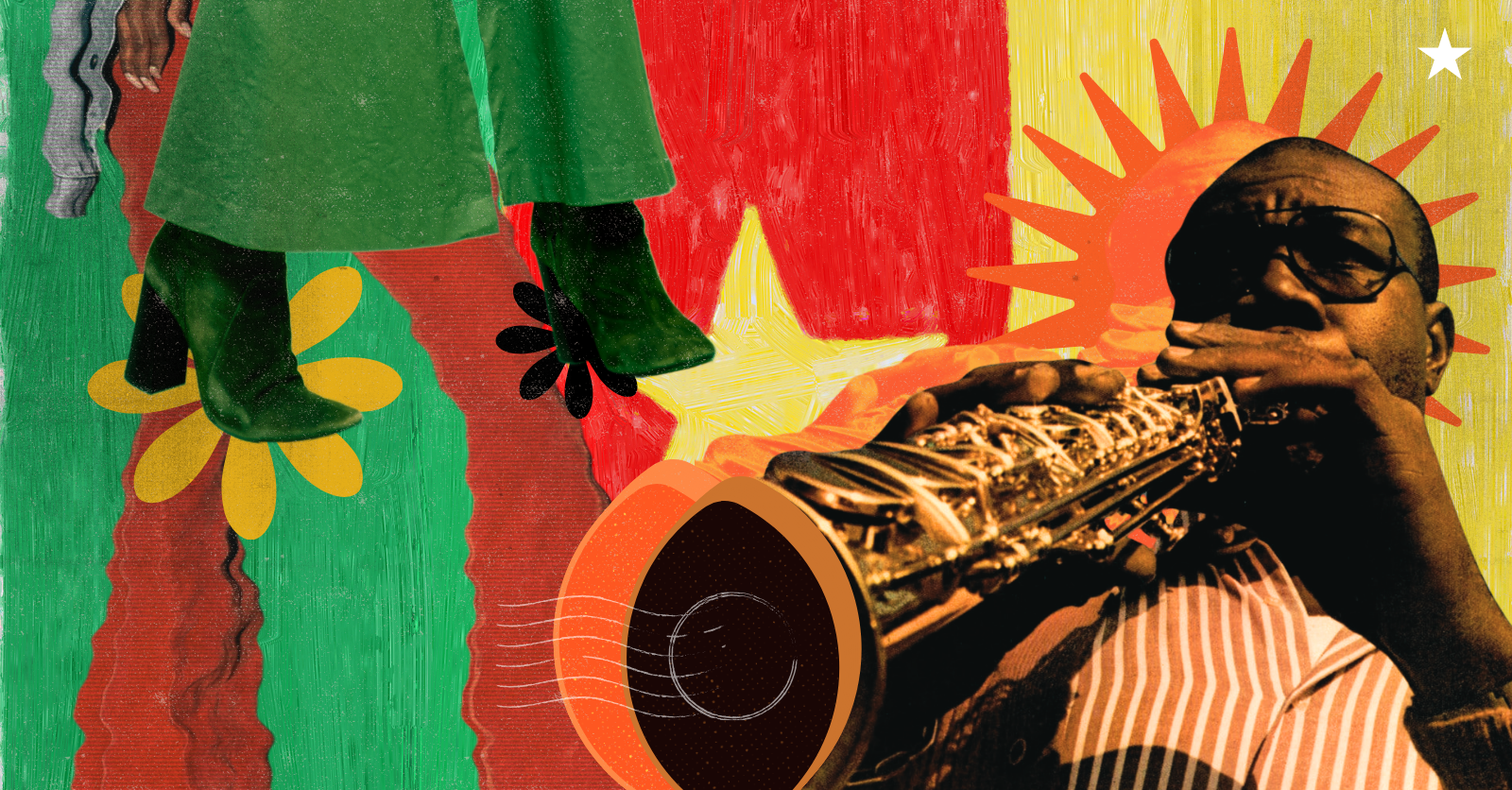
A Song for Cameroon
As artists across the world sampled Manu Dibango’s ‘Soul Makossa’ for global hits, his original contribution faded into the background—a powerful metaphor for how Cameroon’s cultural exports are often consumed without recognition of their origins.
In 1972, a hypnotic saxophone riff and an infectious chant swept across continents. Manu Dibango’s ‘Soul Makossa’ was more than a song; it was a cultural exclamation mark, announcing Cameroon’s arrival on the global stage. From Parisian nightclubs to New York discotheques, its rhythm bridged oceans and identities, uniting disparate worlds in a shared groove. Yet, as the music echoed across the globe, a more sombre tune played in the background—a melody of fractured dreams and unfulfilled potential.
Cameroon, often dubbed ‘Africa in miniature’ for its rich cultural diversity, stood as a beacon of dynamism in the postcolonial era. Its music was no exception, with genres like Makossa and Bikutsi embodying the nation’s complexity: vibrant, diverse and resilient. Makossa, in particular, reflected Cameroon’s struggle for unity amid profound diversity. Emerging in Douala during the 1950s, it fused local rhythms with Congolese rumba and Western jazz, creating a sound both distinctly Cameroonian and globally resonant. What set Dibango’s ‘Soul Makossa’ apart was not just its infectious groove but its enduring cultural impact. It became one of the most sampled songs in music history, immortalized in tracks by Michael Jackson, Rihanna, Kanye West and countless others. Yet, this ubiquity came at a cost. As artists repurposed Dibango’s genius for global hits, the original voice behind the riff faded into the background—a powerful metaphor for how Cameroon’s cultural exports are often consumed without recognition of their origins.
Makossa was not just a Cameroonian innovation; it was a pan-African and diasporic sound that transcended borders. Emerging during the height of Black cultural production in the 1960s and 1970s, it shared kinship with Ghanaian highlife, Nigerian Afrobeat, and Cuban jazz. Its rhythmic complexity and melodic hooks resonated across Africa and its diaspora, effortlessly bridging linguistic divides. At a time when colonial-era boundaries often limited cultural exchange, Makossa broke through as one of the earliest iterations of what we now call the ‘Africa to the World’ movement. It proved that African music, even when rendered in local languages or rooted in specific cultural traditions, could transcend geographic and linguistic barriers to claim space on the global stage...
