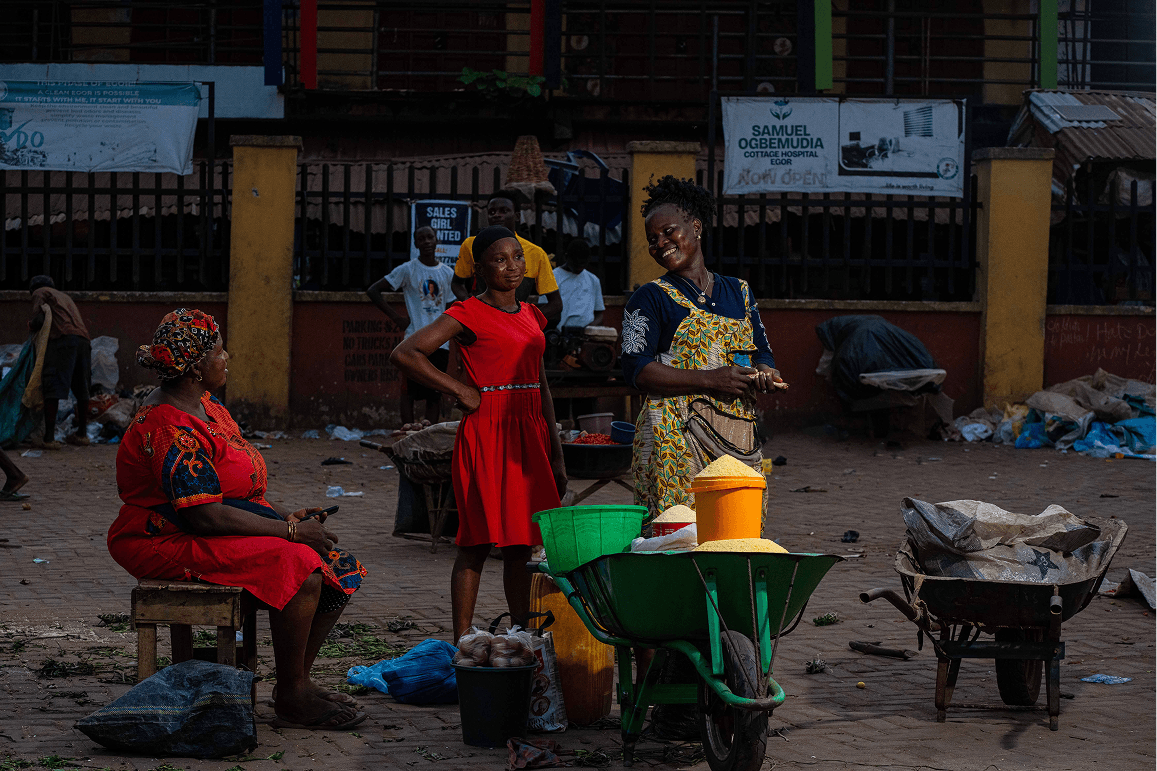
To live in Nigeria today is to live in negotiation with money.
Across Nigeria and much of Africa, economies are not experienced merely through inflation or other macroeconomic variables, policy announcements or stock markets, but through everyday systems of exchange, improvization, speculation and survival. People move constantly between formal and informal economies: ajo groups coexist with fintech apps; sports betting shops sit beside churches preaching prosperity; roadside traders use digital payments while online scammers build fantasies of global wealth.
In the years following the ‘Africa Rising’ era, Nigerians were promised modern prosperity through liberalization, technology and global capital. Yet many of those promises remain unresolved. Startups have collapsed. Our currency is struggling to reemerge from its free fall. Entire industries have emerge on the back of nationwide uncertainty. Wealth is, arguably, performance while hustle has become ideology and innovation essential to survival.
For our forthcoming issue on money, industry and economic life, The Republic is seeking deeply reported, character-driven and intellectually ambitious stories about how Nigerians and Africans earn, imagine, perform, circulate, hide, lose and survive money.
We are interested not simply in economics, but in the cultures, fantasies, infrastructures and moral worlds that money creates. We want stories about labour and desire; debt and aspiration; fraud and survival; speculation and spirituality; capitalism and improvization.
We are less interested in celebratory startup profiles or generic business reporting. Instead, we want stories that interrogate how industries, technologies and financial systems shape everyday African life, and what they reveal about Nigeria’s relationship with itself and the wider world.
WHAT WE’RE LOOKING FOR
We are particularly interested in stories about:
⎈ The cultural and political meanings of money in Nigeria and across Africa.
⎈ Fintech, startups and digital economies examined through the experiences of workers, users, customers and those left behind.
⎈ Informal economies and financial systems: ajo/esusu groups, cooperative societies, street banking, POS networks and underground infrastructures.
⎈ Ponzi schemes, betting cultures, crypto economies and the psychology of speculation, desperation and hope.
⎈ Internet cultures of wealth: Yahoo, influencer entrepreneurship, luxury aesthetics, motivational capitalism and digital aspiration.
⎈ Industries in decline or transition, and what their collapse reveals about labour, class and modernity.
⎈ The hidden infrastructures behind economic life: ports, logistics, manufacturing hubs, currency circulation, electricity, roadside commerce and supply chains.
⎈ Spiritual and moral economies: prosperity preaching, ritual wealth, online babalawos and the intersections between money and belief.
⎈ Historical stories about banking, trade, oil, structural adjustment, privatization, taxation, debt or economic reform.
⎈ The emotional and social life of money: obligation, “billing”, migration, family expectations, romance, status and class performance.
WE ARE ESPECIALLY INTERESTED IN STORIES THAT ASK:
⎈ What does financial survival look like in Nigeria and contemporary Africa more broadly?
⎈ How do Nigerians learn to trust or distrust financial systems?
⎈ What do startups, betting companies, fintech platforms and digital marketplaces reveal about African desires and anxieties?
⎈ What happens to communities built around industries after decline, collapse or technological change?
⎈ What does wealth mean in societies shaped by inequality and uncertainty?
⎈ What does money mean beyond economics?
STORIES MAY INCLUDE BUT ARE NOT LIMITED TO:
⎈ Longform reported features
⎈ Narrative essays grounded in original reporting
⎈ Investigations
⎈ Historical essays
⎈ Profiles approached through people and systems rather than corporate branding
⎈ Photo essays and visual storytelling
⎈ Reported criticism and cultural analysis
⎈ Stories that could translate into audio or documentary formats
We are especially interested in stories that reveal larger systems through intimate reporting. The strongest pitches will combine narrative power, analytical depth and original reporting.
WHO SHOULD PITCH
Journalists, researchers, essayists, photographers and interdisciplinary storytellers across Africa and the diaspora are encouraged to submit.
We are particularly interested in strong narrative voices, original reporting, ambitious ideas and stories rooted in lived experience.
HOW TO SUBMIT
Please submit your pitch via our submissions page:
Select PITCH for both the ‘Type’ and ‘Category’ of submission.
Upload a Word document that includes:
⎈ Proposed title
⎈ A short summary of the story
⎈ Why the story matters now
⎈ Reporting approach and access
⎈ Key people, places or communities you intend to engage
⎈ Three core questions the piece aims to answer
⎈ At least two links to previously published work
All submissions must be based on original reporting and writing.
DEADLINES
Pitch deadline: 30 May 2026
Deadline for submitting full first drafts: 24 June 2026
COMPENSATION
We will pay between $150 to $350 for accepted stories. We encourage you to share this call with journalists, photographers and storytellers whose work critically engages questions of money, labour, industry and everyday African life⎈