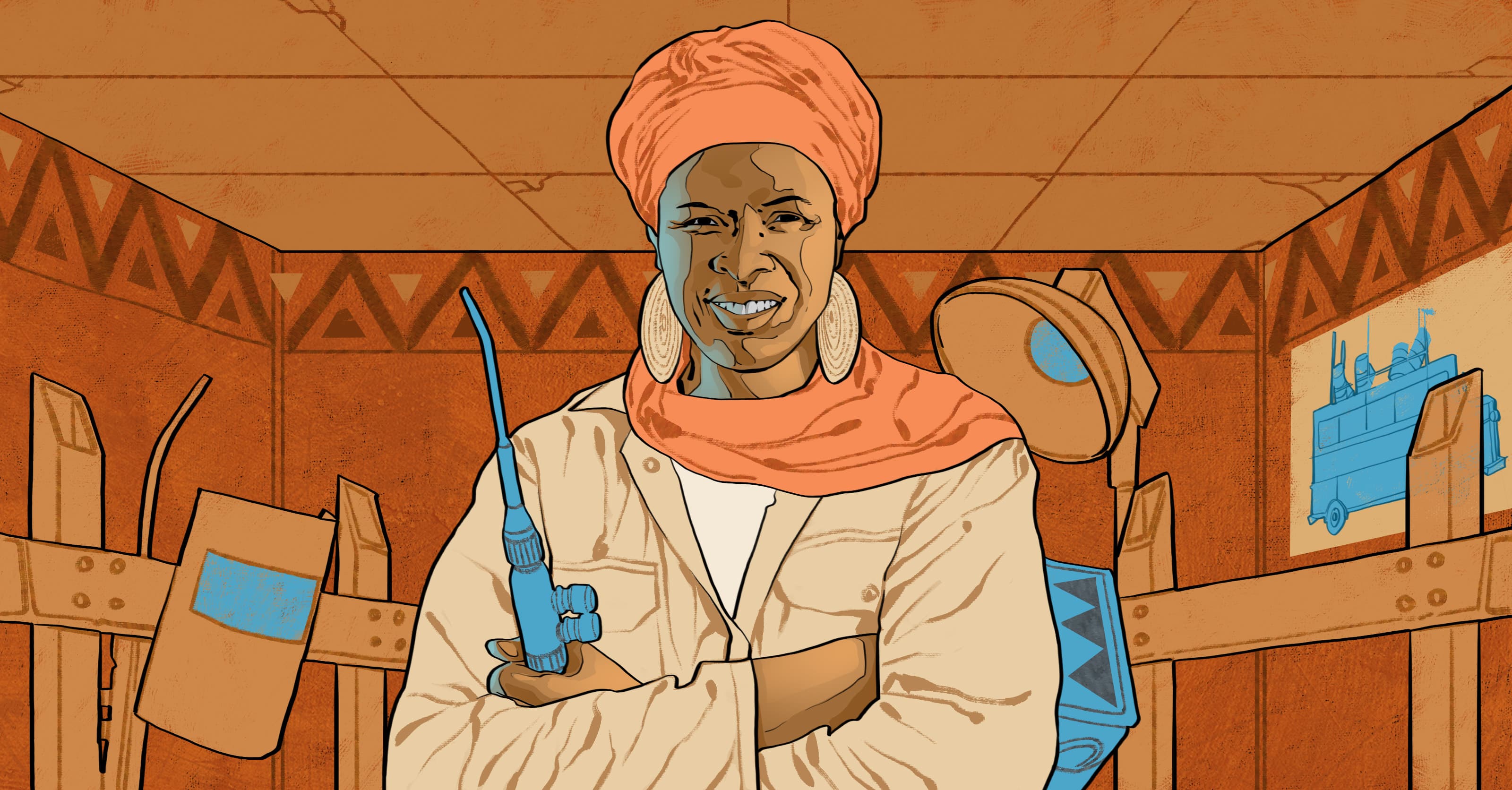
Public memory shouldn’t be controlled by the government,’ the Nigerian British sculptor, Sokari Douglas Camp, told me. It was April 2024, and we were in the verdant rooftop patio of her London home and studio. It was a rare, sunny afternoon for that time of the year, and she was having some renovation done, which meant the soft-spoken artist and I would sometimes pause for a wave of clanking to pass to keep from straining to hear one another. I was on the European leg of my research for season two of
The Republic’s
podcast on Ken Saro-Wiwa and the Ogoni Nine. One argument I planned to explore on the podcast was that the Ogoni movement was not remote but had profound international ramifications. What I couldn’t figure out, though, was what exactly the Ogonis’ international reach looked like, and the implications such a reach had on their relationship with the Nigerian government. While I knew that the Ogonis had been persecuted by the Nigerian state after the execution of the Ogoni Nine in 1995 (with many becoming refugees in nearby countries), it wasn’t clear just how prolonged and multi-faceted the state’s repression of the Ogonis was.





Comments
Sign in to comment.