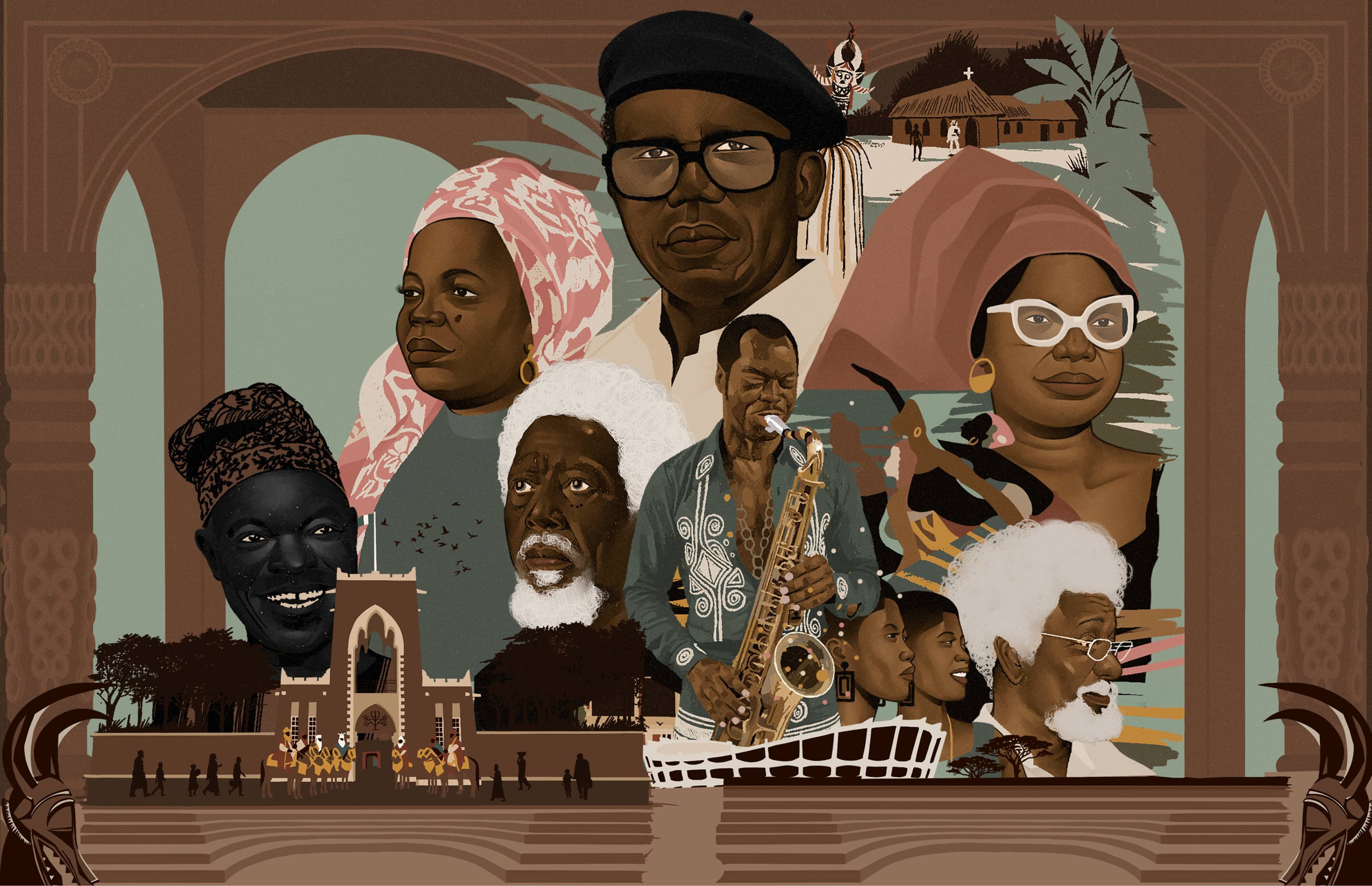
On the surface, the phrase ‘Nigeria in the World’ projects an outlook on what it means to be Nigeria and Nigerian through an external lens, in a context within but beyond the country’s borders. A closer, more granular look reveals the humanity, refusal-to-carry-last, and the excitement and frustration that often come with being Nigerian. It reveals, as we detail through the stories in our latest issue, Nigeria in the World, what it means to connect with specific diasporic and immigrant realities, and how that ultimately, for better or worse, shapes Nigeria’s perception both at home and abroad.
‘Nigeria in the World’ therefore looks at the ideas, beliefs, people and capital moving out from the country and back into it, hardly ever arriving as what they were when they left. That idea finds its sharpest form in one of my favourite stories from this issue: Maurizio Bongioanni’s profile of Princess Inyang Okokon, who left Nigeria in 1999, promised work as a chef in Europe, only to find herself in a house in Italy where, as she came to understand, she and four other Nigerian women were ‘waiting to be sold.’ What makes her story extraordinary is what she did with survival: testifying against her trafficker and co-founding an organization which works to provide a helpline for the women who follow the road she once took.
Her story sits among stories that trace a Nigeria that is both ominipresent and overlooked, from Wardah Abbas’s The ‘Electronic Imam’ Who Rewrote Nigerian Islam, a companion piece to the same author’s widely read How Nigerian Universities Became Centres of Islamic Radicalism, to Lanre Balogun’s Reclamation Across the Atlantic, which recounts a chance encounter that leads the author to a Candomblé ceremony in Salvador, Brazil, where he reconnects with Yoruba indigenous religion.
Together, these stories portray Nigeria as both an exporter and importer of ideologies, ideas and people, tracing how those global movements reverberate back home. They are essential reading for understanding the breadth and the frustration of Nigerianness as seen through and influenced by external contexts. Each story carries a depth, reporting and texture that has to be read in full to be felt.
But don’t stop at my word for it.
Subscribe here to read all the stories, or buy the magazine here to hold Nigeria in the World in your hands. However you read it, read it in full.
Enjoy reading.