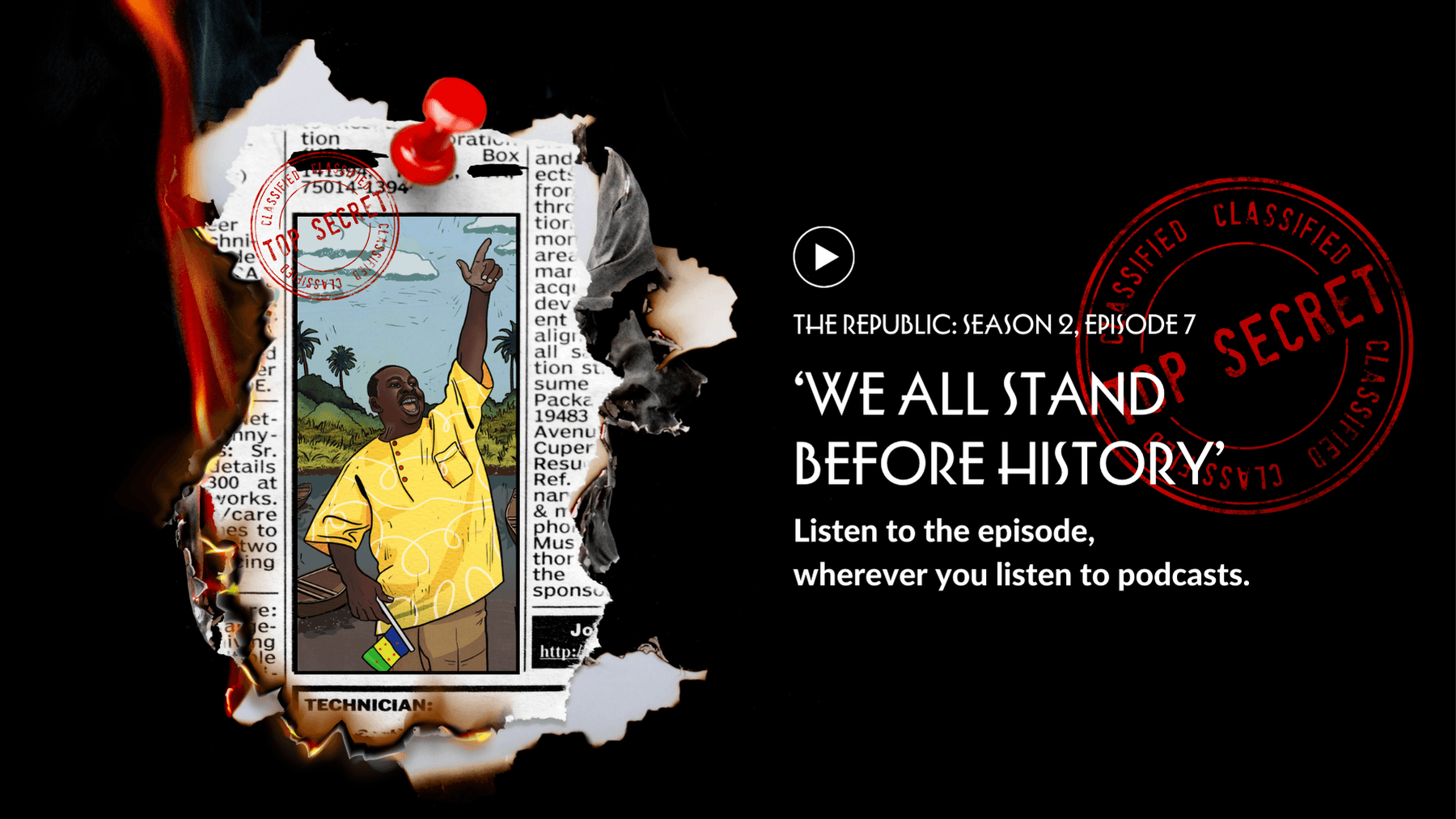
‘We All Stand Before History’
In 2006, Nigerian-British sculptor, Sokari Douglas-Camp, was commissioned by human and environment rights organization, Platform, to create a work of art in honour of the memory of Ken Saro-Wiwa.
Hosted by Wale Lawal
Feb 16, 2025


Listen to the Episode
In 2006, Nigerian-British sculptor, Sokari Douglas-Camp, was commissioned by human and environment rights organization, Platform, to create a work of art in honour of the memory of Ken Saro-Wiwa. Douglas-Camp created a life-sized replica of a Nigerian steel bus, called ‘Battle Bus: Living Memorial for Ken Saro-Wiwa’. It was an artistic symbol of movement and change.
In 2015, 20 years after the execution of the Ogoni Nine, Platform planned to commemorate the Ogoni Nine execution and wanted Douglas-Camp’s Battle Bus to feature at the event held in Bori, Saro-Wiwa’s hometown. But when the battle bus arrived at the Lagos Seaport that year, it was impounded by the port authorities.
It is now 2025, nearly 30 years since the executions happened. Presidents have come and gone; Niger-Delta resistance has, arguably, become more violent and more commercially motivated; public memory of the Ogoni Nine has atrophied, and the battle bus, an artistic work crafted to honour the memory of the Ogoni Nine, is still under arrest by the Nigerian authorities. What is it about Saro-Wiwa that continues to aggravate and possibly even terrify the Nigerian ruling establishment? How have the Ogoni people been able to come to terms with the execution of the Ogoni Nine, and deal with the unresolved environmental crisis caused by oil exploration till this day? What does the crisis in Ogoni and the Niger Delta more broadly tell us about what it means to be Nigerian?
In this episode, Wale Lawal finds some answers.
About Looking for Ken Saro-Wiwa (Season 2) · Hosted by Wale Lawal