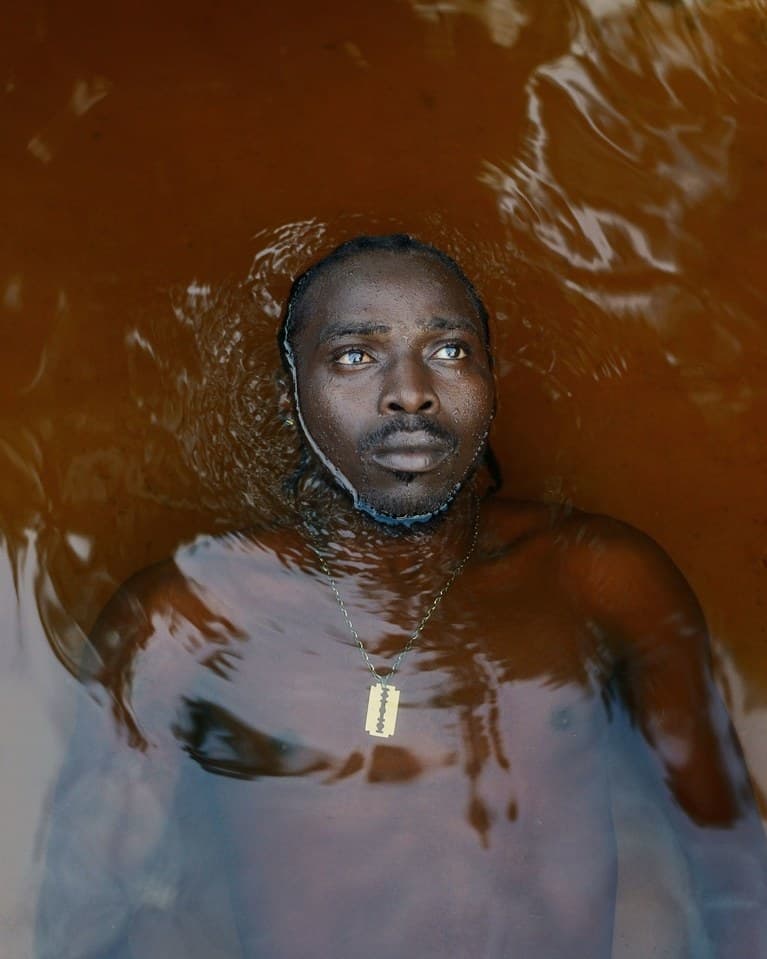
When another headline reads that more bodies have drowned in the Mediterranean, the emotional labour of going through more narratives of black bodies sinking to the bottom of hope saps those left behind of their visceral energies even more. The capacity to repeatedly imagine creatures of the sea nibbling and tearing at the bodies of those primarily identified as African migrants—those recipients of silent burials and loudly proclaimed drownings; those unworthy lives; those mourned by the waves; those whose names have become anecdotal in the annals of the telling, retelling and mis-telling of the stories of mobilities denied, cut short, sunk—is finite. And to be repeatedly confronted with stories of people remembered—if at all—as, merely, bodies running into the mouth of death, is burdening.
From migration stories, too often, a question emerges: why is it that these people invariably choose the possibilities of drowning over staying alive? Is it war, some form of violence, the possibilities of a different kind of death? Places that used to be home may no longer habitable, but the sea, if the legacy of the black Atlantic echoes still, is no sanctuary either. In the moments of migration, especially forced migration, there are imagined places of sanctuary, and mobilities that take shape on the basis of these imaginations. There are, also, expectations that defy the way some of those who are yet to find reason to migrate understand boundedness. In some hegemonic understandings, there is a desirable boundedness and fixity. An ideal bordering through which claims over the inside and outside and, consequently, claims over who occupies the figure of the citizen and the migrant—the strange— are established. This imagining of boundaries, which materialises in the physical and social death of those who move precariously between borders, haunts us in the everyday. It is a spectre that hovers over those who fear, in one moment or the other, their strangeness, as it often does, begets atrophy.
Yet the desire to be mobile, the circumstances that result in these kinds of mobilities, are themselves evidence of boundedness, or of being bound to a place in ways that necessitate escape. For to choose the likelihood of drowning is to be similarly and simultaneously bound and boundless; to face floating to safety, or floating as cadaver. It is not that these are the only options but that both possibilities have become sutured to our imagination of certain places as sites of despair and others of sanctuary. When you look at yourself in the mirror, do you see bodies at the bottom of the sea, floating? Do you see corpses splashed, as sensation, on multitudes whose senses constantly deaden at the sight of the desperate from elsewhere? Or do you see the stranger who threatens the comforts of repressed hauntings and painful legacies, by seeking sanctuary in the heart of empire?
What does it mean, then, to recognise the burdening of these sensations? To navigate this place, this world, as a refusal of spectacle, and as a call to the reclamation of an unbounded imagination? To think and write in these general terms is, of course, not to suggest that some people exist as unburdened or unbounded in opposition. Rather, it is to be cognisant of historically contingent kinds of burdening that continue to produce—not always in affirming ways—forms of knowing and being in the world. These kinds of productive imaginings continue then to function as ways of bordering the lives of others, who in turn internalise and reproduce these imaginings as ways of self-bordering, and the bordering of other others. This, I am certain, is nothing new in the play of empire and power. Even modes of imperialism were named indirect rule; and the purchase of these kinds of self-bordering may demand one not go further than the limits of their own imagination.







Comments
Sign in to comment.