Leaving the supernatural references for a moment, Nigeria’s former head of state, General Yakubu Gowon, explained the rationale for his first state creation exercise in 1967,
saying:
Politically I thought the only thing we should do was to break up all those regions to ensure that no region or new states would be too big to be a threat to the unity of the country, and the fear of that domination by one particular state will no longer be a threat.
So, what we have here are two diametrically opposed views to carrying out the project of state or nation building. From Gowon’s perspective, the reason is geostrategic with the aim of preventing future challenges to central power and territorial sovereignty. On Chief Oganah’s side, the proponents of Anioma State are on a biblical journey to the promised land of development and progress.
As it stands, state creation advocates must satisfy constitutional requirements for creating a new state, followed by a referendum—which analysts like W. N. Yemi believe is
the most difficult condition to fulfil. This is because consistently low voter turnouts and participation in general elections, the endless drama around voter registers and the country’s limited experience with referendum-based exercises, have all made state creation projects incapable of satisfying the referendum criteria, which states that two-thirds of eligible voters in the affected area must approve the proposal before it proceeds further.
What does this mean? First, there is no perfect formula for creating states, and second, in Nigeria’s case, the current discourse around state creation shows that
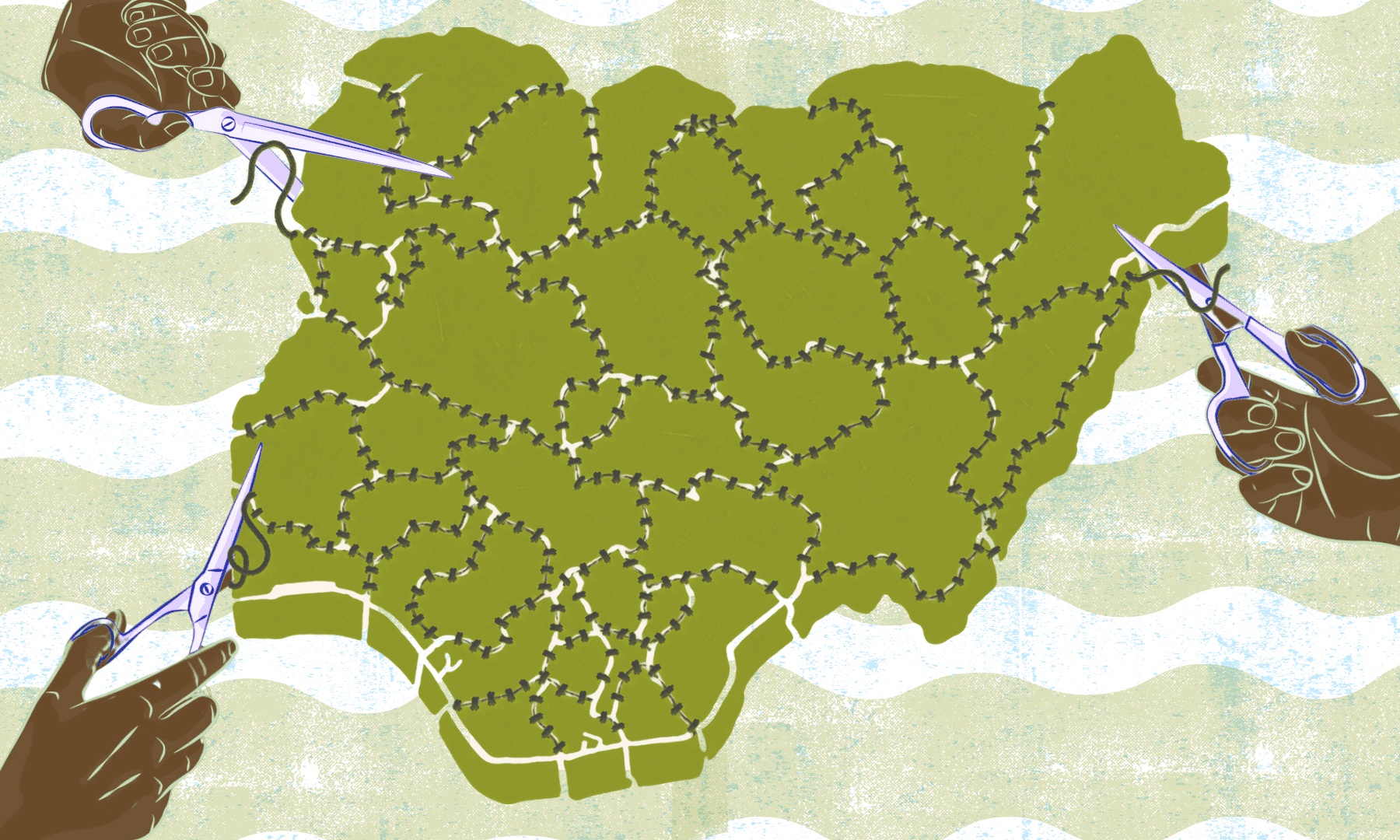
political ambition and power grabbing agendas are the driving factors in this new era of governance, while sweet-sounding narratives about unity and development are simply window dressing. So, with all these in mind, why does Nigeria have 36 states, why not stop at maybe eight states, or keep it going to a nice and tidy 40? Is there even a correct number of states a country should have? How did we arrive at 36 states and what do bodies like the Anioma State Creation Movement imply for this number?
WHY DO COUNTRIES CREATE STATES?
When I spoke to geopolitical analyst, Ovigwe Eguegu, bout the logic of state creation in Nigeria, he explained that, ‘there is a contradictory move of dividing-to-unite, where you create as little divisions as possible to form a balance of government efficiency, economic pragmatism and political cohesion.’ He added that, ‘if a government is confronted with a secessionist province, effort will be made to end that pursuit forcefully or diplomatically.’
The objective here is to satisfy internal demands, maintain territorial integrity and national sovereignty while limiting the real costs of (armed) struggles for self-determination—which is legitimate and recognized by international law. Eguegu ended his commentary by pointing out that:
Countries like Russia, China and Canada, which have strong central governments with semiautonomous zones, also have the understanding that compromises are necessary to keep national unity and that long-term strategies must be in place to bring such regions back into the central state apparatus.
At this point it makes sense to place Nigeria’s state creation journey in comparison to similar processes in other countries around the world. Expectedly, there are similarities with other federalized republics like the United States in the sense that civil wars were waged in both countries to stifle secessionist pursuits. However, the difference is that while the United States government
fought to foil secession and reabsorb the Confederate States of America (CSA) into the Union, the Nigerian government responded to the Biafran secession by creating new states, partly to weaken the Eastern Region’s political and geopolitical influence. Another comparison is India where ethnic identity, like in Nigeria, played a major role in state creation. Although the difference here is that while Nigeria had ethnically homogenous regions and states, none were explicitly created based on language like Bombay, which was split between Marathi-speaking people and Gujarati-speaking people.
The religious dimension is also mirrored in the Indian context with the split of the Punjab province between Hindu and Muslim populations, a change that resulted in widespread turmoil at the border regions. This is not entirely dissimilar from the religious tensions that plague Nigeria’s socio-political milieu, vis-à-vis a Muslim dominated north and a Christian majority south. The point is that Nigeria’s experiences as a colonial entity and a nominally independent federal republic are not out of the ordinary when compared to other countries in the world. Nevertheless, the unique cultural and socio-political dynamics in the country steered the state creation process along the bumpy road to 36.
NIGERIA’S ROAD TO 36
From 1960, the new Federation of Nigeria was simply trying on new shoes. While the country had just gained nominal independence, the underlying socio-political tensions were like pebbles not allowing these new shoes to fit properly. The word nominal is important here because, until 1963, the British monarch, Elizabeth II, remained head of state as the queen of Nigeria, with her constitutional powers exercised through the office of the governor-general of Nigeria. That office was abolished in 1963, and Nigeria declared itself a Federal Republic; this is where the real drama began.
By 1967, the Gowon government had discarded the regional arrangement, which
consisted of the northern, western, eastern and midwestern regions, and introduced a
twelve-state structure. The new structure comprised the north-western, north-eastern, north-central, western, mid-western, south-eastern and east-central states, alongside Benue-Plateau, Kano, Kwara, Lagos and Rivers. Ten years later, General Murtala Muhammed overthrew the Gowon regime. In a major reorganization, General Muhammed added seven states—Bauchi, Benue, Borno, Imo, Niger, Ogun and Ondo—bringing the total to 19 in 1976. On 23 September 1987, General Ibrahim Babangida, who had seized power, announced the creation of two more states, Katsina and Akwa Ibom, ostensibly to
complete the 1976 state creation process. Nigeria now had 21 states. But at this point, state creation had become the shorthand response to almost any agitation over access to resources. So why stop there?
The Babangida regime remained knife happy and kept on carving. Kogi state was cut from Kwara and Benue, Kebbi from Sokoto, Abia from Imo, Bendel was split into Delta and Edo states, Enugu was pulled from Anambra, Jigawa from Kano, while Osun and Adamawa were cut from Oyo and Gongola respectively. These nine states were created, and by 1991, Nigeria had become a country of 30 states.

Throughout the 1990s, Nigeria seemed to be a figurative laboratory of political instability. In June 1993, the general elections were annulled by Babangida, who in turn was pressured to step down by the Armed Forces Council. What followed was the Ernest Shonekan-led interim government, which lasted from August 1993 to 17 November 1993. Shonekan was forced to resign by the defence minister, General Sani Abacha, who became the new military head of state. However, in response to the political crisis that followed the annulment of the June 1993 elections, the Abacha regime established a National Constitutional Conference (NCC). Once again, state creation was top of the agenda, not only because it dominated the NCC debates, but also because, as with previous regimes, the government’s go-to response to agitations over political and economic marginalization was to initiate a state creation process.
The NCC circa 1993-1994 was
gridlocked by the conflicting interests of its members and was unable to resolve the pressing issues of state creation. Certain members of the NCC
wanted the military to hand over authority to elected civilian governments as soon as possible, while another faction wanted Abacha to become the sole presidential candidate in a new civilian government. In a panic of sorts, the responsibility was transferred back to the Abacha government. In typical military regime fashion, Abacha formed a new committee in 1995 and tasked it with the same objective. The new committee on the creation of state and local government
opened a memorandum to the public and by 15 January 1996, the committee got 2,360 demands for new local government and 280 requests for boundary adjustments. The report generated from this ‘survey’ was not published or publicized, and on 1 October 1996, General Abacha announced six new states into existence—Bayelsa, Ebonyi, Ekiti, Gombe, Nasarawa and Zamfara—bringing the total to 36.
CENTRAL GOVERNMENT BECOMES LITERAL
As the process of state creation played out, the question of governance became top priority. In response to this matter, the plan for a new and centralized capital of Nigeria was
proposed by the Aguda Panel—a group of experts that convened on 9 August 1975 and was led by Justice Akinola Aguda. Its primary task was to recommend the relocation of the Federal Capital from Lagos to a centralized part of the country. The panel proposed that the capital would be the Federal Capital Territory
(FCT). As a replacement for an overcrowded Lagos in the west, they recommended the FCT be situated within the Emirate of Abuja, a choice that was made because of the Emirate’s geographical centrality relative to Nigeria as a whole. This dance actually began in December 1975 during the General Muhammed regime when the Aguda Panel
created the borders of the FCT by cutting through Niger, Nasarawa and Kogi. Then by 4 February 1976, General Muhammed announced Decree 6 of 1976 to Nigerians, effectively making the FCT an official entity of the country.
The FCT differs from other states in Nigeria not just because General Muhammed
proclaimed that ‘the area is not in the control of any major ethnic groups,’ or that ‘it is a symbol of Nigeria’s oneness and unity.’ The FCT differs because as opposed to a state governor, it is administered by the FCT minister who is appointed by the federal government. This minister then appoints members to the Abuja Metropolitan Management Council, through which the development of the FCT’s six local governments is managed.
GEOPOLITICS ALONG THE ROAD TO 36
For a country with over 250 ethnicities, hundreds of languages and vastly varied geographies, Nigeria’s state creation exercises were historically intense and somewhat uninspired, usually becoming cyclical with each creation process causing agitation for more reorganization. Unfortunately, this one-lane response also reveals the
disintegrative tendencies that haunt Nigeria as a country till today.
Leku Leku, a medical doctor and Cold War historian, said in plain terms, ‘if you push state creation too far, it can lead to balkanization. You can look at Yugoslavia through the 1990s and see how ethnic rivalries, fall of the Soviet Union, and Cold War geopolitics all led to the breakup of that country.’ He then reflected on the Nigerian context,
In the South East, we know that Cross River State was created because the Gowon regime wanted to break secessionist power in the region, but that split also caused fissures in the existing cultural fabric there even though the federal government weakened support for the Biafran secession in the region.
As for the organizations that served as interest-vehicles driving transformation throughout Nigeria’s early political history, the National Council of Nigeria and Cameroon (NCNC), which was formed in 1944 in the eastern region, became the first political expression seeking the total independence of Nigeria. The Northern People’s Congress (NPC) on the other hand was established in 1943 with the prime objective of building northern autonomy through socio-political and economic development, while the Western Region produced the Action Group (AG) in 1951 and saw wide support among Yoruba-speaking people. Collectively, these parties were an expression of a people seeking autonomy, and independence from colonial influence. Internally, however, the story was different because these parties were divided along ethnic and religious lines that set the stage for the ethno-regional politics still apparent in contemporary Nigeria.
THE PERFECT NUMBER
Under the Abacha regime, Nigeria was divided into six administrative regions: the North Central, North East, North West, South East, South South and South West zones. Till today, they are referred to as geopolitical zones, and they encompass all the states of the country. Aside from the underlying trend of ethnic homogeneity, there was seemingly no rhyme or reason for the structuring of the geopolitical zones. Furthermore, contrary to common expectation, the largest regions were not wealthiest, nor the smaller regions the least populous.
For a breakdown of this paradox,
The Cable produced an
economic index report in 2022 that sheds light on this argument. The South West with the highest GDP in the country at ₦59.60 trillion is home to
roughly 44 million people and stretches along the Atlantic coast of Nigeria. In contrast, the North East zone
accounts for about a third of the country’s entire landmass, with a lower population of 33 million people, and a GDP of ₦12.48 trillion, the lowest among the six geopolitical zones.
What this reveals is that the size or number of regions are not explicitly tied to better economic or political outcomes. As of 2024, the same
index showed that Lagos in the South West reported a GDP of ₦41.17 trillion. It was followed by Rivers State in the South South with a GDP of ₦7.96 trillion despite being in the Niger Delta, which holds Nigeria’s largest oil and natural gas deposits. Conversely, Kebbi and Sokoto states of the North West have the highest percentages of out-of-school children in the country at 67.6 per cent and 66.4 per cent respectively. The North West is also the second largest zone, with a population of 62 million people. However, despite the great landmass, numerous natural resources and being home to Kano, the second most populous city in Nigeria, the rural North West lags behind other parts of the country because of
multidimensional problems such as government neglect, insecurity, low literacy and poor resource allocation.
HOW MANY IS TOO MUCH?
In February 2025, the House of Representatives Committee on Constitutional Review received
proposals to create 30 new states across the six geopolitical zones of the country. In October 2025, the Senate and House of Representatives joint committee
recommended creating six new states, one in every geopolitical zone, which will increase the total number of states in the country to 42—that is, if the recommendations go through.
The discourse around the creation of new states, especially among political elites reveals either a lack of vision or cold cynicism. This much is made clear with the wide range of reactions to the new state creation initiatives. Former senator, Shehu Sani,
called the proposal ‘ironic and comical’ adding that ‘politicians just want to carve out mini colonies for themselves.’ Legal experts also weighed in on the matter criticizing the government for lacking priorities at a time of pressing socio-economic challenges. Civil interest groups like the Pan-Niger Delta Forum
argued that such a sensitive move should be approached with caution, while the Afenifere, a prominent Yoruba socio-political group,
stated that the initiative appears to be a political exercise aimed at weakening the central government thus deepening existing inefficiencies.
As in the eras of colonial and military rule in the country, political leaders are showing that they have no other answers to the cries of Nigerians who want stable government, access to resources, good education or security. Their response still revolves around state creation, a further divvying of the country, because Nigeria is perceived as a ‘cake’ to be shared among the deserving, without concern of how said cake was baked. As Dr Philip Vande puts it in his 2012 paper, ‘
Ethnicity and the Politics of State Creation in Nigeria’, ‘Nigeria is a heterogenous state with over 374 ethnic groupings, so if every marginalized group called for a new state as the solution to all its problems, how many states will Nigeria have?’
In essence, the question shouldn’t be, is there a ‘right’ number of states? Because the number of states is not the actual issue, what people want are working states that enable them to live out lives of dignity, where their rights are guaranteed. People want functioning institutions and an economic system that does not prioritize profit over their well-being and very existence. A functioning state will grant Nigerians that sought-after sense of collective national identity that reflects pride, shared development and sovereignty.
The Russian Federation has 89 federal subjects, the Federation of Australia has six states, the US has 50 and Germany has 16. These states vary widely in terms of geographic size, economic capacity, population size and ethnic fabric. Nigeria with its 36 is nothing special. What matters is the quality of governance and the guarantee that the well-being of the population-at-large is consistently placed above the pursuit of profit, with the country’s resources and institutions in complete service of that purpose. So, to answer that itchy question: is there a ‘right’ number of states? No⎈
The views, thoughts, and opinions published in The Republic
belong solely to the author and are not necessarily the views of The Republic
or its editors. We want to hear what you think about this article. Submit a letter to the editors by writing to editors@rpublc.com The Republic’s journalism is available for licensing and republication. For syndication, reprints and other licensing enquiries, contact
licensing@rpublc.com.







Comments
Sign in to comment.