Mai Ganga ya Gode, Yaran Mai Ganga sun Gode.’
(The musician is thankful, and so are his inheritors.)
‘A yanzu kanin Shehu za mu zaba ‘yan Nigeria…’
‘We Nigerians are voting for Shehu’s younger brother…’
(Referring to Umaru Musa Yar’adua the younger brother of Shehu Musa Yaradua and Nigeria’s president from 2007-2010).
That’s one of the earliest campaign songs I can remember. I first heard it in 2007 and since then, there have been tons of others. As a young girl growing up in Jos, which is a second home of sorts to Kannywood, the local film industry, as well as a melting point for various Nigerians, I was exposed to campaign songs from Gombe, my ‘state of origin’ and many others from states I’ve never been to.
The songs were also my first introduction to proper politics and politicians, because these songs—part jingle, part epic—managed to succinctly tell the politician’s story and that of his policies. The songs present manifestos in aural form, combining modern sounds with catchy rhythms while keeping the techniques and adages of griots and praise singers of the past. Over time, I’ve watched and listened as these songs have become more powerful and popular with the advancement of media-sharing technology, spread far and wide, and taken artists to the greatest heights of their popularity.
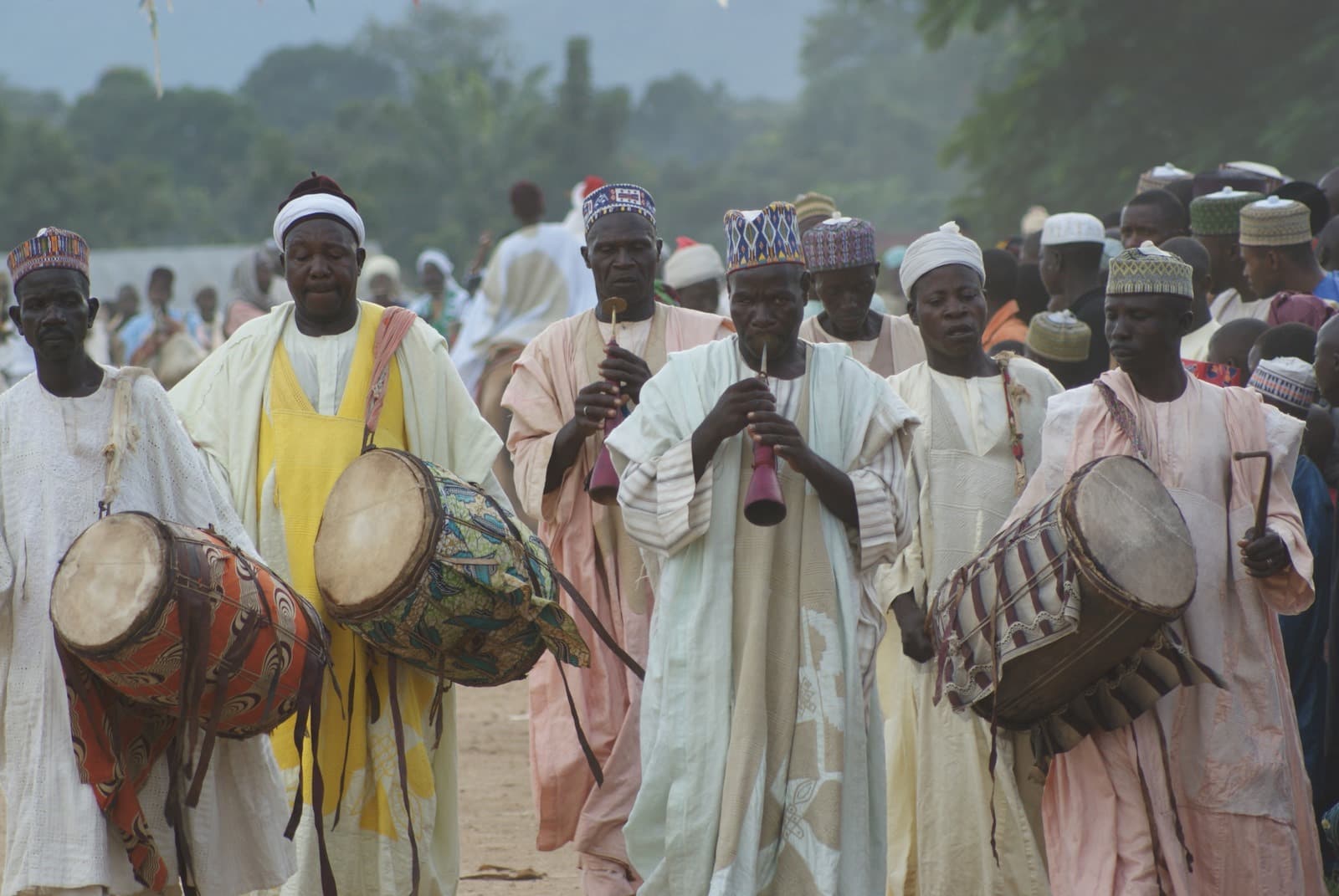
Since the earliest documentations of Hausa language and culture, the role of artists, griots, praise singers, poets, actors in northern Nigeria has always been tied to the political class. In the past, artists were beholden to their patrons who were monarchs and a great deal of their art revolved around praise singing, extolling patrons and the preservation of cultural practices. One of the earliest examples of this is ‘Wakar Yabon Bawa Jan Gwarzo,’the praise song of the king of Gobir ‘Bawa the Valiant’ circa late-eighteenth century. In this song, the griot praises the king’s campaigns, rallies popular support for his ruling, praises and extols his personal attributes while soliciting the king’s boundless generosity by asking for favours upon himself. This set the earliest template for praise singing in the Hausa language.
With the advent of colonialism came access to recording equipment and means of distributing these songs though radio. Artists began to benefit from the nascent radio coverage and the ears of the curious populace. As such, the topics of these artists’ songs began to expand and they went from being just praise songs about monarchs and conquerors past, to songs encouraging northern troops that fought in World War 1 and 2, to those supporting independence struggles. And with the advent of self-governance, these praise songs saw use as campaign songs and slogans. This birthed a symbiotic relationship between the new class of leaders who realised the influence of music in electioneering, and musicians who sought new patrons. The talents of the artists were also tapped for propaganda purposes like those that encouraged national unity post-independence, agricultural practices, vaccination and education for young girls. With the turning of the political tides after Nigeria gained self-governance, the songs began to serve as amplifiers for the voices of the people, sometimes being rally calls against injustices perpetuated by the ruling classes.
‘Mai dubun nasara, Sardauna…’ – Alhaji Musa Dankwairo
‘Man of a thousand triumphs, Sardauna…’
The premier of the North, Sir Ahmadu Bello, greatly patronized Alhaji Musa Dankwairo, a standout singer and performer of his time, alongside Alhaji Shehu Jankidi to extoll his achievements in catchy songs that enjoyed wide circulation. Jankidi’s ‘Ahmadu Bello irin Shehu’ talks about how if it wasn’t for the premier, the North wouldn’t have had tarred roads, pipe-borne water electricity or cement to build. Dankwairo’s career was still strong until the Second Republic.
Another popular singer of the time was Dr Mamman Shata, who was openly political and was one of the first to sing campaign songs for his party, the Aminu Kano-led, leftist Northern Elements Progressive Union (NEPU). Dr Dan Maraya Jos, followed suit with songs praising the Sardauna of Sokoto and leader of the conservative Northern People’s Congress (NPC). Jos was the third in an iconic trio of contemporaries that included Dankwairo and Shata who are heralded as kings of northern Nigerian music. Other prominent singers of the time like Naranbada and Haruna Oji also lent their voices to various campaigns and personalities.







Comments
Sign in to comment.