

Our new print issue, Africa’s Hustle Republics, is here! Subscribe for less than ₦1K/$1 a week for full access.
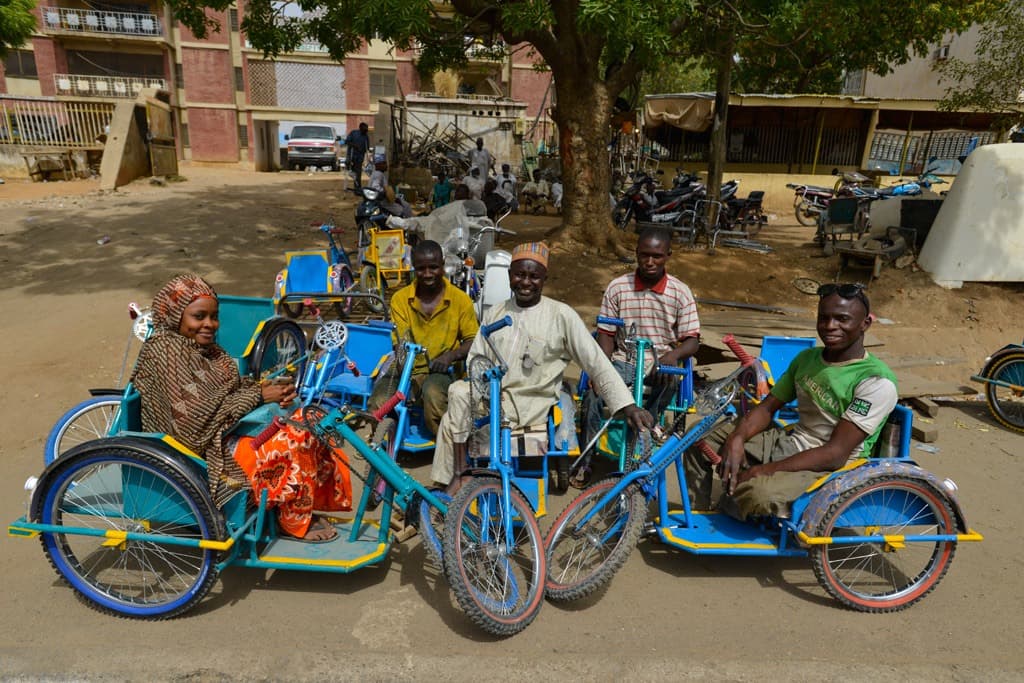
Nigeria once accounted for more than half of the polio cases around the world but today, after a successful vaccination programme, the country is polio-free. Now up against COVID-19 and aiming to vaccinate 40 per cent of the population by the end of 2021, we can look to our experience with polio for lessons.
n 2012, after a national vaccine rollout programme had suffered years of setbacks, President Goodluck Jonathan declared polio as a national health emergency in Nigeria. By 2020, increased efforts to eradicate polio had resulted in Nigeria finally being declared free of the virus. ‘Polio is no longer endemic in Nigeria,’ the World Health Organization announced. But in 2020, too, however, the Buhari administration declared another national health emergency: COVID-19.
By March 2020, a presidential task force had been set up to handle Nigeria’s COVID-19 response and plan for a vaccine roll-out. The task force had the ambitious aim of vaccinating 40 per cent of the eligible population against COVID-19 by the end of 2021, and 70 per cent before the end of 2022. With the new COVID-19 health emergency underway, a closer look at what made the polio vaccine roll-out successful can help suggest possible strategies for Nigeria’s COVID-19 vaccinations.
Great strides in disease eradication typically begin with effective international and local partnerships, because healthcare partnerships play a significant role in disease management and eradication around the world. In the eradication of polio in Nigeria, the Global Polio Eradication Initiative (GPEI), a global coalition of national governments and several humanitarian organizations, proved to be the most instrumental partnership.
Polio eradication efforts began in Nigeria as early as 1996. From the onset, the GPEI led the funding, procurement and supply of vaccines, strengthened by partners such as the Global Alliance for Vaccines and Immunization (GAVI) and Rotary International. In later years, the presidential task force on polio eradication led efforts to distribute vaccines by working with agencies such as the National Primary Health Care Development Agency (NPHCDA), state governments’ polio task forces and community stakeholder groups such as the Traditional Leaders Committee on Primary Health Care and the Nigerian Inter-Faith Group. During the 24-year journey to eradicate polio, this network of partners helped to create polio eradication initiatives, emergency plans, expert review committees, outbreak response assessment teams and other strategic initiatives, before finally achieving the goal of eradication in 2020.

The Republic is a Nigerian media-tech company dedicated to explaining our time—through deeply reported journalism on power, culture and society.
Focused consumption without interruptions.
Years of reporting at your fingertips.
Long-form journalism that matters.
Create a free account to continue reading this month and access more of our work.
About the Author
is a researcher at heart, a lover of photography by eye, and a past winner of the African Organization for Standardization's Continental Essay Competition.



Comments
Sign in to comment.