Editor’s note: This essay is available in our print issue,
Godfathers: An Introduction. Buy the issue
here.
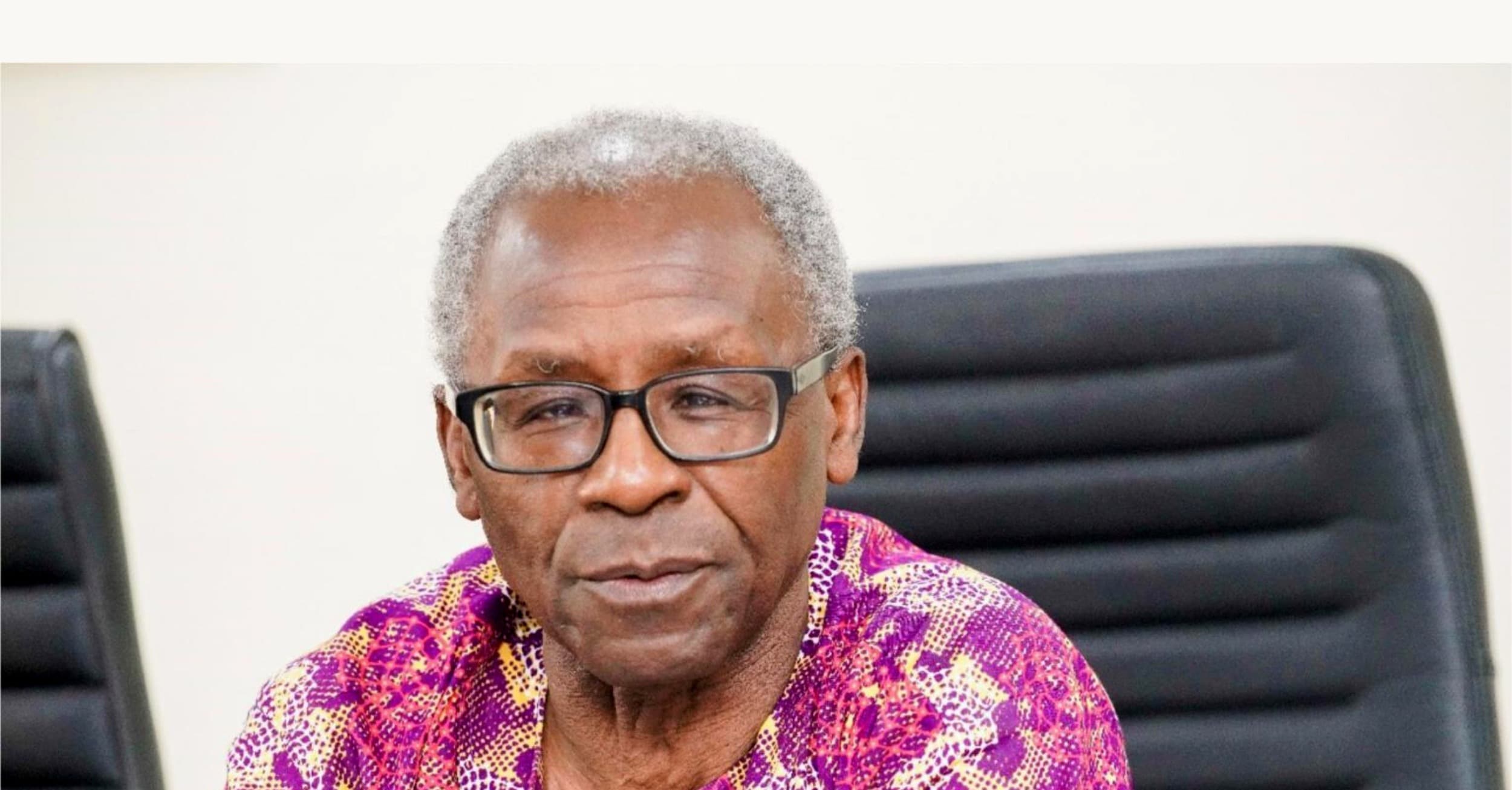
Oyewale Tomori is a Nigerian expert on global health. He is a professor of virology, an educational administrator, and a former vice chancellor of Redeemer’s University. He has worked for the World Health Organization to eradicate polio and sits on several committees and boards in the global health space. Tomori received the
Nigeria National Order of Merit in 2002, the country’s highest award for academic excellence and is the incumbent president of the Nigerian Academy of Science. He views every accolade as a debt to Nigeria because they are the results of the investments the country made when he was younger.
Tomori tells me his path began with his father. In his words, to call his father simply polygamous would be an insult. His father had 15 wives of which Oyewale is the 39th child. His father was more than polygamous—he was ‘multi-gamous’. At the time, all the children were destined to work on the family farm but then the Nigerian government stepped in with mandatory free education.
‘My father, not wanting to go to prison, sent all of us to school,’ Tomori says to me. ‘Without that, I wouldn’t be where I am today.’
Speaking to him it becomes clear what the secret to his successful career has been—free education. Tomori’s education was all free; primary, secondary, and university. ‘Those are the things I owe my country, and that I can never pay back,’ he says. He clarifies that this investment has led to a certain sense of national pride unique to his generation. Future generations don’t have that same sense of pride, as they do not imagine that Nigeria values their worth and will invest in them. Therein lies the challenge for a future Nigeria; how to rekindle the belief that the government is working on behalf of its citizens, investing in them, and creating the enabling environment for them to thrive.
Tomori’s first degree was in veterinary medicine and his training began in veterinary sciences, studying animal viruses. Today, he spends much of his time talking about human viruses.
‘We learn more and more that we cannot really separate animal and human viruses as many of the viruses that cause epidemics, such as yellow fever, originate in animals. So a thorough understanding of the human-animal interface is what is needed,’ Tomori says.
A serendipitous moment on Tomori’s career path was during a Lassa fever outbreak in Nigeria in 1969, when the team investigating the outbreak came to talk about virology at his university. He mentions this moment as an example of how enabling environments work. While Tomori believes Nigeria lacks the enabling environment for its people, he also believed that if university students are exposed to real-world challenges, it would spark interest in their minds as it did his.
Nigerians are renowned the world over and have developed a positive global reputation for their contributions to innovation across business, science and technology. I ask why it is not the same within Nigeria as Nigerians are already well-trained when they land in other countries and immediately become the diaspora.
‘In Canada, USA, UK, and Japan, Nigerians arrive with the knowledge and know-how to succeed. Other countries seem to possess the enabling environment that Nigeria lacks,’ Tomori says in response.
A lot of this has to do with the lack of government investment and funding within Nigeria, Tomori explains. One of the challenges of global health is to increase domestic funding. Many national-level disease programmes, health services, and interventions are all externally funded. African governments struggle to prioritize and invest in their own ecosystems, and Nigeria is no stranger to this.
‘These are the things I think we need to organize in Nigeria. If we don’t put our money into this, develop the environment and make it possible, then you can train 200 people but none of them will function. Nigeria’s problem is not the training of the people. Nigeria’s problem is creating the enabling environment for those who have been trained to function maximally.’
The challenges that Nigeria faces are, unsurprisingly, faced by the rest of the continent. Having a long distinguished career means that you have seen many of the old debates before, and many of the lessons learnt become forgotten in time, leading to the same mistakes and the persistence of the same challenges...







Comments
Sign in to comment.