

Our new print issue, Africa’s Hustle Republics, is here! Subscribe for less than ₦1K/$1 a week for full access.
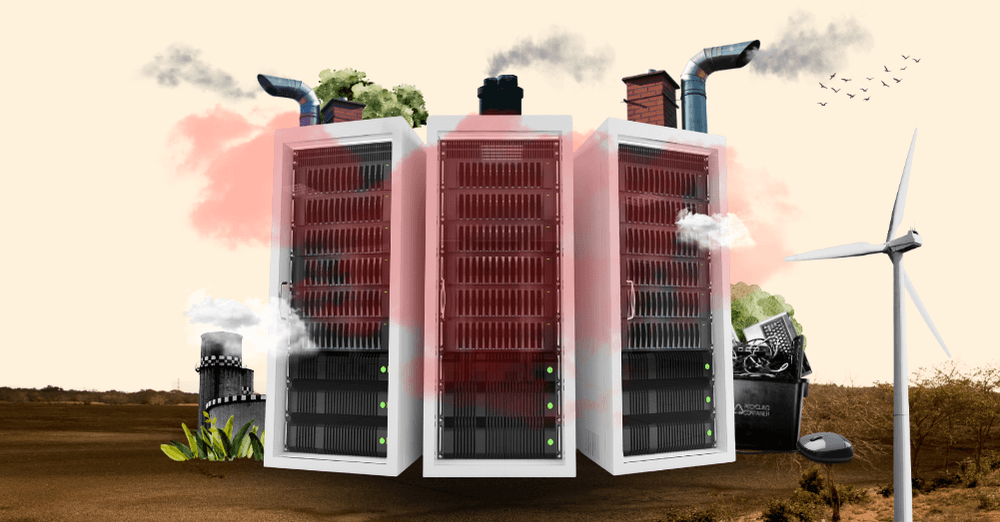
As Africa races to power its digital future with Chinese solar panels and AI-ready data centres, it risks becoming both the supplier of critical minerals and the dumping ground for toxic waste in a new form of green extractivism, wrapped in the language of digital and climate progress.
As artificial intelligence sweeps across Africa, powering everything from data centres to digital economies, several critical questions loom: how will the continent meet AI’s massive energy demands without repeating old mistakes? What if Africa’s rapid turn to solar energy and imported Chinese panels, driven more by affordability and failing grids than by climate ideals, actually represents a new chapter in green extractivism? What happens when AI’s enormous electricity and water footprint meets the limits of renewables alone, forcing reliance on hybrid systems that still depend heavily on fossil fuels? In the end, Africa’s digital revolution is at a crossroads: it will either build true energy sovereignty or become an AI-powered extension of the same extractive systems that have historically defined Africa’s relationship to global capital.
Artificial intelligence is often hailed by global institutions such as the World Economic Forum and the United Nations Educational, Scientific Cultural Organization as the next frontier of global development. Its growth, including in Africa, holds the promise of significant advances across various sectors, including energy. Yet, a paradox emerges. The same digital revolution that powers these gains could also deepen environmental harm. AI data centres, known for their intensive energy demands, risk locking the continent into energy pathways that may undermine its climate and development goals. Because such infrastructure requires enormous amounts of electricity, water and critical minerals, it may entrench Africa’s role as both an energy supplier and a site for the externalization of environmental costs, making the debate over AI inseparable from questions of extractivism. This concern is amplified by the widespread perception within the engineering community that green energy alone cannot generate the stable, large-scale power required to sustain AI infrastructure. In this context, more pressing concerns arise. Across Africa, much of the renewable build-out is being driven by Chinese-manufactured solar panels, which have become a symbol of the continent’s transition away from fossil fuels in the face of unreliable grids and rising diesel costs.

The Republic is a Nigerian media-tech company dedicated to explaining our time—through deeply reported journalism on power, culture and society.
Focused consumption without interruptions.
Years of reporting at your fingertips.
Long-form journalism that matters.
This story features in our print issue, 'An African Manual For Debugging Empire'.
Create a free account to continue reading this month and access more of our work.
About the Author
is a research political economist, poet and anthropology enthusiast.


Comments
Sign in to comment.