

Our new print issue, Africa’s Hustle Republics, is here! Subscribe for less than ₦1K/$1 a week for full access.
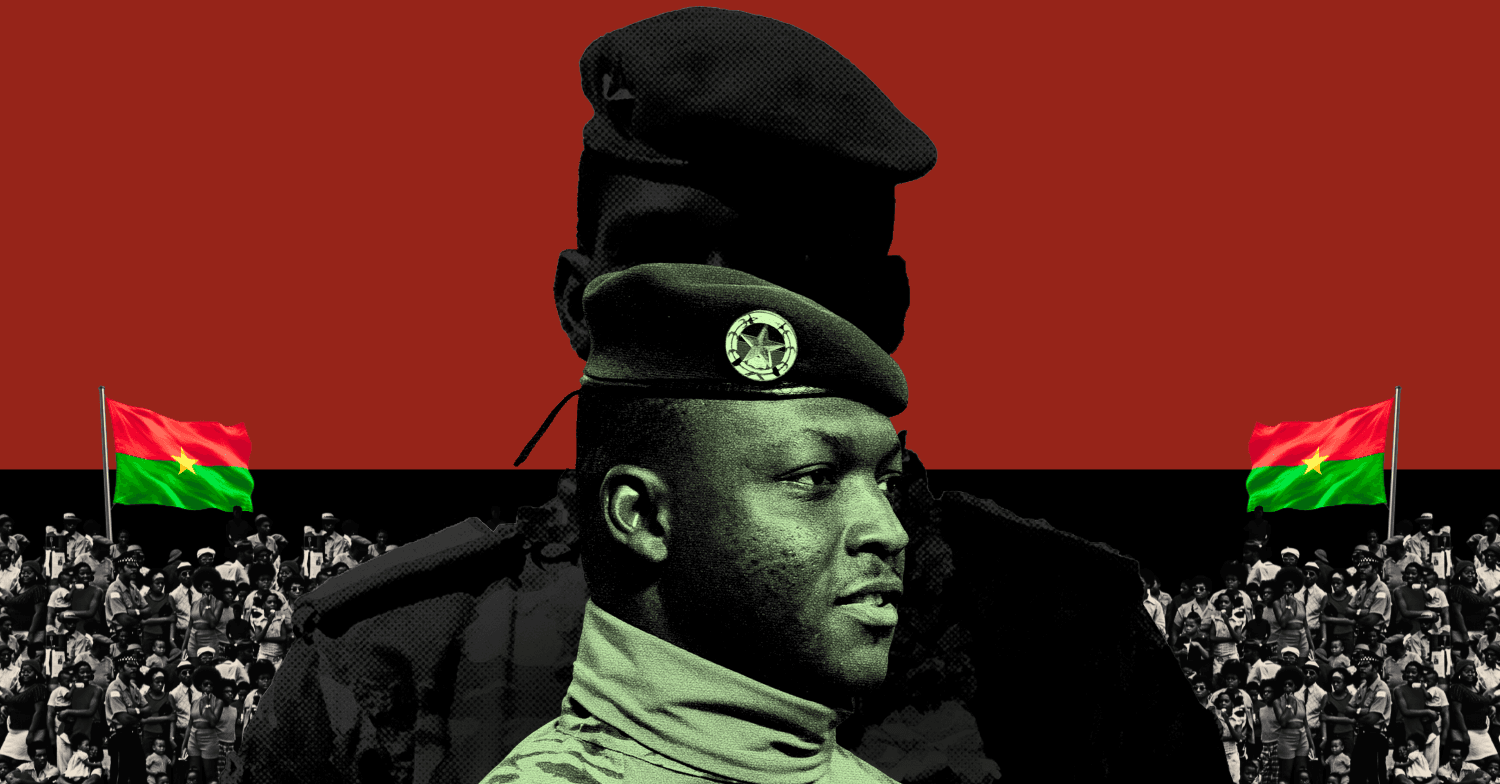
In a period of dwindling pan-Africanism, Ibrahim Traoré has risen as one of Africa’s most favourite leaders, raising questions about whether he represents a new breed of pan-Africanism.
Aug 24, 2025
Photo illustration by Dami Mojid / THE REPUBLIC. Source Ref: ALEXANDER KRYAZHEV for RIA NOVOSTI / WIKIMEDIA.
‘He who feeds you, controls you.’
— Thomas Sankara, former president of Burkina Faso
Captain Ibrahim Traoré rose to power in Burkina Faso in October 2022, following the country’s second coup that year. At just 34 years old, his youth and military rhetoric have drawn frequent comparisons to Thomas Sankara, the iconic revolutionary leader who governed in the 1980s. Traoré portrays himself as a new revolutionary, invoking Sankara’s legacy of self-reliance, anti-imperialism, and pan-Africanism. Traoré’s rise signals the possibility of an ideological shift toward a new, self-defined regional role for Burkina Faso. His leadership also raises critical questions about the substance of pan-Africanist claims, the dangers of authoritarian consolidation, and the region’s vulnerability to geopolitical influence. Much like Sankara, Traoré’s rise amid political instability signals more than a leadership change; it signals a potential ideological shift, one that seeks to redefine Burkina Faso’s role in a multipolar global order.
Yet, while Traoré and leaders like him are right to stress anti-Westernism and decolonization, this conspiratorial lens can energize efforts to resist those who threaten national autonomy; however, it should not be the sole measure of leadership. Criticism is warranted, particularly regarding his blocking of democratic elections, the expansion of jihadist-held territory under his rule, and his use of misinformation to overstate achievements.
Against this backdrop, assessing Traoré’s governance necessitates a closer examination of how local demands for autonomy, enduring colonial influences, and ongoing geopolitical contests intersect. This provides context for weighing the ideals of pan-Africanism against the real risks of authoritarianism that shape the country’s current direction.
The Republic is a Nigerian media-tech company dedicated to explaining our time—through deeply reported journalism on power, culture and society.
Focused consumption without interruptions.
Years of reporting at your fingertips.
Long-form journalism that matters.
Create a free account to continue reading this month and access more of our work.
About the Author
is an international relations scholar with a passion for public service and global diplomacy, having contributed to peace development initiatives in South Sudan and conducted research on political engagement in East Africa, while earning recognition from institutions like Stanford University’s Hoover Institution.




Comments
Sign in to comment.