The Very Nigerian Playbook of Campus Politics | The Republic
The Very Nigerian Playbook of Campus Politics
Student unions in public universities played a significant role in Nigeria’s struggles for independence and democracy. Today, however, as godfatherism, repression and declining participation reshape campus politics, student unionism has become a microcosm of the very Nigerian political culture it once sought to challenge.
At a students’ union manifesto reading in a public university in Nigeria, it is fairly easy to predict which aspirants will emerge winners at the poll. For some, it is because of their carriage, the certainty underneath their steps. But for others, one can tell from the cheering that accompanies them as they take the stage that they have done the underground work, so that their presence at the reading is merely a formality.
Garuba Square, Nnamdi Azikiwe University. Photography by Deji Onaolapo / THE REPUBLIC.
It is 29 July 2026, elections season, at Nnamdi Azikiwe University (UNIZIK). We are gathered at Garuba Square, a popular hotspot on the Awka campus. Most students are absent; only a fraction of the student population (about 49,000) are here, but one doesn’t exactly feel this absence. The energy pulses as students tap each other, whisper to each other and hail their preferred candidates. There are students clustered in groups, speaking loudly in order to hear themselves above the din. The aspirants, about 29 of them, are seated in front, clutching their speeches tightly, tapping their legs to a rhythm only they can hear. In a few minutes, the speeches will begin with the presidential aspirants, and immediately after nine of them have spoken, the two vice-presidential aspirants will follow. After they step aside, the energy in the hall begins to dissipate as students start trickling out. Then, after the two aspirants for secretary-general conclude their readings, the students begin to leave in droves, their seats yawning as the square empties out. It is almost as though the offices of treasurer, director of sports, director of socials, director of welfare, public relations officer and their aspirants are not of consequence, insignificant to the interests of the students.
University student leadership bodies in Nigeria were born in the era of idealism that ushered in the end of colonial Nigeria. They thrived in their quest not only against obnoxious anti-student welfare policies, but also for Nigeria’s independence from Britain and freedom from oppressive military regimes. Over the years, however, as Nigeria transitioned to its faulty version of democracy and student unions increasingly began to imitate the structure of the state, the unions lost some of the power they once held among the student community, with students increasingly perceiving them as merely ceremonial.
But these unions still matter. It is in student unionism that young Nigerians first understand the need to stand up to authority and the manner in which to do it in Nigeria. It is there that they learn to negotiate their needs. It is within university walls that students begin to understand the leadership process and carve out an understanding of their country’s needs and their place in the making of their nation. In many ways, student unions and the universities that serve as their grounds have contributed significantly to the making of Nigeria as we know it today.
HIGHER EDUCATION IN NIGERIA
Library Building, Nnamdi Azikiwe University. Photography by Deji Onaolapo / THE REPUBLIC.
Over the decades since Yaba College of Technology (Nigeria’s first higher educational institution) opened its gates to its first set of students in 1947, higher education in Nigeria has evolved significantly. From historically top-ranked federal universities to small vibrant state colleges, and to specialized, elite private institutions, higher institutions have steadily multiplied. Between 1948 and 2010, for example, 21 federal-owned universities were established in Nigeria. Similarly, between 1982 and 2010, state universities multiplied from five to about 36—and between 1991 and 2020, private-owned institutions of learning grew to exceed 70. According to data on Statista, there are over 300 universities in Nigeria today. This rapid increase in the supply of higher institutions is only a response to the exponential increase in demand. In 2026 alone, for example, over one million new students were enrolled nationwide in a single admissions cycle—a significant surge from the 300 enrolled at the Yaba College of Technology at its inception 79 years ago.
Image of an everyday concern affecting students. Photography by Deji Onaolapo / THE REPUBLIC.
Despite the proliferation of institutions, higher education remains unaffordable for many Nigerians. This is majorly because of Nigeria’s dire economic situation: ₦70,000 is the nationwide minimum wage; about 50 per cent of Nigerian families earn below ₦100,000 monthly; over 60 per cent of Nigerians live below the poverty line. And yet, in 2024, Nigeria’s premier university, the University of Ibadan (UI), increased its tuition by over 400 per cent—with fees ranging from ₦203,000 to ₦412,000, depending on the department. The University of Nigeria in Nsukka followed suit in 2025, increasing its ‘sundry charges’ by 60 per cent. Student accommodation in the hostels at Lagos State University cost ₦325,500 per person for a room of four. At UNIZIK, student housing now goes for as high as ₦400,000 per room off campus, and over ₦600,000 in its satellite campus in Okofia. Nigeria, these figures suggest, is pricing its young people out of an education. In May 2024, the government introduced a student loan initiative, the Nigerian Education Loan Fund, to help offset educational costs by loaning school fees to applicants, and providing a non-refundable stipend of ₦20,000 monthly. Recipients have, however, described the disbursement of the stipends as sporadic. Nathan, a student at UNIZIK’s faculty of engineering told me the money ‘arrives late and sometimes not at all.’ The school fees are paid directly to the institutions and are to be refunded interest-free after graduates secure employment. Among present recipients, the bleak reality of graduate unemployment in the country, estimated at 9.19 per cent in 2024, raises concerns about the burden of loan repayment.
Additionally, while there are remarkable increases in enrolments and literacy rates, the data also points at troubling developments. As of 2024, Imo State recorded the highest literacy rate at 96.43 per cent, with Lagos State following closely behind with 96.3 per cent. However, in northern states, the rates are significantly lower, with Yobe and Katsina states recording 7.23 per cent and 10.36 per cent respectively. This is because of the insecurity issues that plague these regions, amongst other factors such as cultural barriers (in some regions) that prevent female children from attending or finishing school. In fact, in 1997, British scholar Jean Boyd, as quoted by scholars Kabir Mohammed, David Nggada and Yusuf Abdullahi, noted that ‘the track in which women education started in Nigeria was sloppy,’ as there was no ‘demand for this brand of education; it was against the whole of African opinions…’ While the tide has significantly turned regarding public opinion on female education in Nigeria, discriminatory practices persist. In 2022, UNICEF recorded that of the 18.5 million out of school children, 60 per cent (over 10 million) of them were girls. A majority of the number comes from northern Nigeria, where only one in four girls from underprivileged backgrounds reportedly finish junior secondary school.
Management Science Building Inner Courtyard, Nnamdi Azikiwe University. Photography by Deji Onaolapo / THE REPUBLIC.
These issues are not arbitrary. They are symptomatic of a general devaluation of education in Nigeria. The rapid growth in enrolment is staggering when one considers the inadequate resources and infrastructural challenges that plague the sector. In 2025, Nigeria’s budget for education was ₦3.52 trillion, accounting for only about 2.14 per cent of Nigeria’s GDP,and6.1 per cent of its national and combined public budgets. This falls below the international standard of 15 to 20 per cent. According to a 2023 research by Emmanuel Ohaegbulam and Samuel Chijioke:
the annual percentage budgetary allocations to the education sector by the Federal Government of Nigeria, from 1960 to 2023, was not in adherence to the UNESCO recommended benchmarks (15 per cent, 20 per cent and 26 per cent.) Also, between 1999 and 2021, Nigeria’s adherence level (7.81 per cent) to the UNESCO recommended benchmarks was far below those of some other African countries, like Ghana (24.37 per cent), Kenya (21.70 per cent), Senegal (21.32 per cent), South Africa (19.49 per cent) and Morocco (17.61 per cent).
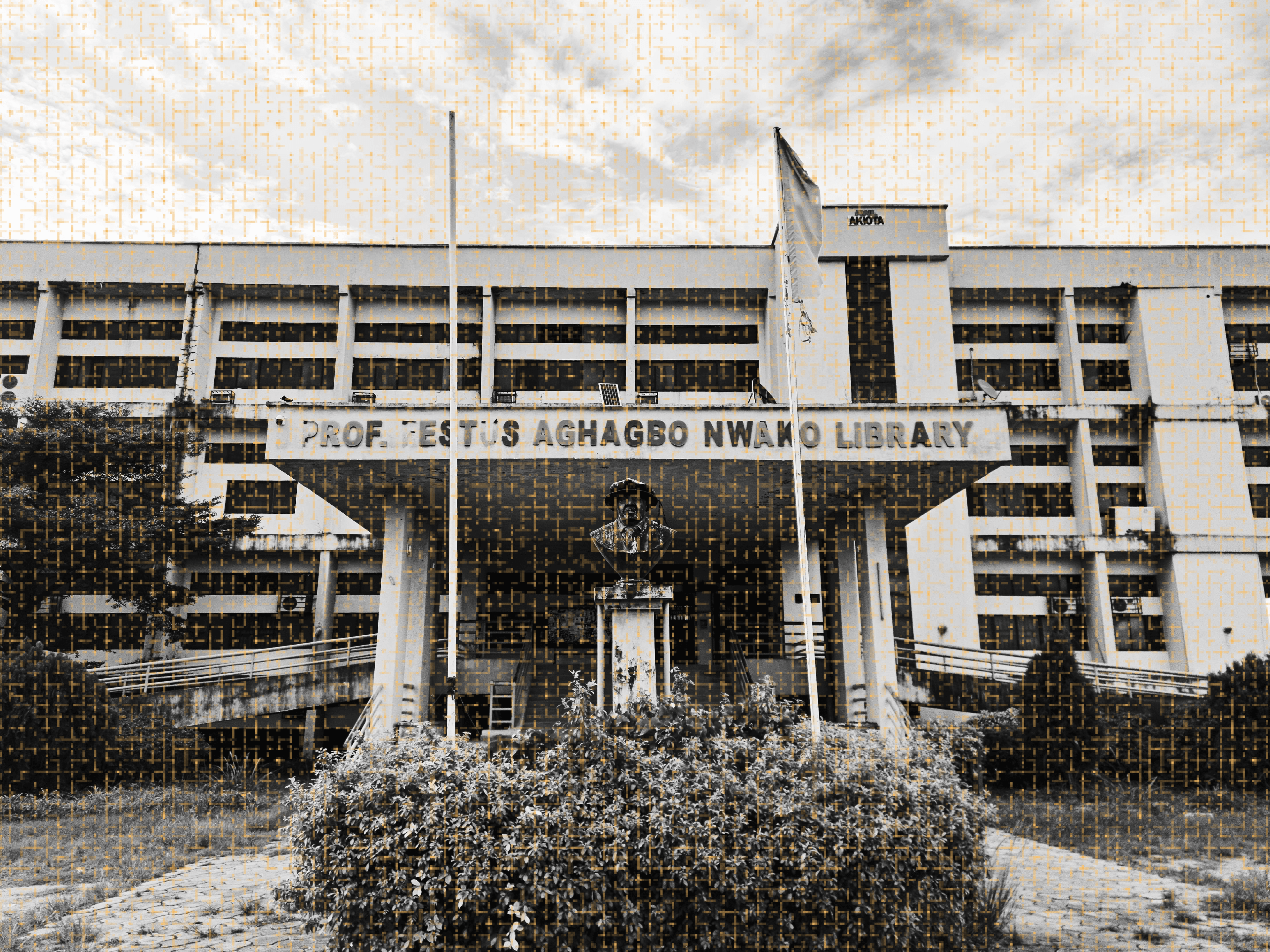
Library Entrance, Nnamdi Azikiwe University. Photography by Deji Onaolapo / THE REPUBLIC.
University education and the quality of graduates produced is directly proportional to the continued growth of any nation. It is the duty of the universities to incubate the country’s developmental researchers, for instance, who in turn use their knowledge to proffer contextualized solutions to the country’s problems. By failing to invest adequately in the education infrastructure, Nigeria has repeatedly threatened its own growth.
A HISTORY OF STUDENT POLITICS IN NIGERIA
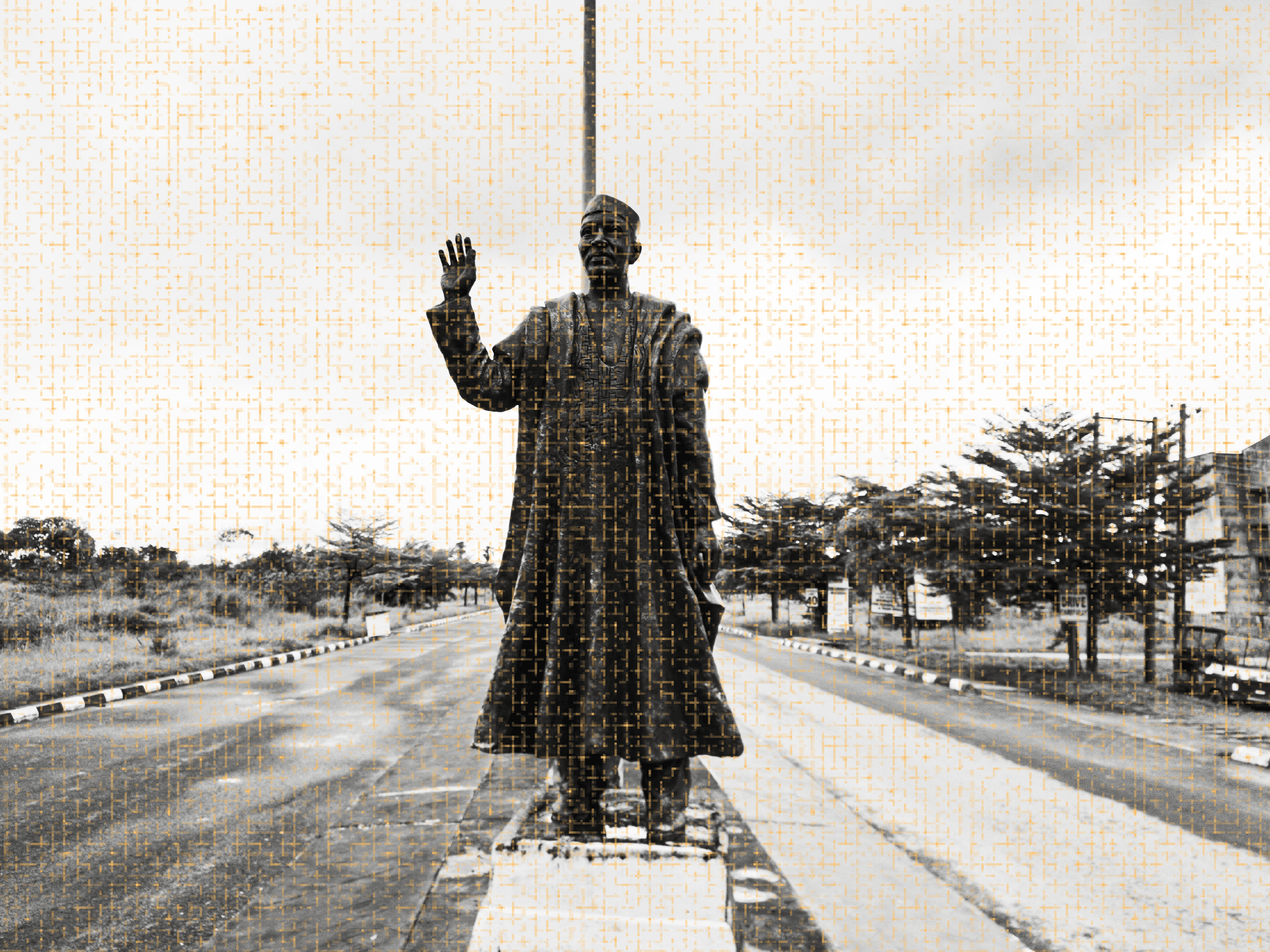
Statue of Nnamdi Azikiwe, Nnamdi Azikiwe University. Photography by Deji Onaolapo / THE REPUBLIC.
The origin of student unionism in Nigeria is traceable to the West African Student Union (WASU), established in England in 1925 by the Nigerian Ladipo Solanke and the Sierra Leonean Herbert Bankole Bright. Before the establishment of the University College, Ibadan, in 1948, it was commonplace for promising students to receive scholarships to further their studies abroad. WASU was the first organized body in which African students (many of whom were Nigerians) united to collectively tackle Western imperialism and the racially motivated denial of housing to African students. Local unionism would eventually emerge in 1956, with the formation of the National Union of Nigerian Students (NUNS). In their 2024 paper ‘Students' Activism: Intersection of Challenges and Opportunities for Good Governance in South West, Nigeria’, political scientists Abdullahi Oyekanmi, Sunday Omojowo, Afeez Shittu, and Ademolu Adenuga, explained that:
the first birth of any recognized student body with national spread was in the University of Ibadan in 1956. In the paradigms of the operational structures of students’ activism, there are many structures of NANS in each of the six geo-political zones in Nigeria.
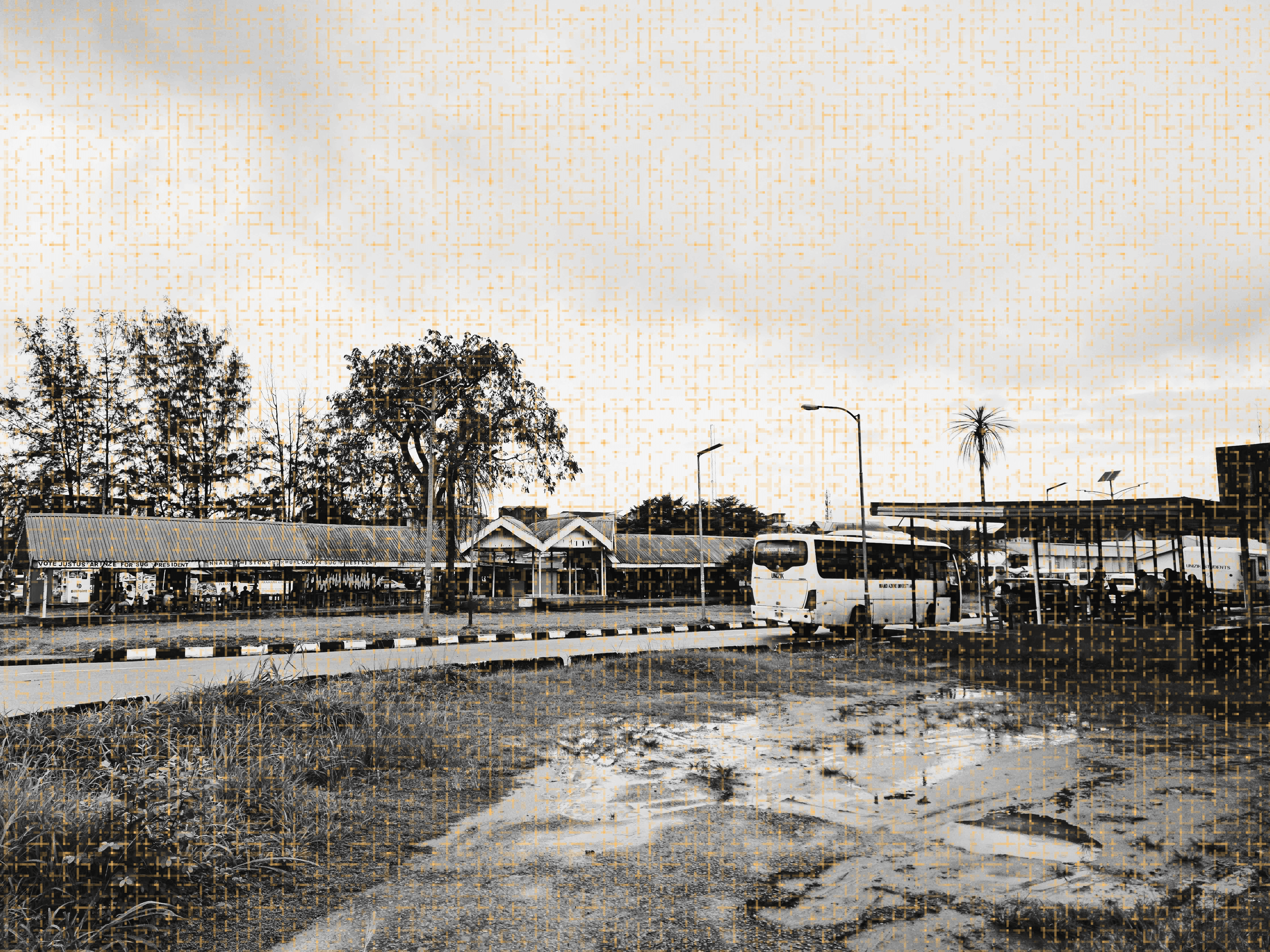
Bus Stand, Nnamdi Azikiwe University. Photography by Deji Onaolapo / THE REPUBLIC.
Student unions were not only concerned with on-campus issues, but were also deeply motivated by the quest for self-governance and emancipation from colonial domination. As researcher Yannick Ugwunali identified in his 2022 paper, student unions ‘not only stood for the welfare of students but also that of the entire citizens.’ For example, after Nigeria attained political independence and was soon plunged into military dictatorships, student unions reacted decisively—from joining the historic 1989 anti-structural adjustment programme riots to their frontline participation in the June 12 pro-democracy movements. The deadly Ali Must Go protests in 1978 led to a repression of NUNS, but the union would reconvene in 1980 as the National Association of Nigerian Students (NANS), adopting a fundamentally anti-imperialist outlook in its 1982 charter. This was reflected in the positions the group took in national and international issues. For example, as professor of political science, Sylvester Odion-Akhaine, reported in his 2009 paper, ‘Student Movement in Nigeria: Antinomies and Transformation’:
These students went as volunteers to Nicaragua and Angola when these countries were besieged by US-sponsored counter-revolutionary insurgencies, and many shared rooms with South African exiles and organized Youth Solidarity on Southern Africa in Nigeria in virtually all the university campuses in the country. Such was the height of the movement’s internationalism.
Today, however, student activism has declined significantly. According to Oyekanmi, Omojowi, Shittu, and Adenuga:
There has been [a] paradigm shift from such students’ activism of 1970s and early 1980s where students’ ideology and orientations were directed at strengthening Nigeria’s democratic institutions and consolidate her ethos from military interregnum and autocratic political leadership… Students’ movements have remained inactive from many democracy coalition groups, civil societies and good governance advocates in Nigeria.
Hilary Onwuasoizu, SUG Candidate, Nnamdi Azikiwe University. Photography by Deji Onaolapo / THE REPUBLIC.
In essence, today’s students feel divorced from the larger political climate. ‘There’s no strong ideological basis, no history to fall back on. There’s no reference,’ Mide Gbadegesin of Concerned Students Against Tuition, now Concerned Students Movement (CSM), told me. CSM is a students’ protest group primarily at UI dedicated to student welfarism and liberal ideas. They sensitize students on issues by organizing one-on-one ‘evangelical’ movements, through X (formerly Twitter) Spaces and press releases. It was this group that raised placards in demonstration against UI’s fee hike during the inauguration of student union leaders in 2024.
The protesters were arrested for leading this peaceful protest, and two of them, Aduwo Ayodele and Gbadegesin, were suspended for four semesters by the university.
THE VERY NIGERIAN WORLD OF STUDENT POLITICS
Comrade Chukwueloka Wiston Nnake, SUG President-Elect, Nnamdi Azikiwe University. Photography by Deji Onaolapo / THE REPUBLIC.
The world of student politics in Nigeria is similar to the larger political climate in the country in many crucial ways. For one, as is obtainable in the Nigerian political climate, godfatherism abounds in student politics and significantly impacts how elections are sought and won. In his 2026 paper, ‘Godfatherism, Governance and Political Development in Nigeria’, deputy director of the Aminu Kano Centre for Democratic Research and Training at Bayero University in Kano, Dr Sa’idu Abdullahi, identified that ‘godfatherism has been part of Nigerian politics since before the inauguration of the present political dispensation.’
The world of student politics in Nigeria is similar to the larger political climate in the country in many crucial ways. For one, as is obtainable in the Nigerian political climate, godfatherism abounds in student politics and significantly impacts how elections are sought and won. In his 2026 paper, ‘Godfatherism, Governance and Political Development in Nigeria’, deputy director of the Aminu Kano Centre for Democratic Research and Training at Bayero University in Kano, Dr Sa’idu Abdullahi, identified that ‘godfatherism has been part of Nigerian politics since before the inauguration of the present political dispensation.’
In many ways, student leaders are often believed to be implants of the state, in that other students often suspect them as acting to protect the interests of the state than those of the students. Gbadegesin told me that for the past six years in UI, ‘there has been a heavy connection between one of Governor Seyi Makinde’s special advisers, the people who emerge as president [of the student union government], and the people who eventually enter NANS politics.’
Without disclosing the special adviser’s name, Gbadegesin suggested that this special adviser sponsors elections—‘How is a 400-level student able to afford putting his face in a big billboard and all of that?’—and with his network effectively influences who gets to represent the students, not only at UI but at other universities in Oyo State. Student leaders are, in theory, representatives of the student population, who hold immense political and social capital; but in practice to students like Gbadegesin, they are no more than individuals who are propped up and supported by the state government, through special advisers who play the role of godfathers to these leaders. In return, these student leaders do their godfathers’ bidding, nipping student protests in the bud before they bloom into state issues that cast state governors in an unflattering light.
Campaign materials showing the winning candidate. Photography by Deji Onaolapo / THE REPUBLIC.
Although this structure is not always so overt in all institutions, Chioma Ohaeri, the 31st secretary-general of UNIZIK’s student union government, told me that there are in fact individuals, ‘king-makers’, whom aspirants must meet privately to make their intentions known when running for elections. ‘There are people you should meet, not because they determine [who wins elections], but out of respect,’ she said. ‘For example, you can't just bypass your faculty president and go and buy form. It's about respect.’ She also added that, ‘there are important personalities that you just have to meet based on “hello, I’m contesting. I’ll just like to give you that respect of you were once a kingmaker in school, a one-time this or one-time that.” Be it graduate or undergraduate…not to solicit support but to just let them know.’
These godfathers sometimes fund campaign activities for their preferred candidates, who then extend the help back in the form of favours when in office.
‘If you have a godfather when you enter the office, your motive moves from your primary duty of discharging your duties,’ Hilary Onwuasoizu, the public relations officer of the 31st government at UNIZIK told me. ‘It boils down to you trying to please your godfather, and in pleasing your godfather you’ll see that there are a whole lot of things that you ought to do, that you won't do because you'll be looking for the money to settle your godfather.’ According to Onwuasoizu, ‘these things distract student leaders from fulfilling their purpose or delivering their primary duties. When there is a decision from the management and the SUG, the godfathers will influence the decisions of sitting leaders for them to do this or do that. Their influence has influenced the way administrative duty is run in the university community, especially in the SUG.’
The primary funding for the running of the student union comes from the university itself. At UNIZIK, for example, a payment catalogued as ‘SUG levy’—₦3,000 for new intakes and ₦2,000 for returning students—is included in the annual tuition paid by each student (for context, as of 2025/26 academic session, the university had about 49,000 students; this means that the union received over ₦120,000,000. This money is tracked by the bursary and then disbursed into union account.). Student leaders receive official compensation from the university administration, and also make money from brand sponsorships. ‘Where we generate money is not from the budget; it is from the sponsors,’ Onwuasoizu states. Altogether, this makes student leadership a lucrative endeavour.
Campaign material showing Esther Ekweozor. Photography by Deji Onaolapo / THE REPUBLIC.
There is also the question of female representation. The subject of women’s participation in politics and the structural issues that impede them in Nigeria has long generated heated conversation. Research from 2021 by Oloyede Oluyemi highlights that of the 36 recently confirmed ministerial appointments in 2015, only six were female, amounting to only 16.7 per cent of the total number of ministers employed. Nine years later, in 2024, following a cabinet reshuffling, that number increased to only seven, but this time out of 48 positions. Oluyemi also found that in the 2015 election cycle, only 5.6 per cent and 6.5 per cent of members of the national House of Representatives and the Senate, respectively, were female. The numbers dropped even further in the 2023 election cycle, with women winning only three of 109 seats in the Senate and 17 of 360 seats in the House of Representatives, amounting to 2.75 per cent and 4.72 per cent respectively. Women representation in Nigeria is so low that no single state in the country’s democratic history has produced an elected female governor.
There is also the question of female representation. The subject of women’s participation in politics and the structural issues that impede them in Nigeria has long generated heated conversation. Research from 2021 by Oloyede Oluyemi highlights that of the 36 recently confirmed ministerial appointments in 2015, only six were female, amounting to only 16.7 per cent of the total number of ministers employed. Nine years later, in 2024, following a cabinet reshuffling, that number increased to only seven, but this time out of 48 positions. Oluyemi also found that in the 2015 election cycle, only 5.6 per cent and 6.5 per cent of members of the national House of Representatives and the Senate, respectively, were female. The numbers dropped even further in the 2023 election cycle, with women winning only three of 109 seats in the Senate and 17 of 360 seats in the House of Representatives, amounting to 2.75 per cent and 4.72 per cent respectively. Women representation in Nigeria is so low that no single state in the country’s democratic history has produced an elected female governor.
Campaign material showing female vice presidential candidate. Photography by Deji Onaolapo / THE REPUBLIC.
Considering this, it is no surprise that these structures are replicated in student leadership positions. The office of the student vice president, for example, is often reserved for women and saddled with the responsibilities of ‘welfare’ and ‘assisting’ the president, who is very often a man. On paper, everyone is allowed to contest for whatever positions they desire, but there remain what Ohaeri describes as ‘unspoken notions in place’ for what is actually permissible. ‘I went for screening and the first question they asked me was am I a feminist?’ Esther Ekweozor, one of the female presidential aspirants of the just concluded elections at UNIZIK, told me during our interview. ‘The other guy who was also a presidency candidate, they asked him: What do you want to do for the students? They didn’t ask me that until they were done with him… The second question was if I was married and if I was in a relationship and if my partner can influence my decisions. Then they paused and asked my opponent questions before coming back to me to ask what I have for the students. If I wasn't a woman they would have asked me just exactly what they asked the guy there.’
The position of president would go on to be a battle between seven men and two women. Both women recorded a combined total of 12.3 per cent of votes. ‘This is not the first time a woman is coming out for presidency [in UNIZIK],’ Ekweozor told me. ‘But it is actually the first time a woman qualified screening and went to polling unit. A woman declared interest four or five years ago, but she didn't make it to screening—she stepped down.’
Social media is a powerful force for disseminating information to the student population. Onwuasoizu, who has been running an ‘aspirants group’ since his first year, affirms the impact of these networking platforms on getting the word out during his campaign season: ‘when I started going for SUG position, during my campaign, I still went back to those groups, made some posts. I believe it helps because then I was in 200 level contesting against 400 level students, so it was not an easy win.’ ‘Social media did play its role,’ Ohaeri tells me. However, online visibility is also determined by gender. Ekweozor, the presidential aspirant mentioned above, reported being rejected on the platforms of influencers: ‘Woman cannot lead us; she'll lead with emotions. She is not ready. UNIZIK is not ready to have a woman leader.’
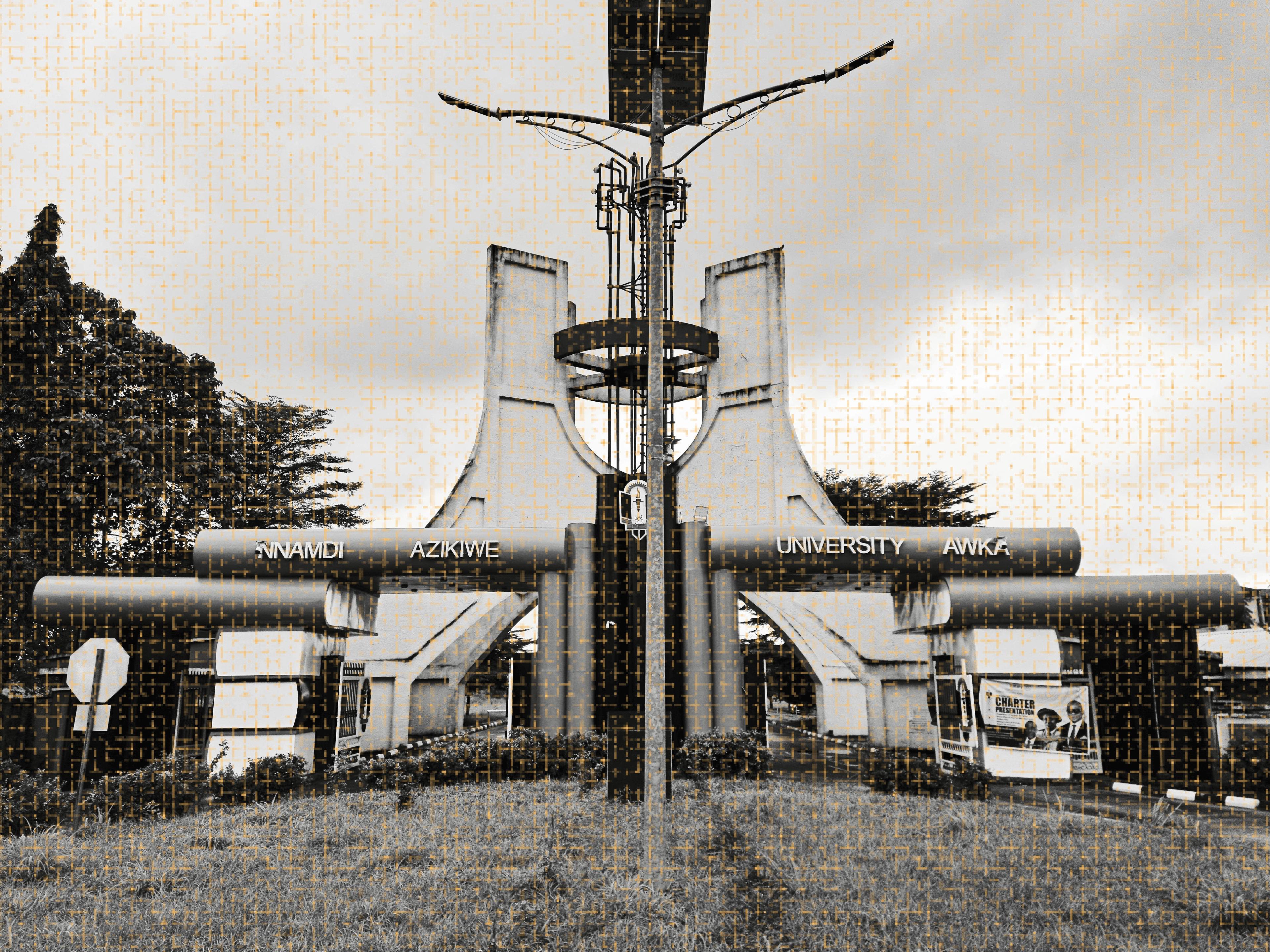
Nnamdi Azikiwe University Main Gates. Photography by Deji Onaolapo / THE REPUBLIC.
INSIDE STUDENT POLITICS AT NNAMDI AZIKIWE UNIVERSITY
‘The student community is a microcosm of Nigeria as a whole,’ Gbadegesin reminded me. Its structure and organization mirror those of Nigeria’s. While there are clearly defined roles, elected leaders have to use their discretion to figure out things that are not spelled out by the constitution.
Nnamdi Azikiwe University SUG Complex. Photography by Deji Onaolapo / THE REPUBLIC.
At UNIZIK, the student union government comprises three arms: the executive, the Students’ Representative Council (SRC) and the Students’ Judicial Council (SJC). These arms are headed by the president, speaker and chief judge, respectively. The offices of president and speaker are open to every department, while that of the chief judge is exclusively reserved for law students. The executive level has the president, vice president and secretary general at its highest echelons. They are responsible for the day-to-day running of union affairs. The SRC checks the powers of the executive body, approves budgets and passes student laws. The SJC then ensures that all actions taken by the two aforementioned bodies align with the dictates of the constitution.
Campaigns begin even before the university’s stipulated period, which is usually the week before poll day. Visibility is currency; it is a game of not only who one knows, but also what one is known and remembered for. Candidates are often advised by incumbent leaders and stakeholders to make themselves ‘visible and known’ as early as possible. Election season typically comes around in the final week of July, just before exams kick off in the first week of August. Aspirants also pay visits to satellite campuses in Nnewi, Agulu and Ifite-Ogwari to make themselves known among the student population at each campus. This tends to cause a strain on the candidates, as they have to forfeit classes and miss assessments. ‘I went from a first-class student to a second-class upper,’ Ohaeri told me. ‘My lecturers are still even surprised that I’m not in 2.2 [second-class lower]... I was always writing letters. The office became my second home to the point where I was sleeping there more often than not.’ The university now attempts to curb low grades by mandating every candidate to possess a minimum of a second-class upper score before contesting.
In addition to students, according to Hilary Onwuasoizu, who was the public relations officer of the 31st government at UNIZIK, aspiring leaders are also required to ‘consult influential students or student leaders. We call them capacities. This means that they have influence either in their faculty or department.’ In exchange for their support, ‘you consult them with something,’ Onwuasoizu continues. ‘Either you go with wine or you call them for an official meeting and give them refreshments… You go spend a whole lot of money, because at the end of the day you go don meet about 50 student leaders.’
As elections draw closer, aspiring leaders form ‘alignments’—ad-hoc political parties in which faculties and departments align with each other in order to consolidate voting blocs. At UNIZIK, most campaigns aimed at ordinary students occur online via WhatsApp groups. Students are inundated with declaration of intent speeches and campaign flyers of candidates the department or faculty supports for the election cycle. Students who choose to campaign for other candidates are booted out of shared WhatsApp platforms by higher-ups. Public posting of campaign flyers and calls for support is then made accessible only to selected students. ‘There is a restriction of right to free votes, if I can call it that. You being a student and me, being a leader, we have the right to vote for anybody we want to vote. But because we have interests and politics is [about] interests, we'll do everything possible to protect that interest.’ Onwuasoizu told me. ‘When it is in our favour, it is good, but generally, it is not a good thing. During my own time, I aligned with people and I know that they actually did this particular thing for me, but that is not really the right way to go about the country we want. It is not really the right thing to do but we are just doing it to protect our interests.’
Due to apathy in matters of student politics and limited campaign reach, it is no surprise that students vote alongside identitarian lines— a line-up of chosen candidates is shared on faculty and departmental WhatsApp news platforms and students are encouraged to vote ‘our people’. A great number of students have little knowledge of who the candidates are, so they follow the names on the shared list, if at all they decide to participate in the elections. Voting along identity lines does not end with faculties and department. It is not rare to find candidates given a platform in church on Sunday of campaign week or priests encouraging their congregation to vote and to vote ‘for our person’. They sometimes do not even need to directly be a part of their flock: if they attend an Anglican church on campus, for example, it becomes something akin to a duty that Anglicans on campus vote them. On manifesto days, too, candidates cleverly associate themselves with a fellowship community, hoping to appeal to fellow brothers and sisters. One could speculate that religious association greatly contributed to the emergence of Comrade Chukwueloka Wiston Nnake as president-elect at the just concluded elections at UNIZIK. He is known as ‘Elo Voice’ and famous for his talent as a praise singer on campus. ‘I am a very powerful praise singer. When I sing at Garuba Square, the whole UNIZIK can shake,’ he told me, with a self-assured smile on his face.
‘Before my time, there was political participation but it was limited,’ Ohaeri told me. ‘It was more or less friends of the candidates that were pulling out. You would see students very uninterested in a lot of things about politics. I feel like it was because there were no grassroots movements, no going around the classes and be more student-focused. Ohaeri, who served as secretary-general of the student union at UNIZIK for the 2024/25 academic year, also recalled that,
In year one, a lot of my classmates did not even know that a student body existed. Same thing goes for our 200 level. When people were aware that they existed is when there were sagas and fights. Even at that, it only made waves in student leader platforms; it didn't make waves round the student community itself… My time was a lot more student-oriented. For example, we went class by class different times to know the needs of students. You'd even see us entering keke with other students, you'd see us fighting for shuttle at school gate. Why? Because we were also students. None of us get car. My VP was living in the hostel throughout and she was the most known person in our union. When walking, you'd see her greet like 10-20 people who knew that this was the vice-president of the student union. It was just a lot more student-oriented and there was a lot of grassroots work.
The UNIZIK campus radio station, UNIZIK 94.1 FM reported that the recent election recorded a turnout of 18,746 students, with a total of 130,657 votes cast across the 76 elective positions. With a student population of over 48,000, this is a low turnout. But when considered alongside last year’s 4,000 voters, it is a rather remarkable leap. The president-elect Comrade Nnake, calls this ‘a welcome development,’ and that it happened because ‘students really believed in me; they believed in my competence and they came out and voted massively.’
WHAT STUDENT POLITICS TELLS US ABOUT NIGERIA TODAY
It is July 31 at UNIZIK, two days before the aspirants of the student union government head to the polls. We are sheltered by a large tree, bracing the cold that is seeping into our bones so we can finish revisions for the day, as exams arrive in less than a week. We look up as a band of boys arrive with loudspeakers, chanting the name of their candidate and calling for votes.
I look up from my textbook and ask Precious, a second-year student, if she has made a choice for the elections tomorrow. She looks up, as does Ebube, another classmate, with a face prone to smiles. Precious begins to laugh and Ebube asks which election. I respond. ‘E no really concern me. The university still does what it wants to,’ Precious says, her face devoid of the mirth that filled it seconds ago. ‘The light issue will remain, and they will still not do the roads. I feel like names are just changing while everything else remains the same.’ Ebube agrees: ‘Those people are just after name, fame, money and connection.’
This is similar to Nigeria’s wider political culture where citizens feel divorced from the political climate, until a crisis touches close to home. There’s no such divorce for student politicians though. Instead, through campus politics, they feel prepared for public leadership. ‘I feel like this new office is building me for something greater,’ Comrade Nnake told me.
Since 2024, as universities increased tuition across many public universities in the country, student union governments went into deliberation with their universities’ management. Some were able to negotiate a lower increase. Others weren’t so successful, and students broke into protests and demonstrations. At several universities, such protests brought campuses to a standstill. If student politics has become opportunistic, student activism, it appears, can still be influential, meaning universities can still be centres for civic participation and political engagement. The torch has not died.
However, censorship remains rife on Nigerian campuses, and public-facing student leaders often have to bear the brunt of their university’s ire—as was the case for the student protesters at UI. The cost of student activism is steep, and these students continue to bear it: Ayodele’s History education has come to a pause; Gbadegesin’s master’s degree is stuck in limbo; for Nice Linus, another of the protesters at UI, her future at the Nigerian bar remains uncertain. All of this because they organized students into a peaceful demonstration against university fee hikes. An unfortunate situation, but is this not simply a reflection of modern Nigeria?⎈
The views, thoughts, and opinions published in The Republic belong solely to the author and are not necessarily the views of The Republic or its editors. We want to hear what you think about this article. Submit a letter to the editors by writing to editors@rpublc.com
License This Article
The Republic’s journalism is available for licensing and republication. For syndication, reprints and other licensing enquiries, contact licensing@rpublc.com.
















Comments
Sign in to comment.