‘Historians Value Closure.’
Historian and author of ‘Racism or Classism: Africa’s Hidden Race Problem’, Moses Ochonu, finds the ending of Things Fall Apart disappointing. Historians value closure and ‘the tragic end of Okonkwo raises more questions than it answers.’
By Moses E. Ochonu
July 1, 2020
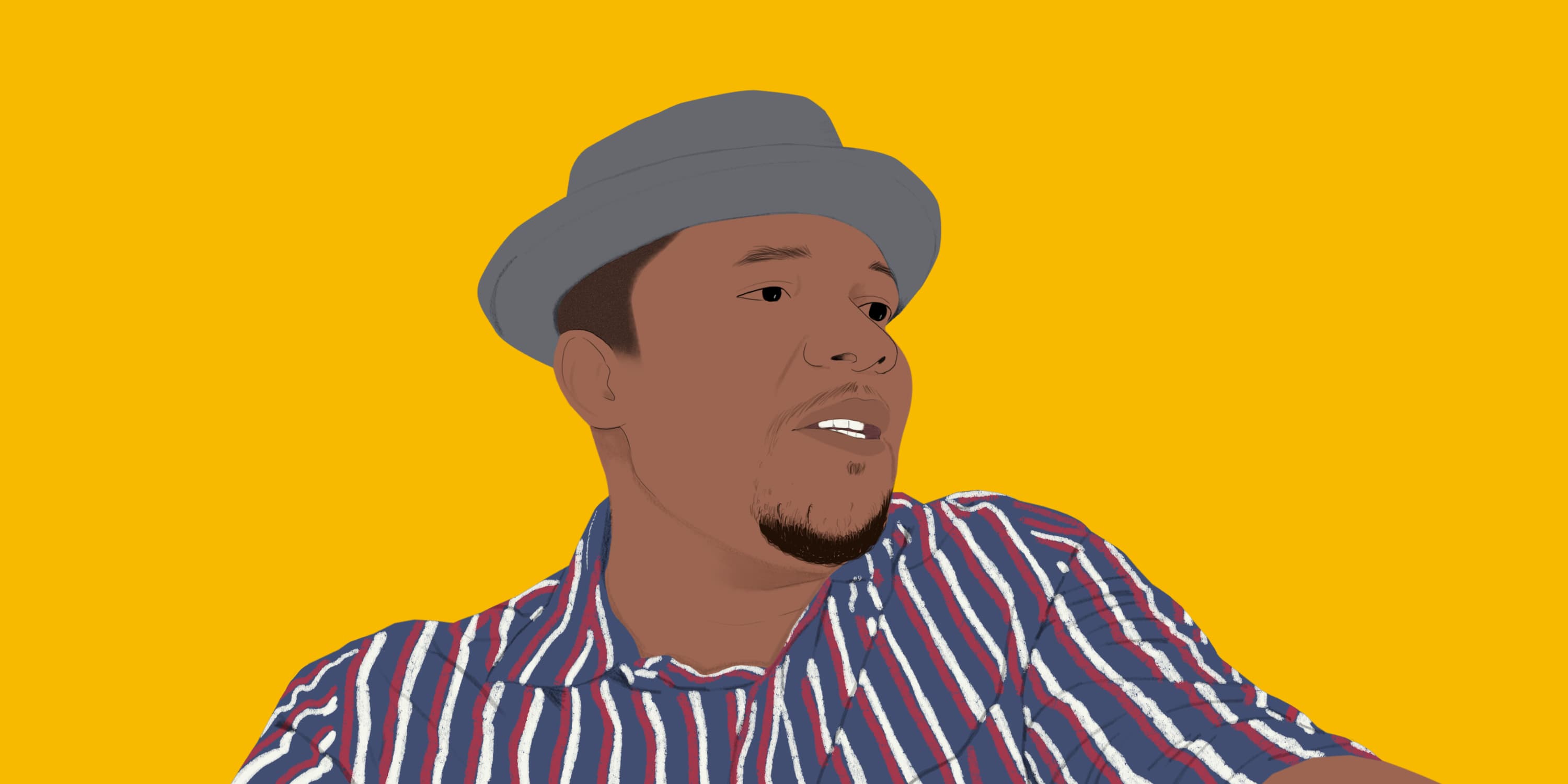
Moses Ochonu. OJIMA ABALAKA
Our questions are italicized.
What books or kinds of books did you read growing up?
I have always been drawn to adventure, broadly defined. I love reading about unconventional human experiences and about people who dare to step out of their states of comfort to explore other lands and cultures. Growing up, I read books about adventure, travel, cultural encounters, and fantasies. It didn’t matter if the stories were fiction or non-fiction. Such books availed me an opportunity to embark on my own mental adventures, to travel to other times and spaces. I was fascinated by stories of other places, peoples, and cultures. The familiar rarely appealed to me. It’s probably the reason I read a lot of novels in the Pacesetter fiction series. I cannot count the number I read, but I must have read close to 80 per cent of the titles. We used to exchange them in those days, and we would brag about how many we had read. I could not get enough of that series in my early teenage years. Later, as my reading palate became more discerning, I gravitated towards the novels in the African Writers Series—novels by Chinua Achebe, Ngũgĩ wa Thiong’o, and Flora Nwapa. I had a knack for memorizing lines from some of these works, lines I considered great accomplishments in rhetorical and linguistic creativity. I loved stories. The more removed from my own experience and from my time the story was the more it appealed to me.
As I grew up in multiple places and followed and lived with relatives around northern Nigeria, adventure stories approximated my own nomadism and transcultural life. I was not particularly fond of serious history books as a child, although I loved books on the coups and counter-coups, the civil war, and past Nigerian political crises. War memoirs and autobiographies captivated me. Some schoolmates would bring these books to our school and we would queue up to read them in turns. I also loved oral stories of the past because they made my mind wander and wonder about how plausible those stories were. These mental wanderings fed into the fecundity of my youthful imaginations. As they say, the past is a foreign country, so the foreignness of historical accounts satiated my appetite for the exotic, the different.
If you could rewrite a classic book/text, which would it be and why?
Chinua Achebe’s Things Fall Apart has always left me with a tinge of disappointment. The tragic end of Okonkwo raises more questions than it answers. For me, the end of the protagonist complicates the story more than it resolves it. Maybe this is why I am a historian and not a novelist. We historians value closure. We are like sleuths pursuing explanatory endpoints and truths, even if these are often elusive and subjective goals. For me resolution and conclusion in storytelling are important. I would definitely rewrite the conclusion of Things Fall Apart. Okonkwo’s central position as an anticolonial hero is ultimately undermined by, some might say sacrificed for, the need to portray colonization as an all-consuming machine of brutality and destruction.
What is the last book you disagreed with, and why?
I was an undergraduate in Bayero University, Kano, when I read Francis Fukuyama’s
The End of History and the Last Man. I had a visceral reaction to it. I disagreed with its overwrought premise of a neat dialectical progression in human ideological evolution. For me, this premise, rooted as it was in a rather mechanical adaptation of Hegelian dialectics, stood in contrast to the contingencies and instabilities of human evolution and behaviour, which have profound causal implications for the trajectory of humanity. Nor could I totally buy into the book’s hubristic ideological triumphalism. I thought at the time that Fukuyama’s victory lap on behalf of Western liberal democracy and its capitalist subsidiary was premature. Finally, the book’s central postulation of ‘the end of history,’ the very idea that there is an end to human ideological evolution and that that end had been reached with the global ascent of liberal democracy, sat uneasily with me. Some of that scepticism has intensified and been vindicated more than two decades since the book. For instance, the current troubled state of liberal democracy and the rise of authoritarianism in the West invalidate the triumphant finality of Fukuyama’s ahistorical argument.







Comments
Sign in to comment.