

Our new print issue, Africa’s Hustle Republics, is here! Subscribe for less than ₦1K/$1 a week for full access.
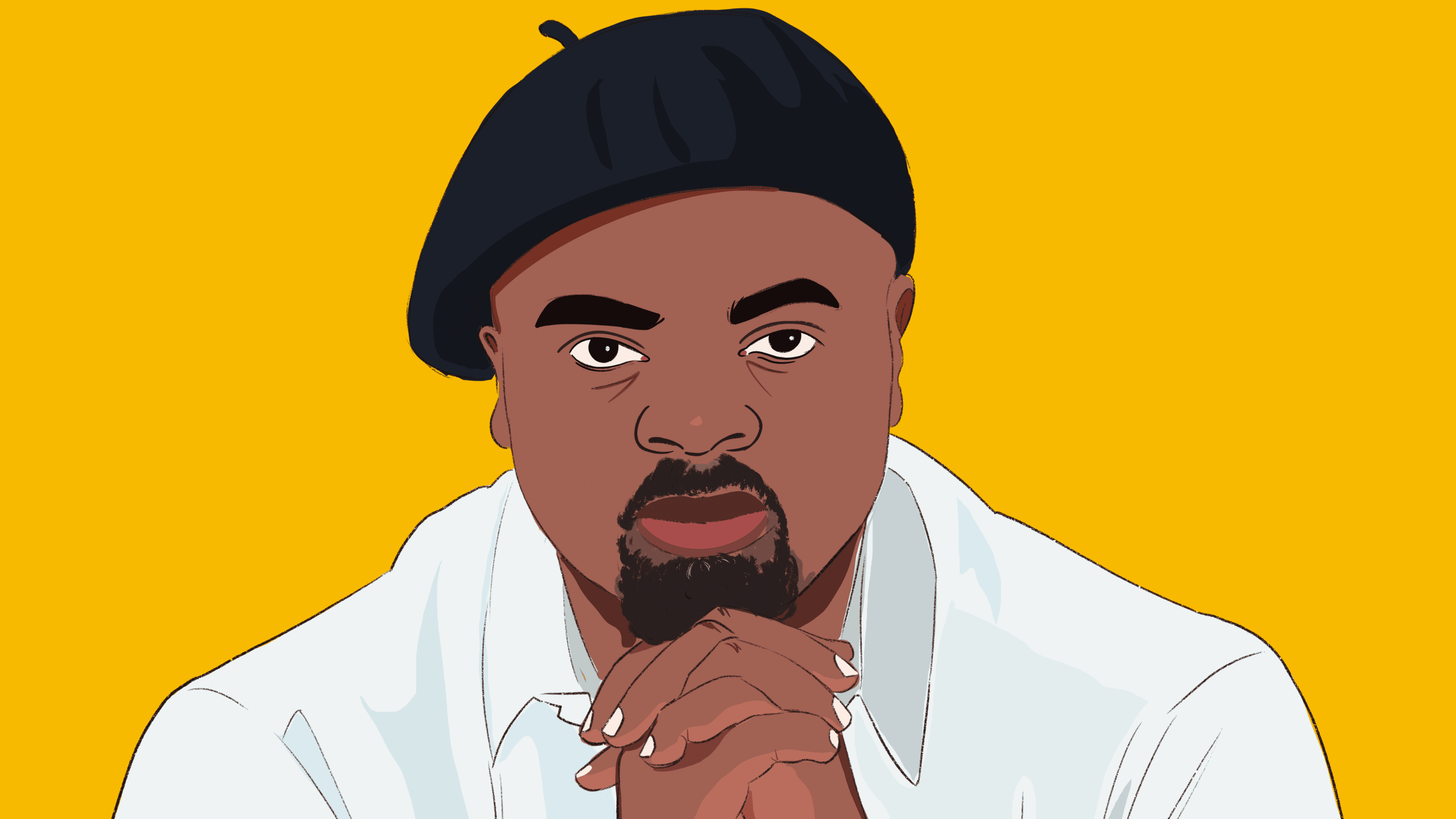
Nigerian poet, novelist and author of Madame Sosostris and the Festival for the Broken-Hearted, Ben Okri, argues that Nigerian literature doesn’t always have to be about Nigeria: ‘Nigerian literature limits itself to Nigeria and then limits even the ways in which the country can be written about. What we want is a vast literature, a great literature…that speaks to all humanity.’
First Draft is our interview column, featuring authors and other prominent figures on books, reading, and writing.
Our questions are italicized.
What books or kinds of books did you read growing up?
I read a lot as a child. I read my dad’s copy of the newspapers and stray magazines lying around. I read Charles and Mary Lamb’s Lamb’s Tales From Shakespeare, George Orwell’s Animal Farm, Cyprian Ekwensi’s The Passport of Mallam Ilia, Lewis Caroll’s Alice in Wonderland, Jules Verne’s Around the World in Eighty Days, H. G. Wells’s The Time Traveller, all manner of Onitsha Market literature, some Enid Blyton, Robert Louis Stevenson’s Treasure Island, Kalu Okpi’s The Smugglers, Samuel Taylor Coleridge’s The Rime of the Ancient Mariner and a great deal of poems and essays. This list is by no means representative. My main fascination as a child was reading books of mythology. I read them in a secret and personal way. This may have grown out of my love of comics as a child. But loss cut me off from that. Mythology took over. Then I read novels and poems, but always in a personal and secret way. Later, I journeyed, in a structured manner, through the literatures of the world.
What is the last book/text you disagreed with, and why?
I don’t disagree with texts. I learn from them or leave them alone.
What’s the last thing you read that changed your mind about something?
I have just finished a new biography of the German philosopher Friedrich Nietzsche, and I am a bit astounded to learn that the man who philosophized with a hammer was really writing out of the depths of the turbulence of his own inner life, out of his suffering and neglect. He universalized the insights of his life, yet his life was no more extraordinary in suffering or neglect than most of us. It was the power of the projection of his insights that made the difference.
The Republic is a Nigerian media-tech company dedicated to explaining our time—through deeply reported journalism on power, culture and society.
Focused consumption without interruptions.
Years of reporting at your fingertips.
Long-form journalism that matters.
This story features in our print issue, '100 Years of Ladi Kwali'.
Create a free account to continue reading this month and access more of our work.


Nigerian novelist, poet and author of Graceland, Chris Abani, does not believe ‘Nigerian literature’ exists as a category: ‘It is a common misconception that there is a fixed category that can be read as essentially “Nigerian literature”. Nigeria has 500 nations, 500 languages and about 2,000 dialects. While culture and language can overlap, the level of diversity is such that Nigerian literature cannot be easily narrowed down.’

For the co-founder and publishing director, of Cassava Republic Press, which marks its 20th anniversary this year, Bibi Bakare-Yusuf, it is telling that African literature is often pronounced dead in recent years, when more women and queer voices are becoming more prominent: ‘The loudest obituary writers about African literature tend to be men. These elegies seem to come from a tacit sense of personal or generational displacement rather than from the actual state of the field.’


Comments
Sign in to comment.