The already questionable Lagos State Judicial Panel raises more doubts. This summary was prepared by Elizabeth Akpan.
Following local and international
#EndSARS protests against police brutality in Nigeria, Lagos State
launched the Lagos State Judicial Panel of Inquiry and Restitution for Victims of SARS and Related Abuses in October. So far, the Judicial Panel is one of 28 such panels set up across Abuja and states in Nigeria. On Friday, the Lagos Judicial Panel held its second session. Most of the six-hour hearing was spent visiting locations that related to the Lekki Shootings of 20 October 2020.
Here are four key highlights from the hearing:
1. Bullet shells were found at the Lekki Toll Gate
The Judicial Panel spent most of Friday’s session visiting locations connected to the Lekki Shootings of 20 October 2020. One of such locations was the Lekki Tollgate. At the tollgate, the MD of the Lekki Concession Company (LCC), Abayomi Omoruwa, pointed out a camera set up on a mast. However, he highlighted, ‘there should be footage if the network works.’ Three bullet shells were also found at the tollgate.
2. LCC representatives never mentioned the Lekki Shootings
MD Omoruwa, and head of legal, Gbolahan Agboluaje, were the LCC representatives who met the Judicial Panel at the Lekki Toll Gate and they avoided mentioning the Lekki Shootings. Instead, they focused on discussing the properties destroyed. However, there was no mention of the value of properties destroyed.
3. The Judicial Panel adjourned the tollgate inquiry to Tuesday
The panel Chair, Justice Doris Okuwobi adjourned the inquiry into the event of October 20th at the tollgate to Tuesday, 03 November, at 11 a.m.
4. Soldiers delayed the Judicial Panel from entering a ‘crucial’ site
The Judicial Panel made an impromptu visit to the Military Hospital in Ikoyi after learning from an undisclosed source that the hospital may house information crucial to the investigation. Initially, when the Panel arrived at the hospital soldiers blocked them from entering the premises. However, 30 minutes later, after the soldiers consulted amongst themselves, they were allowed into the hospital. The Panel visited the morgue at the military hospital and learned the premises have not been used since October 2019. The Friday hearing ended at the hospital.
The already questionable Lagos State Judicial Panel raises more doubts.
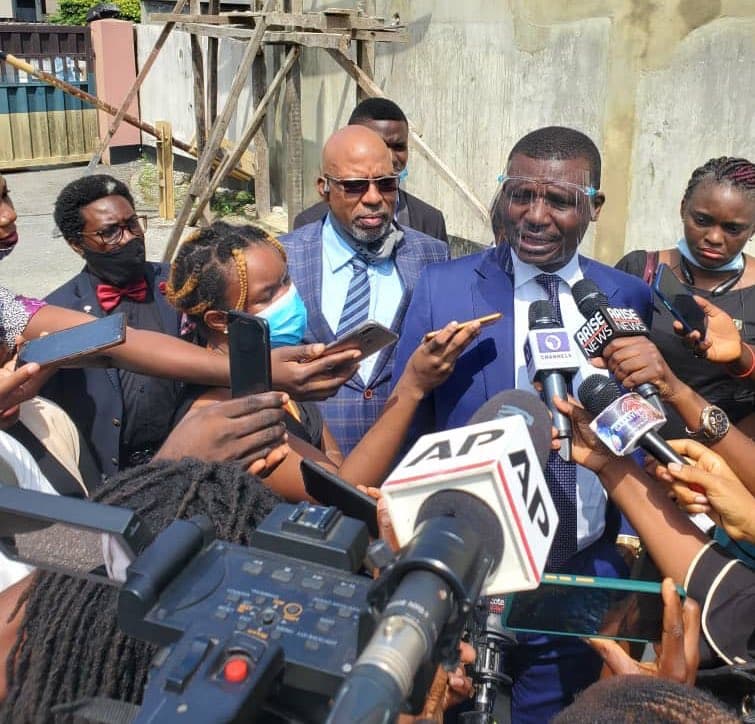
On Friday, 30 October 2020, the Lagos Arbitration Court in Lekki was filled with members of the press and general public waiting for the Judicial Panel to begin. The hearing was meant to start at 10 a.m., however, the Panel arrived almost an hour late to the hearing. This is not too surprising considering the Panel was also late to the first hearing on Tuesday, 27 October.
At 10:56 a.m., the Friday Panel began by swearing in LCC representatives, Omoruwa and Agboluaje. After the swearing in, the proceedings for the day began.
‘When we received the letter on Wednesday, we discovered that three things were required, which are the footage, the investigation report and any other document. We have the footage, we have not done the investigation report and we don’t have other documents,’ Gbolahan Agboluaje said. He mentioned that the LCC has footage of the night of the shooting and asked for time to get legal representation.
After consulting with the members of the panel, the Chair, Justice Doris Okuwobi, announced that the Panel would be visiting the Lekki Toll Gate. Nineteen minutes after they sat, the Panel left to inspect the toll gate. This inspection lasted until 12.11 p.m.
At the toll gate, the Omoruwa claimed that there was a camera up on a mast that should have important footage. However, he highlighted, ‘there should be footage if the network works.’ During the Lekki Shooting, there were reports of network outage in the Lekki area. While unconfirmed, such reports made it unlikely that the camera had any footage.
As the Panel and a team of observers surveyed the tollgate, emphasis of the LCC representatives remained on the properties destroyed. ‘This is the backend electronic support’ Omoruwa said, pointing to one of the properties destroyed. The function of the ‘backend electronic support’ remained unclear and Omoruwa did not reveal any information on the worth of the properties destroyed.
There was no mention of the Lekki shooting or what happened on the night of 20 October. The panel reconvened at 12.52 p.m. and continued the hearing.
In the words of Justice Doris, ‘I have said earlier that the terms of reference of this panel must be given its due regard. So, we are going to adjourn.’ At 12:59 p.m., the panel decided to adjourn the hearing till Tuesday, 03 November.
At 1:04 p.m., the panel rose to prepare for the second visit of the day—an unscheduled visit. The location of the visit was not disclosed at the time. Members of the public present at the hearing asked where the Panel was heading to and the Chair, Justice Doris Okuwobi (Rtd.) responded: ‘If you come, you will know when you get there.’
Just over an hour later, the Panel arrived at the Military hospital in Ikoyi. The Panel believed the hospital may house information crucial to the investigation. However, on arriving at the hospital, the Panel met soldiers who blocked the Panel from entering. According to an AriseTV reporter at the scene, an officer (by name of Mr. Haruna) said: ‘If the visitors do not leave, it will get very dirty.’ The gates were closed, and the officer made an announcement to the soldiers. Some minutes later, however, after the soldiers had discussed among themselves, the soldiers allowed the Panel into the hospital. While the hearing ended at the hospital, it was not clear what caused the delay, which added doubts to the integrity of the Panel’s already questionable investigative process⎈
By placing the burden of what justice should look like on traumatized victims, the Judicial Panel showed it suffers a major bias. This summary was prepared by Elizabeth Akpan.
The prominent faces of police brutality victims in the
#EndSARS protests are young people. However, at Saturday’s hearing, the victims who testified showed that police brutality in Nigeria also affects the elderly. The hearing ran for slightly more than four hours as two victims shared their experiences of police brutality with the panel.
Here are four key highlights from the hearing:
1. The Judicial Panel was late again
Like the first two sessions, members of the Lagos State Judicial Panel were late to the hearing. Today the Panel began at 11 a.m., one hour past the official start-time.






Comments
Sign in to comment.