

Our new print issue, Africa’s Hustle Republics, is here! Subscribe for less than ₦1K/$1 a week for full access.
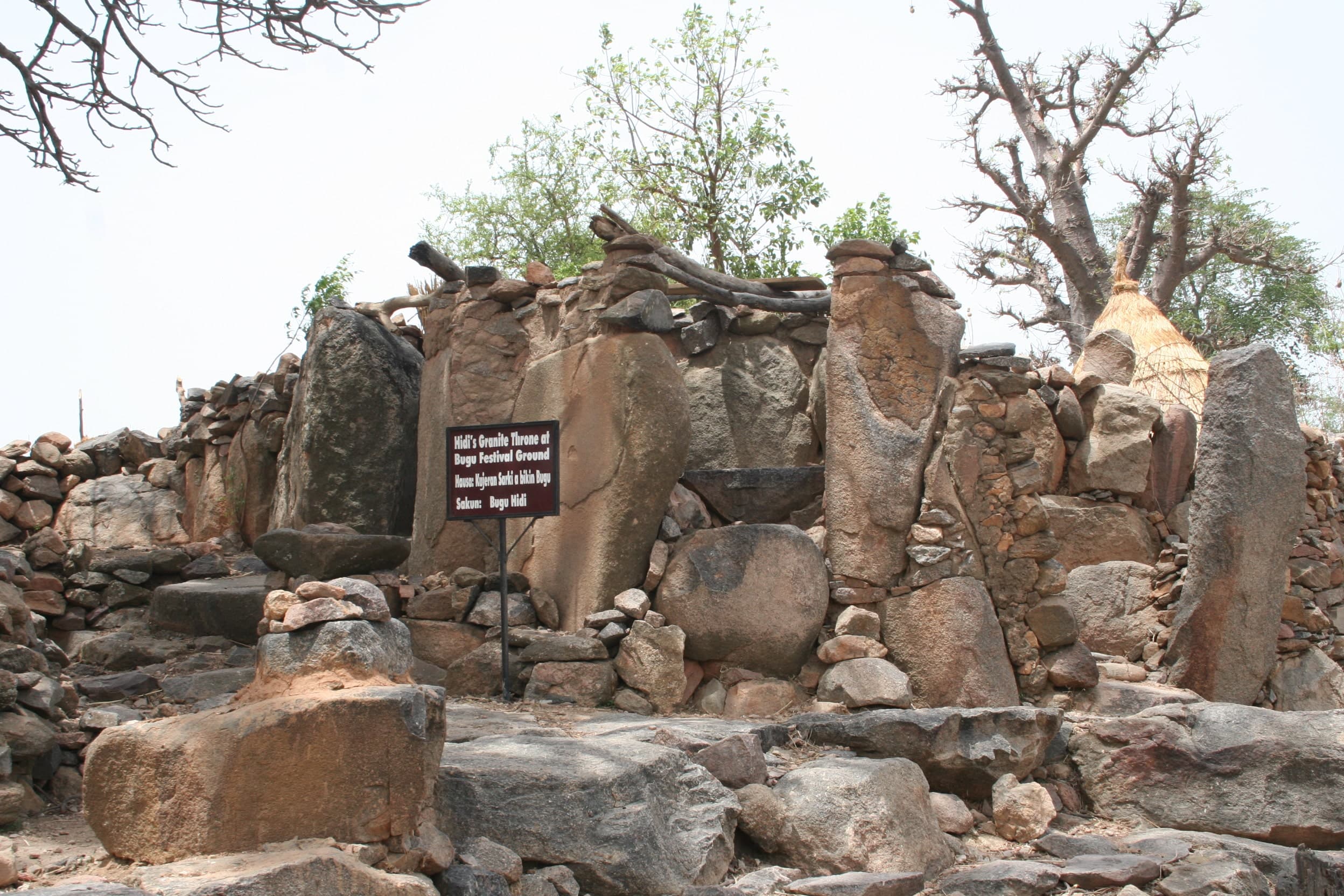
Despite its earlier listing ahead of the Sacred Grove at Osun-Osogbo, the Sukur Cultural Landscape is less known to most Nigerians.
Jun 18, 2021
Stone age iron smelting community of Sukur in Adamawa State, Northern Nigeria, now a UNESCO World Cultural Heritage Site. 2012. STEFAN CRAMER / WIKIMEDIA COMMONS
Hidden high up the Mandara Mountains bordering Nigeria and Cameroon, in Adamawa State, is one of Nigeria’s two designated UNESCO World Heritage Sites. The Sukur Cultural Landscape is a settlement whose existence dates back to Neolithic times and which has, for centuries, remained an independent kingdom and centre of iron production and distribution. This community of independent people lived and continued to depend on a terraced pattern of agricultural practice and extensive trading in iron ore. The people of Sukur came to monopolize iron production in the region owing to the availability of magnetite, an iron ore, and local wood for making charcoal. These resources gave the people a place of pride and dominance among other nearby kingdoms.

The Republic is a Nigerian media-tech company dedicated to explaining our time—through deeply reported journalism on power, culture and society.
Focused consumption without interruptions.
Years of reporting at your fingertips.
Long-form journalism that matters.
Create a free account to continue reading this month and access more of our work.
About the Author
studied history at Ahmadu Bello University, Zaria and is a governance, policy and culture enthusiast. He has written poetry for The Bolton Review and a cultural piece for BellaNaija highlighting aspects of his Bwatiye culture. He is currently a Bridge Fellow with the Nigerian Economic Summit Group.




Comments
Sign in to comment.