

Our new print issue, Africa’s Hustle Republics, is here! Subscribe for less than ₦1K/$1 a week for full access.
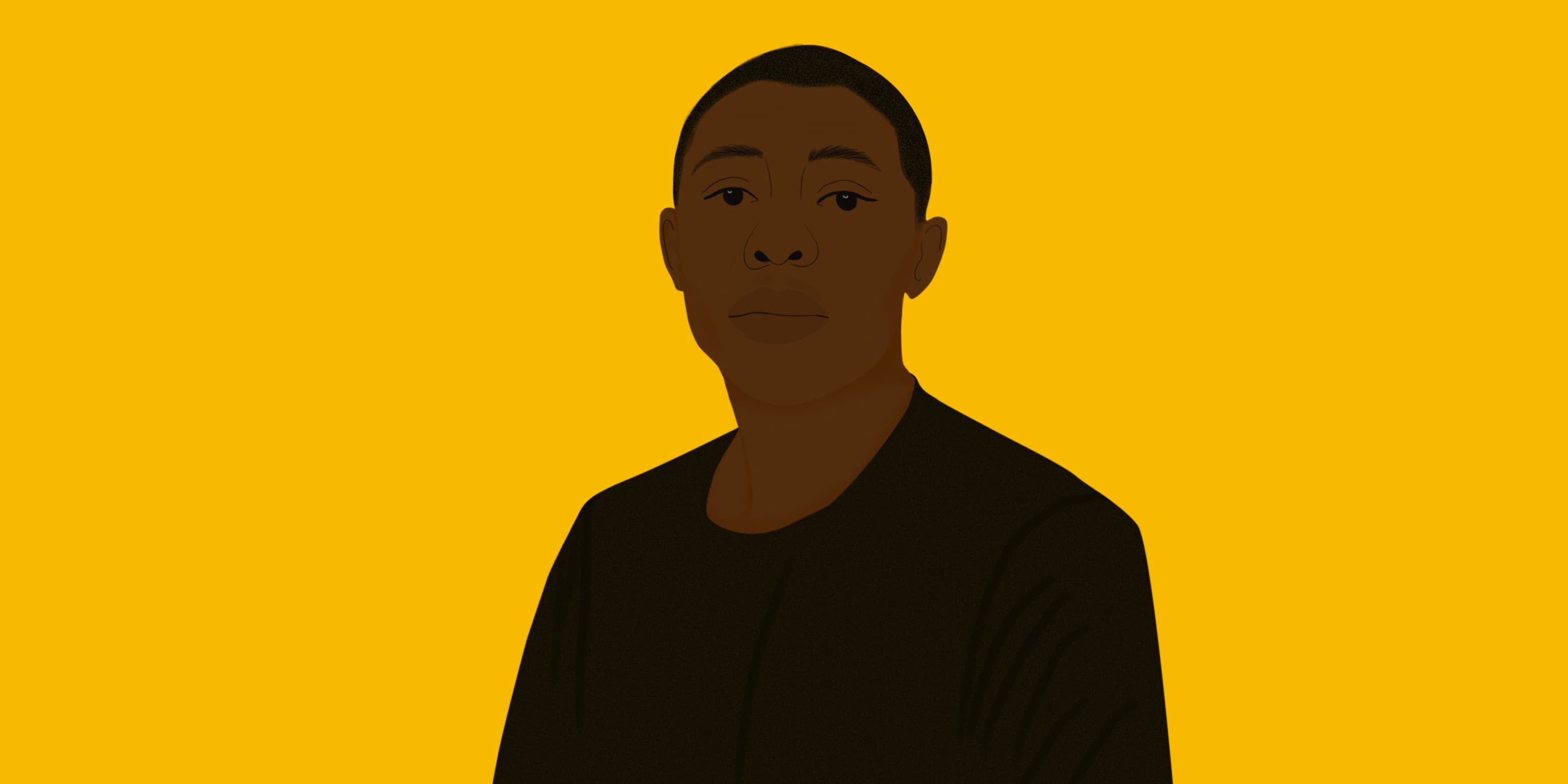
As a journalist, author of ‘Edo State’s Struggle for Meaning’, Ope Adetayo, often encounters misconceptions about Africa: ‘I read a lot of reports on the so-called Global South, especially “Africa”, and what we have come to glorify is bad news, tragic news.’
First Draft is our interview column, featuring authors and other prominent figures on books, reading, and writing.
Our questions are italicized.
What books or kinds of books did you read growing up?
To be honest, I did not grow up around books. I grew up in the streets of Mushin in Lagos, where books and reading are strange because people are only trying to survive violence and poverty. In secondary school, I was in science class throughout. I recently transitioned to the humanities in the university where I am currently studying English after making a rebellious academic detour caused by my fascination with language and its ability to process my imagination in a way nothing else can. The only book I retained the memory of reading as a child is I.E Ufondu’s The Fruit of Honesty. But in my teenagehood, I developed a habit of reading after coming in contact with Wole Soyinka’s Abiku, it was the first major literary piece I read and I was drawn into its vortex of meaning and mysticism. I then began to read African classics like Chinua Achebe’s Things Fall Apart and Arrow of God; Wole Soyinka’s Kongi’s Harvest, Death and the King’s Horseman, The Lion and the Jewel; Camara Laye’s African Child; Peter Abraham’s Mine Boy; Biyi Bandele’s Burma Boy; Buchi Emecheta’s Joys of Motherhood; Niyi Osundare’s Village Voices and Elechi Amadi’s The Concubine.
I grew up in the streets of Mushin in Lagos, where books and reading are strange because people are only trying to survive violence and poverty.
If you could rewrite a classic book/text, which would it be and why?
It is a no-brainer for me because the book still haunts me. That is Buchi Emecheta’s Joys of Motherhood. I would like to rewrite it because sometimes I think about Nnu Ego and what her fictional life is. In my mind, she is a fictional embodiment of the lives of many Nigerian women I have seen. Her suffering is palpable and I still feel for her. That is what classics have, the ability to be eternal. So, in my own version, Nnu Ego would get a happy ending, a sort of relief.
The Republic is a Nigerian media-tech company dedicated to explaining our time—through deeply reported journalism on power, culture and society.
Focused consumption without interruptions.
Years of reporting at your fingertips.
Long-form journalism that matters.
Create a free account to continue reading this month and access more of our work.
About the Author
is a Nigerian journalist and writer based in Lagos. His works, which have been published in English and French, have appeared in Al Jazeera, The Guardian, VICE, TRT World, African Arguments, Sahelien, The Republic, etc. He was longlisted for the One World Media Print Award 2021.



Nigerian novelist, poet and author of Graceland, Chris Abani, does not believe ‘Nigerian literature’ exists as a category: ‘It is a common misconception that there is a fixed category that can be read as essentially “Nigerian literature”. Nigeria has 500 nations, 500 languages and about 2,000 dialects. While culture and language can overlap, the level of diversity is such that Nigerian literature cannot be easily narrowed down.’

For the co-founder and publishing director, of Cassava Republic Press, which marks its 20th anniversary this year, Bibi Bakare-Yusuf, it is telling that African literature is often pronounced dead in recent years, when more women and queer voices are becoming more prominent: ‘The loudest obituary writers about African literature tend to be men. These elegies seem to come from a tacit sense of personal or generational displacement rather than from the actual state of the field.’

Nigerian poet, novelist and author of Madame Sosostris and the Festival for the Broken-Hearted, Ben Okri, argues that Nigerian literature doesn’t always have to be about Nigeria: ‘Nigerian literature limits itself to Nigeria and then limits even the ways in which the country can be written about. What we want is a vast literature, a great literature…that speaks to all humanity.’


Comments
Sign in to comment.