

Earn from the writing you have already published. List your work on Atlas today!
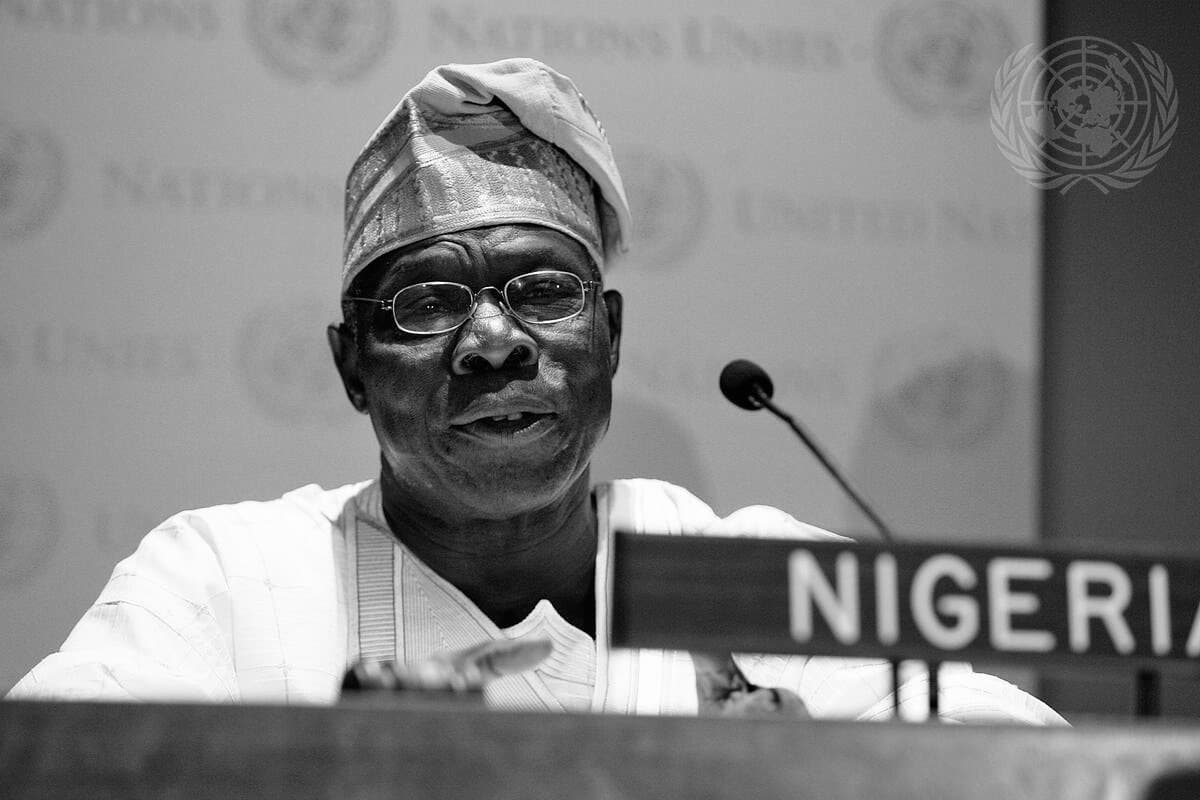
Obasanjo’s legacy as a civil soldier is difficult to summarize. Though he made several advances as Nigeria’s longest-serving civilian leader, he missed several opportunities to build institutions that would have helped entrench true civility and democracy within Nigeria.
Many will agree that no leader has been more influential to Nigeria’s socio-political trajectory than Olusegun Obasanjo. In 1979, he became the first African military head of state to hand power over to a democratically elected government, ushering in Nigeria’s second republic under President Shehu Shagari. Decades later, in 1999, with the country in political and economic turmoil following the sudden end of General Sani Abacha’s heavy-handed regime, Obasanjo became a civilian president. By the time he left office in 2007, Nigeria had been under Obasanjo’s leadership for more than one-quarter of its 47 years of independence.
Obasanjo is arguably the most prominent of Nigeria’s ‘civil soldiers’—ex-military men who, by virtue of the wealth, influence, and power they gained over decades of military rule, went on to occupy important political positions within democratic Nigeria. As Nigeria’s longest-serving leader, Obasanjo’s actions and policy decisions while in office had far-reaching consequences on Nigeria’s national psyche.
When Olusegun Okikiola Aremu Obasanjo enlisted in the Nigerian army in March 1958, he saw the army as an opportunity to obtain an education in civil engineering while earning a salary. He could not have imagined that less than ten years later, Nigeria would be at war with itself. In his book, My Command, Obasanjo details his exploits as General Officer Commanding of the Third Marine Commando Division, which played a crucial role in the eventual victory of the federal forces over secessionist Biafra. According to Obasanjo: ‘Within a space of six months, I turned a situation of low morale, desertion, and distrust within my division and within the Army, into one of high morale, confidence, co-operation for my division and for the Army.’
On 7 January 1970, the Third Marine Commando Division under Col. Obasanjo launched Operation Tailwind, which helped end the debilitating civil war. Within a few days, federal troops captured the provincial capital of Owerri, one of the last Biafran strongholds. The operation forced Biafran head of state, General Chukwuma Odumegwu Ojukwu, to flee to Côte d’Ivoire ‘in search of peace’ while his deputy, Major General Philip Effiong, along with other Biafran officers, officially declared their intention to surrender to Obasanjo’s troops and be reabsorbed into Nigeria. For the part he played in bringing the war to an end, Obasanjo was widely celebrated. His status as a war hero played a part in his appointment as chief of staff in 1975 within General Murtala Muhammed’s regime.

Focused consumption without interruptions.
Decades of reporting at your fingertips.
Long-form journalism that matters.
About the Author
is a writer, designer and creative strategist with a keen interest in Nigerian history. He is a pioneer candidate of the inaugural cohort of The School of Politics, Policy and Governance.




Comments
Sign in to comment.