

Our new print issue, Africa’s Hustle Republics, is here! Subscribe for less than ₦1K/$1 a week for full access.
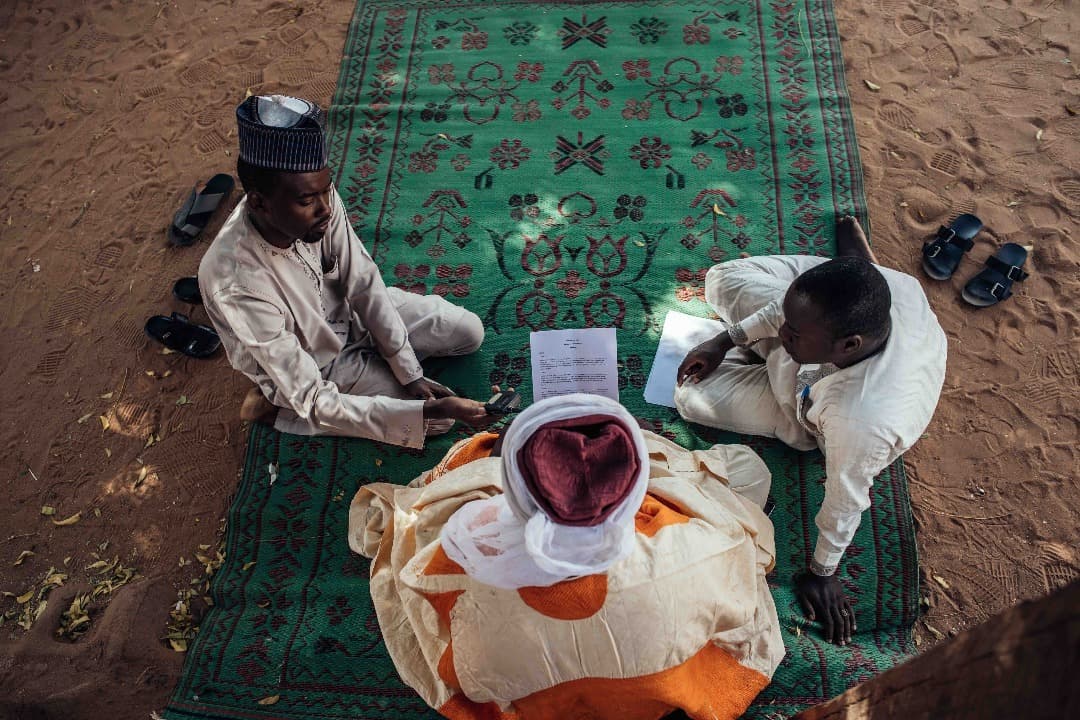
Due to Islamic regulations uniquely governing the lives of Muslims even in the public sphere, more non-Muslims need to understand and engage with Islam.
Notwithstanding what Muslim and non-Muslim intellectuals in Nigeria have in common (the most obvious being a shared national identity), the orientations of both groups are largely different. Whereas non-Muslim intellectuals look to Thomas Hobbes, W.E.B. Du Bois and John Rawls for foreign political theory, the latter additionally look to Abu Hamid Al-Ghazali, Ibn Taymiyya, Abd al-Rahman Ibn Khaldun, and Muhammad Al-Albani. Whereas the former look to Western Europe and the Americas for its foreign cultural and religious power and diplomatic relations, the latter additionally look to North Africa and the Middle East. Whereas the former attend Oxford, Harvard and McGill, the latter also look to centres of learning in Cairo, Medina, Istanbul and Khartoum.
Yet it can be argued that there is a major fault-line in Nigerian, and perhaps global, Christian-Muslim affairs. On one hand, there are continuous propositions by Muslim political and religious leaders to include Islam-related institutions and practices within the public sphere. On the other hand non-Muslim political, religious and intellectual leaders were integrated into a common nationhood with Muslims without adequately understanding the nature of these Islamic political, economic, legal and social institutional ideas.
Some of the consequences of this lack of adequate understanding are the systematic misuse of language (such as labeling terrorists jihadists); the misidentification of illiteracy (in ignoring the use of native languages written in Arabic script); the simplification of Islam (such as binary classifications like moderate and fundamentalist Islam); a neglect of the ‘Islamic form of permanent revolution’ (referring to the tendency for religious, political or violent dissent to emerge in the face of widespread injustice and oppression); and a neglect of Muslim redistributive ethos in framings of social democracy. There is, therefore, a case to be made for an ‘Islamic intellectual premium’—the increased pressure to understand Islamic political, economic, cultural, social and legal thought and dynamics faced by non-Muslims who are in close political involvement with Muslims.
The Republic is a Nigerian media-tech company dedicated to explaining our time—through deeply reported journalism on power, culture and society.
Focused consumption without interruptions.
Years of reporting at your fingertips.
Long-form journalism that matters.
Create a free account to continue reading this month and access more of our work.
About the Author
is the chief research officer at Clean Technology Hub and holds an MSc in Development Economics.




Comments
Sign in to comment.