

Our new print issue, Africa’s Hustle Republics, is here! Subscribe for less than ₦1K/$1 a week for full access.
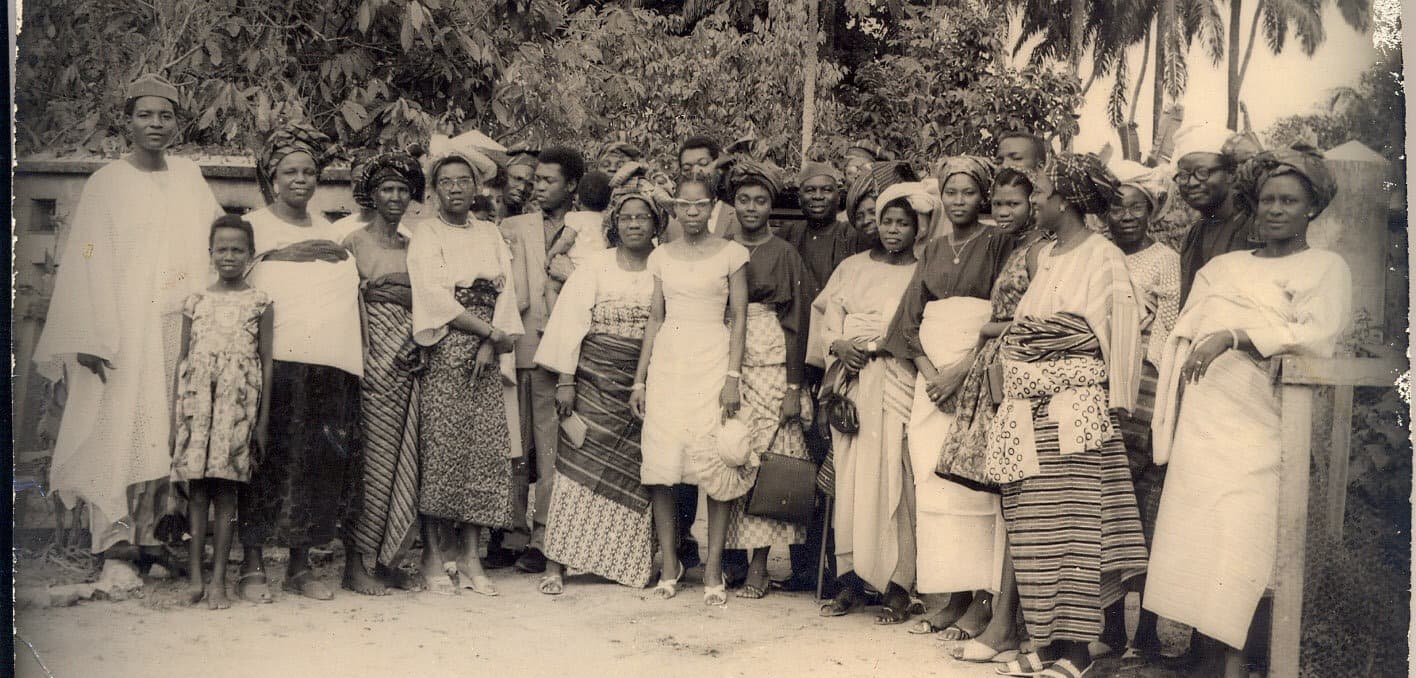
For much of history, Egba market women have been erroneously (re)presented as ‘barbaric’ and ‘disorganized’. Such women, however, were indelible forces of anti-colonial resistance. Their legacies invite us to deconstruct anti-colonial struggles—a restorative and equally revolutionary act.
Despite Nigerian women’s long history of resistance, their contribution to the anti-colonial struggle is often under acknowledged. A key movement in Nigeria’s history is the Egba Women’s Revolt, a revolt against the imposition of British colonial taxation on Egbaland. In 1916, Lord Lugard, the Governor-General of Nigeria urged the colonial office to impose direct taxation in Egbaland. Three years later, Sir Hugh Clifford imposed a tax that was justified on the basis that Nigeria was a British colony. Britain experienced food shortages in the First World War, and as a result the Colonial Office instructed their officials in southwestern Nigeria to seize foodstuffs, impose price controls and food quotas and increase tax for Britain to recover its economic losses. As the colonial treasury increased, Egba women continued to suffer as the draconian taxes reduced their incomes and impoverished their families.
Taxes were a violent and intrusive mechanism that the state used to control women’s lives, which further underdeveloped Egbaland. The viciousness embedded in Britain’s capitalist practices of extracting raw materials for its empire through free labour and the creation of the warrant system to increase profits was violent. In response to the violent tactics of the colonial machinery, representatives of the market women associations met with and expressed their grievances to the Alake of Egbaland. However, the taxation continued for 30 more years. After several years of economic hardship, Egba women employed other resistance strategies such as strikes and protests, demonstrating Frantz Fanon’s cry that revolutionary violence is an emancipatory tool from colonial violence.
Outraged by the state’s complicity in deteriorating their lives, Egba market women challenged the new political structure and economy by engaging in a politics of resistance and refusal. By refusing to pay taxes and striking, these women’s anti-colonial struggle, Judith Byfield argues, ‘broadened into a larger critique of relations of power under colonialism’.

The Republic is a Nigerian media-tech company dedicated to explaining our time—through deeply reported journalism on power, culture and society.
Focused consumption without interruptions.
Years of reporting at your fingertips.
Long-form journalism that matters.
Create a free account to continue reading this month and access more of our work.
About the Author
is a writer and PhD candidate in Literary Practice at the University of Warwick exploring the Egba Women's Revolt.


Comments
Sign in to comment.