Iread my first Buchi Emecheta novel, The Joys of Motherhood, when I was 12 years old. Life as the fourth of five daughters ensured that my understanding of the constraints society imposed on women’s lives was well developed—my ability to extract nuanced meaning from the written word less so. I absorbed the story of Nnu Ego, a Nigerian woman who would drape her body over broken glass to provide a softer path for her children’s fragile soles. This was how I remembered her, as symbolic of the lesson learned (‘Don’t be like Nnu Ego’), although I had no real understanding of which decisions had to be undone to alter her fate.
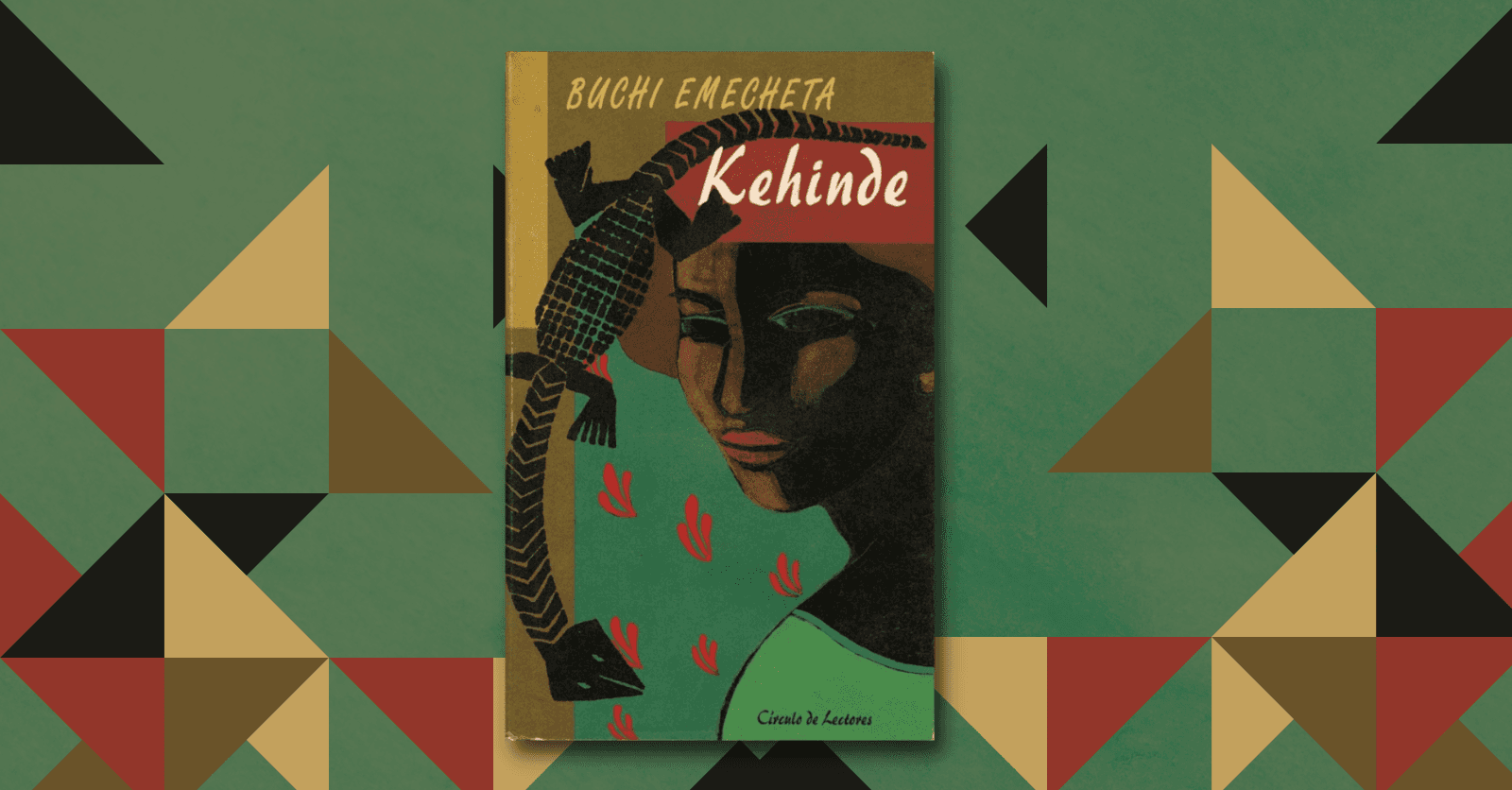
As an adult, I returned to Emecheta’s fiction, intent on immersing myself in the worlds she crafted. In works like her 1994 novel, Kehinde, Emecheta used brutal ‘documentary-style’ realism to showcase the plights of women in patriarchal societies, and often, the question that lay beneath was, what would our world be if women were freed from toxic gender roles? Still, initiation into motherhood, or the negative space of its absence, constitutes pivotal plot points in many Buchi Emecheta stories. Characters like Maria Ubakanma in A Kind of Marriage express longing for children, usually in response to societal pressure. Even so, reactions to conception, pregnancy, and birth vary within Emecheta’s large oeuvre. While Umeadi in The Slave Girl excitedly embraces and finds personal fulfilment in the nurturing mother role, Double Yoke’s Nko, after discovering that she is expecting her lecherous professor’s child, accepts this unplanned initiation with resigned commitment to her new responsibilities. These women, with their complete devotion to the ‘mother’ role, form the background against which Emecheta’s two fully depicted fictional abortions stand distinct.
ABORTION IN THE RAPE OF SHAVI AND KEHINDE
In The Rape of Shavi, Ista’s abortion announcement is abrupt but unsurprising. The image constructed of this European (the only character introduced with her professional title, Dr.), is that of an accomplished modern Western woman whose career is the foundation upon which her identity is built. After her group is airship-wrecked in Shavi, the Shavians marry her to one of her companions, John Mendoza. Ista settles into the domestic comforts of her new life, discovers passions ‘of a depth she had never imagined’, and falls pregnant. The new couple’s return to Europe reminds Ista of her distaste for John’s domineering ways, and she decides that keeping the baby is not worth a lifelong attachment to him.
Ista’s story does not end here, in this perfect profile of the late-twentieth-century emancipated Western woman archetype. Emecheta returns to Ista’s perspective in an eponymously titled chapter, separate from the central narrative of the novel, in which Ista wades through her regrets and guilt. Ista questions her decision to abort, her early thoughts about her ability to parent, and her motivation to continue helping other women birth children if it entails forever confronting her own foreclosed paths. Communal life in Shavi and Ista’s abortion shatter her self-perception. Most striking is the question she poses at the end of the chapter, superficially rooted in concerns about the consequences of bringing Western modernity to Shavi: ‘…so that they can repeat our mistakes?’. The reader is left wondering whether the abandonment of the traditional roles of women within the family and community is the central folly of which she speaks.
A man is just as central to Kehinde’s abortion. In Kehinde, a Nigerian immigrant in Britain aborts a fetus after coercion from her husband, Albert. At the beginning of the novel, the eponymous Kehinde could not be more different from Ista. Although she has a better-paying, more prestigious job than Albert does, she performs the role of the obedient, submissive wife. She believes her marriage is equal, relative to her sister’s polygamous Lagos family, but interactions between her and Albert, where she diminishes herself to soothe his ego, prove the falseness of her claims. Albert wants Kehinde to earn a promotion and continue working to fund his move back to Lagos, so he tells her that, for their family’s sake, she must get an abortion. She does. The regret is immediate, unambiguous. Kehinde dreams of her father, whose attempt at reincarnation, she believes, has been thwarted by this medical intervention. She also thinks about her chi, the guiding spirit that was her twin, Taiwo, who died in the womb they shared. Taiwo reminds her of their mother’s final sacrifice, the decision to birth Kehinde at the cost of her own life. Kehinde stews in her guilt, without comfort from her physically close but mentally distant husband...







Comments
Sign in to comment.