

Our new print issue, Africa’s Hustle Republics, is here! Subscribe for less than ₦1K/$1 a week for full access.
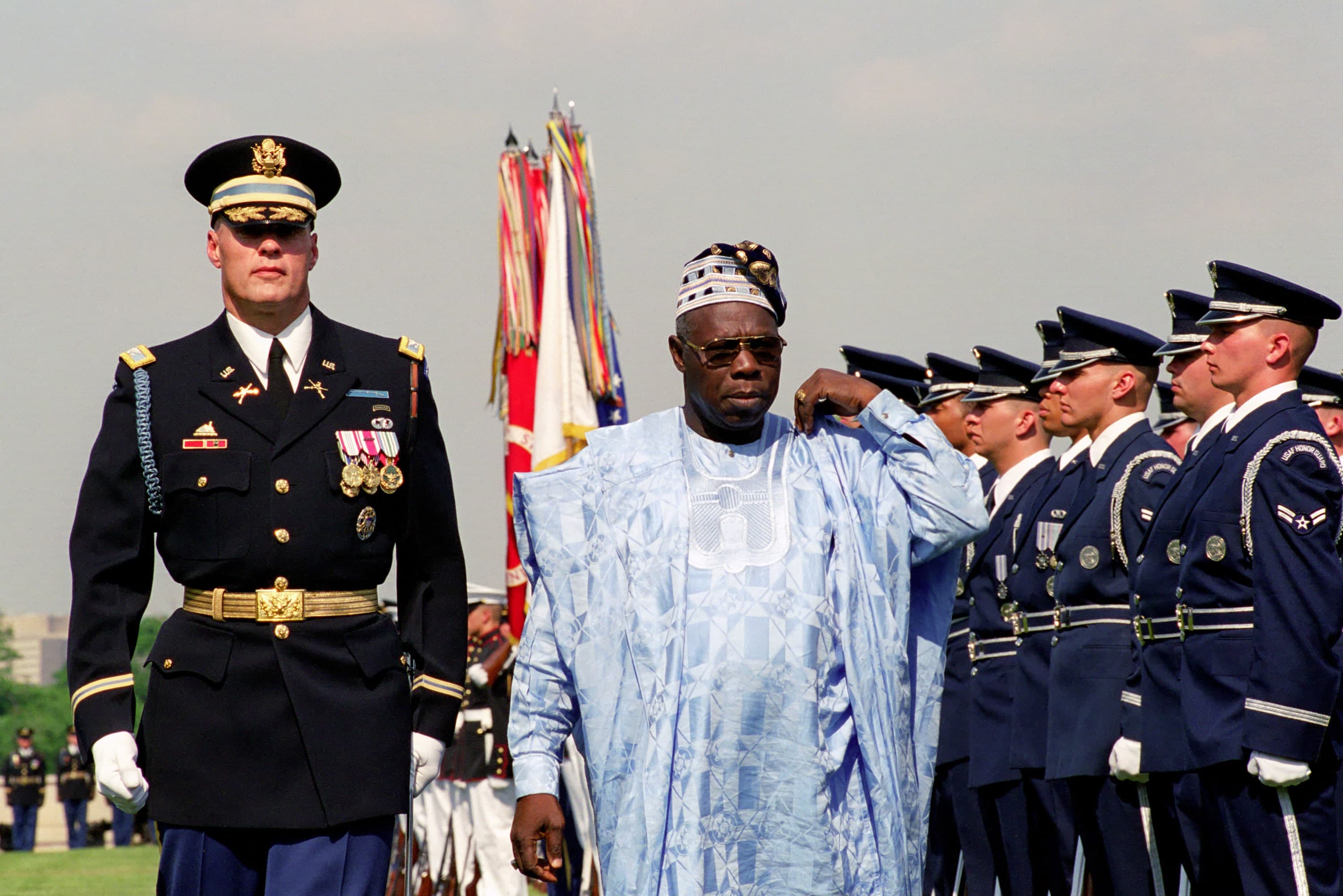
Olusegun Obasanjo’s foreign policy successes did not always translate domestically. It appears the Obasanjo administration sometimes sacrificed domestic stability for improved foreign relations.
Olusegun Obasanjo is one of the most polarizing personalities in Nigeria’s history. To some, he remains the gold standard against which his successors in the Fourth Republic (1999-present) are judged and found wanting. Many others argue that his poor institutional management, domestic policy and attempts to maintain influence post-presidency have greatly damaged his image.
Yet, one area that deserves to be studied is his work on Nigeria’s foreign policy. Obasanjo’s foreign policy approach was neither novel nor original—Nigeria’s size and population demand that the country aspires to the role of a regional hegemon. This role has often come with the added responsibility of exercising significant influence in the West African region and on the continent to support pan-African independence movements and oppose undue external influence on the continent.
Nigeria’s ambition to lead the continent has been outlined by past heads of state and presidents. Yet, more so than any other head of state, Obasanjo was able to deliver on a strategy aimed at achieving this aim. Borrowing from a term often used to espouse the policy framework of an administration, the ‘Obasanjo Doctrine’ remains a necessary body of work to study for any subsequent administration seeking to deliver on the promise of maintaining Nigeria’s status as a regional hegemon.

The Republic is a Nigerian media-tech company dedicated to explaining our time—through deeply reported journalism on power, culture and society.
Focused consumption without interruptions.
Years of reporting at your fingertips.
Long-form journalism that matters.
Create a free account to continue reading this month and access more of our work.
About the Author
is a research analyst and a writer on the politics of policy, institutions, and governance.




Comments
Sign in to comment.