The Bittersweet Aftertaste of Victory | The Republic
The Bittersweet Aftertaste of Victory
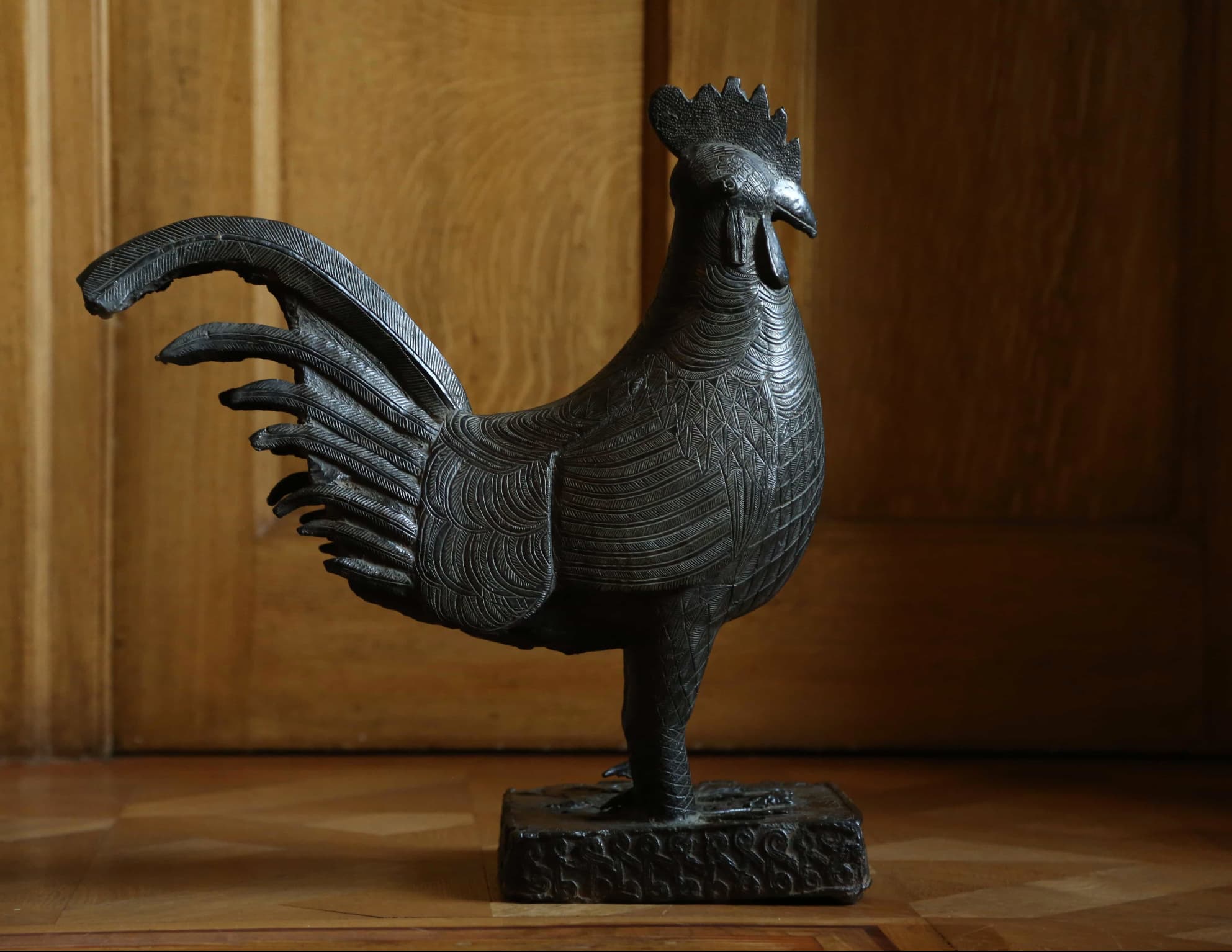
Six years after a group of Cambridge students first demanded that the Benin Bronze cockerel, ‘Okukor’, be returned to the Benin Kingdom, the university returned the cockerel. For some of those activists, including this author, the return means victory but also worry.
Editor’s note: This essay is available in our print issue, A New Chapter for African Artefacts?. Buy the issue here.
In November 2015, when Amatey Doku and I first discussed the repatriation of the colonial loot that sat in our college dining hall, I don’t think we had any idea what we were getting into. But six years on from when we first presented our case, in October 2021, the Benin Bronze cockerel (or ‘Okukor’), finally went home. This is a story of the emotional toll of going up against an 800-year-old institution: the University of Cambridge.
FIRST CAME FEAR
Our newly formed campaign group didn’t really get along initially. But deep down, we knew each other’s combined contributions as classicists, social scientists and young African art aficionados were essential for us to make a good case. As part of our digging, we invited a man called Mark Walker to dinner in the same dining hall where the cockerel sat. His grandfather, Captain Herbert Walker, was a British soldier who was part of the 1897 punitive expedition to Benin and he had done extensive research into his grandfather’s loot, some of which he had already repatriated to the Benin Palace. The college got wind of his arrival and hastily took down the cockerel. I never saw it again before I left the university. First, we laughed at the extent of their overreaction but, for the first time, it dawned on me that this was a huge deal. And I was terrified.
Ore Ogunbiyi. Paula Abu / @narcography
We were seeking a student mandate to ask the college to remove and repatriate the cockerel. Days of in-fighting over the wording of the proposal culminated in an explosive student meeting—so explosive that I cried. It wasn’t a good look, but the very public squabbling forced some necessary refining to the proposal and our broader plan. The more radical part of the group showed up dressed as Black Panthers, arguing that the case we made for repatriating the cockerel must be purely moral. They were right, but I and others sought to appeal to the college a bit more pragmatically and show that a repatriation would be in the college’s material interests, too. The wiser me can now see how much of that decision was shrouded in fear: fear that we might be asking for too much, fear that the college authorities would see this as an attack, fear that unless we pander, we would be jeopardizing our futures at the college.
NEXT CAME FRUSTRATION
That we anticipated the college’s defensiveness made it no less jarring. In a meeting with the college council’s Ethical Affairs Committee, we sat across from a table of white senior staff and explained, politely of course, that a stolen car is no less stolen because you think you can look after it better than the car’s original owner. It is an argument that has been made repeatedly by Benin royals, and that we would be forced to repeat over the next few years, too. ‘But how will they look after it?’ one committee member asked. We had well-developed responses to all their questions but were never given straight answers in return. It was always too complex apparently, but to us it seemed rather simple: give it back.
In a move many would consider cowardly, the college handed off the decision to the university. (The University of Cambridge has a collegiate structure, so colleges like Jesus are effectively semi-autonomous subsidiaries, in charge of their own property, even though they fall under the umbrella of the university.) Our proposal was deliberately targeted at Jesus College specifically because we knew that they legally owned the cockerel, meaning that they could make an independent decision on its future. Over the next few years, we were met with the full force of the University of Cambridge’s bureaucratic heft, the kind that we suspected they hoped would exhaust us into backing down. We had meetings with pro vice chancellors, often without any clear purpose, and university museum staff, too. We would make the same, simple case again and again. We were effectively told in many words that Cambridge was not prepared to step out and set a precedent, even if it was the right one. The university hoped to tire us out, as they are well-positioned to do because students are only there for a few years. Put simply, it appeared that they didn’t care.
THEN, FATIGUE
Our team dwindled as people graduated or eventually got bored of repeating themselves. I focused my time on my degree and other initiatives and it is fair to say that I gave up. People who had seen news clippings at the height of the campaign would ask me how it was going and emptily I would say things like ‘well, we tried.’ Amatey was the first to tell me about the cockerel and to involve me in this fight. He also became the last man standing, maintaining relations with the college and keeping abreast of updates, no matter how small.
I don’t know that the cockerel would have ever been repatriated if not for the academics who carried on the baton after we left. When we grew tired, they didn’t, and we are all indebted to them. Dr. Veronique Mottier, a sociology professor who was once my tutor at Jesus, was investigating the college’s links with slavery and colonialism alongside several others in a group called the Legacies of Slavery Working Party. They did an immense amount of research and inevitably had much more experience working within the boundaries of the institution than we did. There had also been a change of hands by 2022—Jesus College now had a Black master, Sonita Alleyne, a first for Cambridge. Finally, the issue of the cockerel’s repatriation seemed to have moved up the agenda.
Okukor, Benin Bronze Cockerel. National Museum, Benin City, Nigeria. Digital Benin.org
IS THAT IT?
Three years after I had graduated, when I saw the announcement, in an email to alumni, that the cockerel was finally being repatriated, I was in shock. One of the earliest campaigners, Nadine Bachelor-Hunt, tweeted ‘I feel so emotional, the okukor is finally going home… Justice! British Museum – you’re up next!’. I had long stopped believing that it would happen anytime soon. Elation came next. Amatey had always felt optimistic that one day he would see the Jesus College Benin Bronze returned, but he didn’t think it would happen so soon after graduating...
You’ve Reached Your Limit of Free Reading.
The Republic is a Nigerian media-tech company dedicated to explaining our time—through deeply reported journalism on power, culture and society.









Comments
Sign in to comment.