‘My Favourite Books Are Those That Tackle Powerful Subjects With Elegant Prose’
Nigerian writer and author of ‘Identity Formation in Buchi Emecheta’s Kehinde’ Ijedike Jeboma, decided to read all of Emecheta’s works and noticed a shift in her 1994 novel, Kehinde: ‘Emecheta’s legacy is often discussed in terms of the womanism-feminism divide, and I thought Kehinde marked a shift in her oeuvre that I hadn’t seen much commentary about, so I wrote it myself.’
By Ijedike Jeboma
October 1, 2023
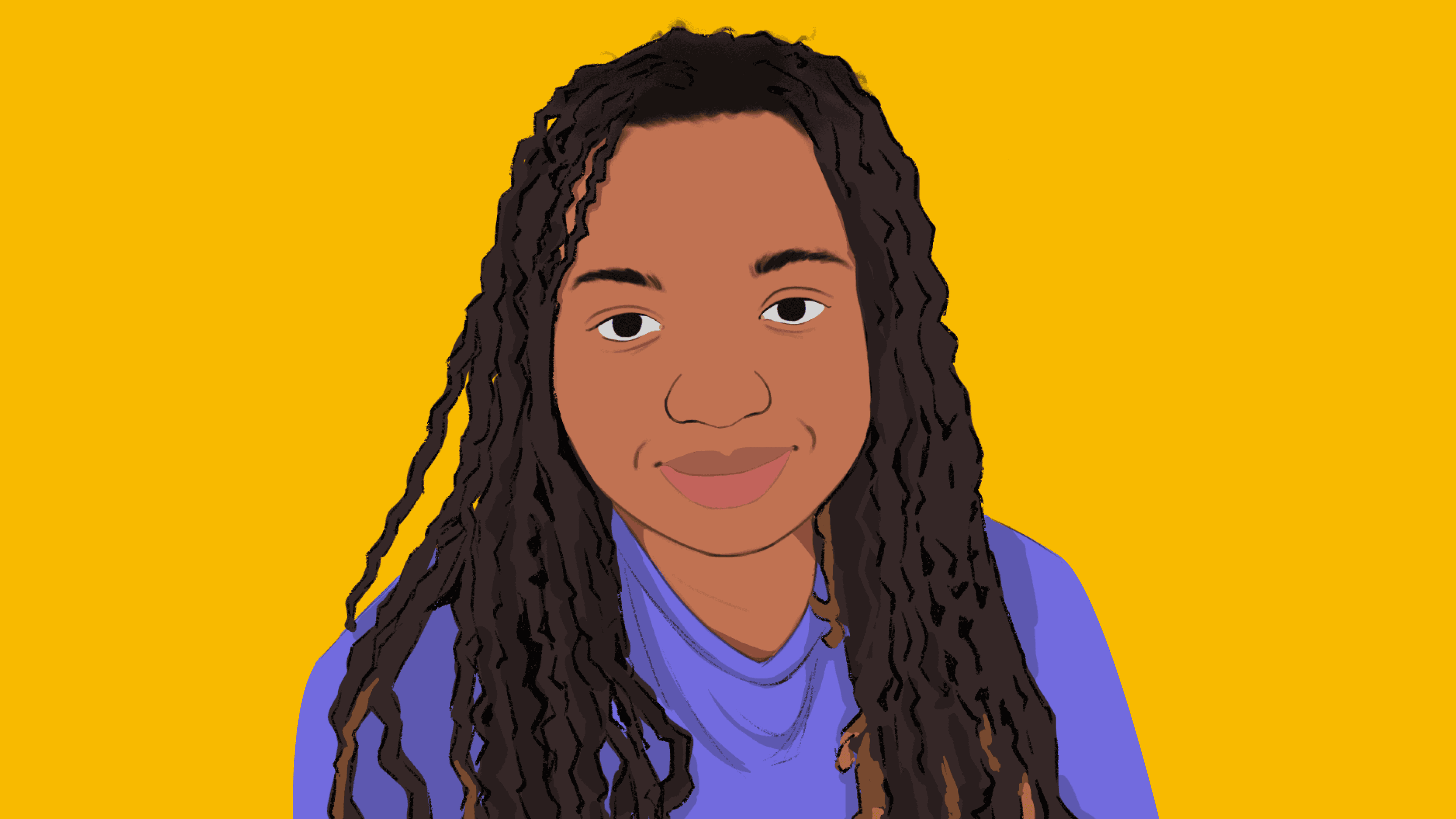
Photo Illustration by Kevwe Ogini / THE REPUBLIC.
First Draft is our interview column, featuring authors and other prominent figures on books, reading, and writing.
Our questions are italicized.
What books or kinds of books did you read growing up?
I read every book I could get my hands on while growing up. Members of my nuclear family were avid readers, so I grew up in the kind of home that had shelves full of neatly organized books and numerous
Ghana-must-go bags of all the other books stuffed into spaces above wardrobes. As a child/pre-teen, I basically read every book in the house that older family members had bought, borrowed, or misappropriated. There was my father’s literary fiction, politics, and history books of which my favourites were Ben Okri’s
The Famished Road and the published collection of
Drum Magazine Nigeria articles from pre-independence to after the Biafran war.
My mother’s books were more religious and/or self-help books:
7 Habits of Highly Effective People by Stephen Covey,
4 Hour Interviews in Hell by Yemi Bankole, and so much more. My older siblings were into horror, thrillers, Christian fiction, and commercial romance, so there was a lot of Stephen King, Anne Rice, Ted Dekker, Francine Rivers, Danielle Steele, and literally a million Harlequin and Mills & Boon novels during that period.
Of course, there was a lot of Nigerian literature both at home and at school. I read a lot of Cyprian Ekwensi, Chinua Achebe, and Buchi Emecheta. Some of my favourite novels at the time were Festus Iyayi’s
Violence, Gracy Osifo’s
Dizzy Angel, Chukwuemeka Ike’s
The Bottled Leopard, and Onuora Nzekwu and Michael Crowder’s
Eze Goes to College.
f your life so far was a series of texts, which text (fiction or non-fiction) represents you at this moment?
Maybe
Lucky Jim by Kingsley Amis? There have been a good number of fortuitous events and work in the past, possibly in my flop era, but I cannot claim that current events aren’t hilarious.
What’s the last thing you read and disagreed with?
Do tweets count? I’ve been reading a lot of fiction and biography, and those can be a bit difficult to properly disagree with.
What’s the last thing you read that changed your mind about something?
The last book that changed my mind about something is Phillips Barnaby’s
Another Man’s War. It is a book about a Nigerian soldier’s (Isaac Fadoyebo) experience in World War II. The book corrected my assumption that all the Nigerians at Burma were conscripted involuntarily. I don’t even know where that assumption came from; I think I read Nnaife’s story in Buchi Emecheta’s
The Joys of Motherhood and just ran with it. I recommend Barnaby’s book very highly!
What makes a text powerful: the subject or how it’s written?
Both. There are many beautifully written books about nothing, and many poorly crafted books with fascinating premises. They all have their functions, and I have enjoyed reading books in both categories. Still, my favourite books are those that tackle powerful subjects with elegant, lyrical prose.
What is your writing process: edit as you write or draft first, then edit?
Could be either option, depending on the circumstances. I like to get out an unserious partial draft on paper, revise/edit that section several times, then type it up and repeat with the next section until the whole piece is done. For obvious reasons, that’s not a feasible method for most of my writing projects.
“The last book that changed my mind about something is Phillips Barnaby’s
Another Man’s War. It is a book about a Nigerian soldier’s (Isaac Fadoyebo) experience in World War II.
I like self-assigned reading projects. When I saw that
The Republic was planning a
Buchi Emecheta issue, I decided to become an Emecheta completist (read everything she ever published). I tried to read her fiction in publication order, and when I finished reading
Kehinde, I knew I wanted to write about it. Emecheta’s legacy is often discussed in terms of the womanism-feminism divide, and I thought Kehinde marked a shift in her oeuvre that I hadn’t seen much commentary about, so I wrote it myself.
This was also related to a recent reading project on the global war novel. I had a lot of opinions about how first and second-generation war novel perspectives differ and turned to Emecheta, who was uniquely positioned somewhere in the middle of that binary.
What is the most meaningful piece of writing advice you’ve ever received?
I don’t remember where I read this, but it’s a statement about humour being the honey that helps truth go down in fiction.
What book did you read before starting graduate school?
I didn’t read any books with the express purpose of preparing for graduate school; I like to keep my ‘professional’ and leisure reading separate. If I had to pick one book that made me excited about what graduate study could be, it would be
The Autobiography of a Transgender Scientist by Ben Barres. I don’t think I’ve ever read a narrative of graduate school written by anyone who loved the experience more than he did.
What’s one book everyone should read before leaving university?
I think this book is different for everyone. For me, it was
Silencing the Past by Michel-Rolph Trouillot. I read it in my final year of university, and it forced a shift in my thinking. I hadn’t realized how malleable history could be, and that book gave me permission to fully immerse myself in various epochs and pull out what I found interesting or important.
I like self-assigned reading projects. When I saw that
The Republic was planning a
Buchi Emecheta issue, I decided to become an Emecheta completist (read everything she ever published). I tried to read her fiction in publication order, and when I finished reading
Kehinde, I knew I wanted to write about it. Emecheta’s legacy is often discussed in terms of the womanism-feminism divide, and I thought Kehinde marked a shift in her oeuvre that I hadn’t seen much commentary about, so I wrote it myself.





Comments
Sign in to comment.