

Earn from the writing you have already published. List your work on Atlas today!
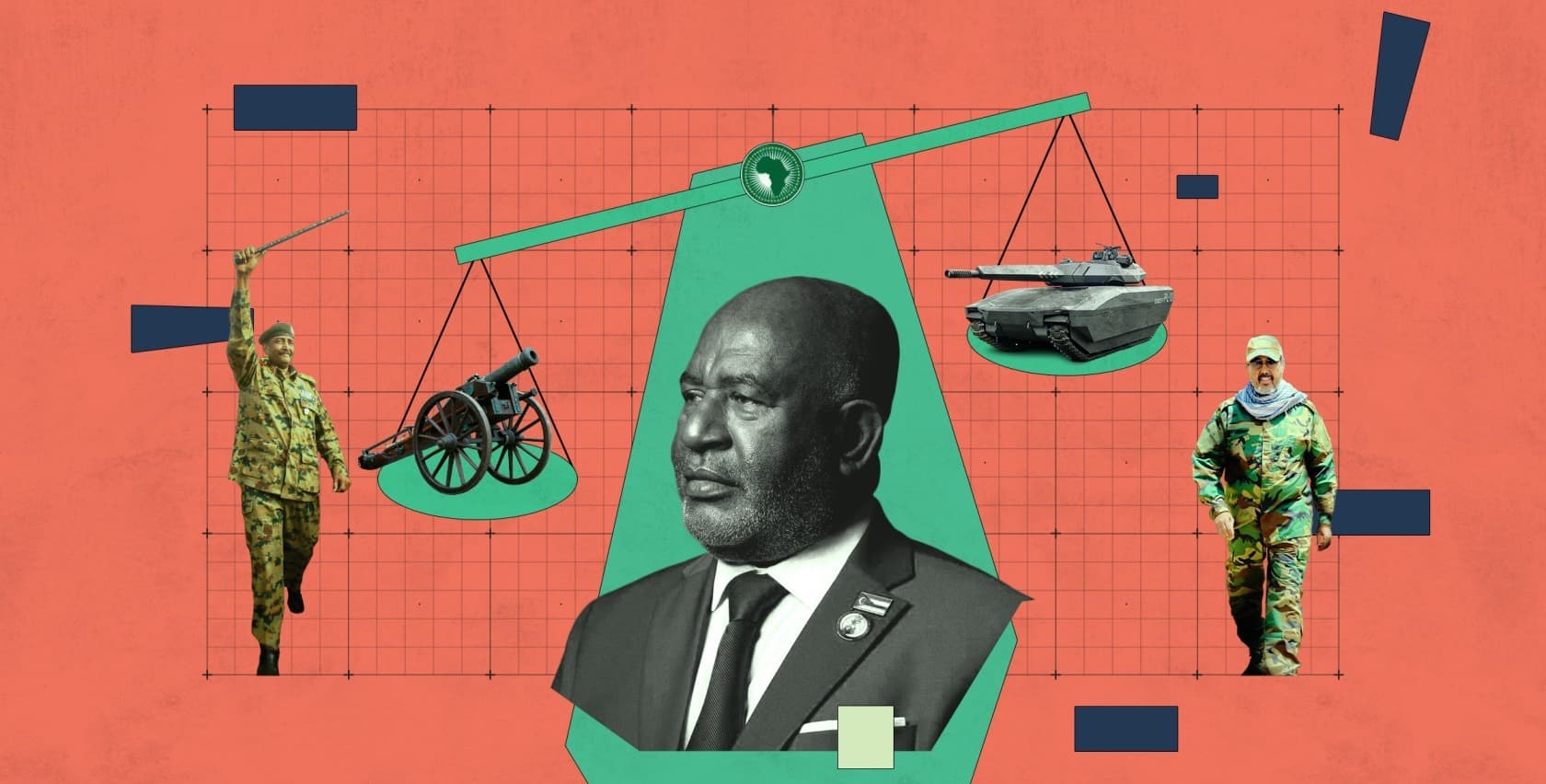
The transformation from the OAU to the AU meant accepting that the challenges Africa faced had changed from those faced during the decolonization era. Among the new challenges, the most perverse were internal wars. The AU attempted to invest heavily in mechanisms that would ‘silence the guns’ on the continent. However, it seems that silencing the guns has remained an elusive dream.
The formation of the African Union (AU) in 2001 was meant to deal with new socio-economic and security realities that were not envisaged at the creation of the Organization of African Unity (OAU) in 1963. Chief among these was the challenge of settling internal crises in member countries and developing the regional governance ability to stop civil wars. The horror of 1994 in Rwanda where the OAU could only watch whilst close to one million people were mass murdered by Hutu extremists in a civil war driven by tribal hatred, as well as other cases of internal armed conflict in Sudan and around the Great Lakes Region indicated that the modus operandi had to change. It was the principle of non-interference, enshrined in the founding Charter of the OAU that proved an albatross in dealing with armed conflicts within countries. Thus, the formation of the AU in 2001 marked a transition from the principle of non-interference towards the principle of non-indifference. With hope and idealism, African heads of state and government laid the foundations for the African Peace and Security Architecture (APSA) in 2002, building on the OAU’s Mechanism on Conflict Prevention, Management and Resolution. With APSA, the AU put the governance of peace and security as the cornerstone of its house. However, the AU has faced challenges in dealing with internal armed conflict.
Somalia has had a perennial internal armed conflict comparable to no other on the African continent. From the 1990s up to date, the nation-state of Somalia has carried the image tag of a failed state because of internal armed conflict and external interests. The country called Somalia today is a small fraction of the territory the Somali people lived prior to the advent of Western colonization. Situated in and at the tip of the Horn of Africa, Somalia’s geo-location made its interface with both Western and Arab international trade an ever-present happening. Arching the Gulf of Arden and the large coastline for the Red Sea, the lands of Somalia interfaced with Arab, Asian and Western merchants. Its location also played into the geo-political aspirations of Imperial Ethiopia. Thus, with the advent of the imperial verve and, subsequently, European colonization in the late 1880s, Somalia found itself the envy and target of four imperial powers: Britain, France, Italy and Ethiopia. By 1939, Somalia had been carved out. France appropriated the region around Djibouti; Italy sliced the Southern part covering Mogadishu and Puntland; Ethiopia took another chunk of Somaliland now called the Somali region; Britain achieved dominance over the Northern territory also called the Somaliland Protectorate.

Focused consumption without interruptions.
Decades of reporting at your fingertips.
Long-form journalism that matters.
About the Author
is a Zimbabwean-based writer with interests in politics, international relations, global media, development and security studies.




Comments
Sign in to comment.