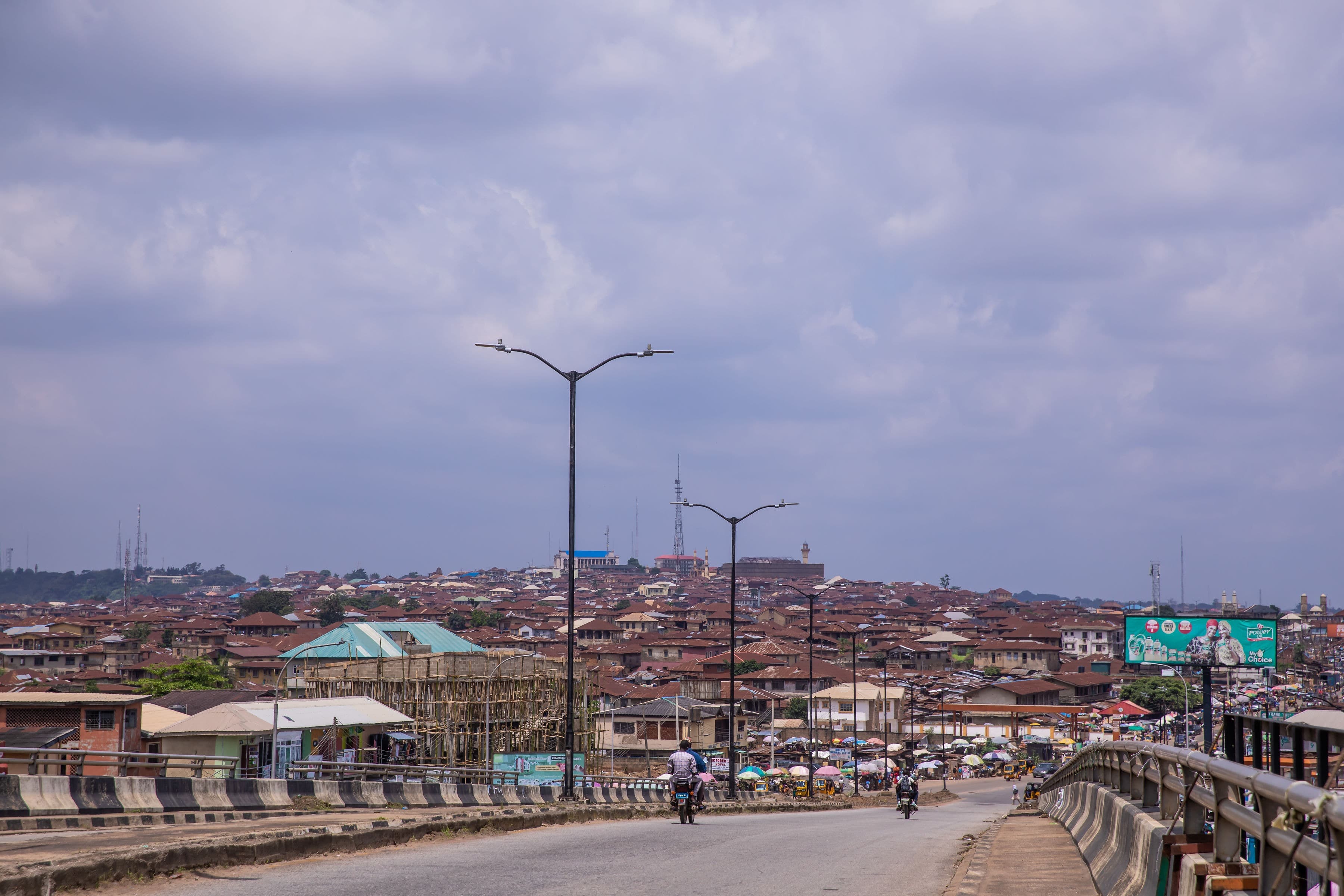
Whether focused on its traditions, economy, or politics, any story about Ibadan, Africa’s fourth largest city, is incomplete without reference to amala. At any time of the day, you’re sure to find the city’s inhabitants congregating around sellers of the city’s favourite meal.
‘No go Molete today o!’, was a common warning growing up in mid-2000s’ Ibadan. Back then, sudden eruptions of violence by political thugs were an almost daily occurrence. At the heart of all this was one man , Chief Lamidi Adedibu, the notorious political ‘godfather’ of Ibadan. Chief Adedibu directed all relevant matters in politics from his palatial residence in Molete, a dynamic area in the city’s interior that houses the National Union of Road Transport Workers’ offices and bustling markets.
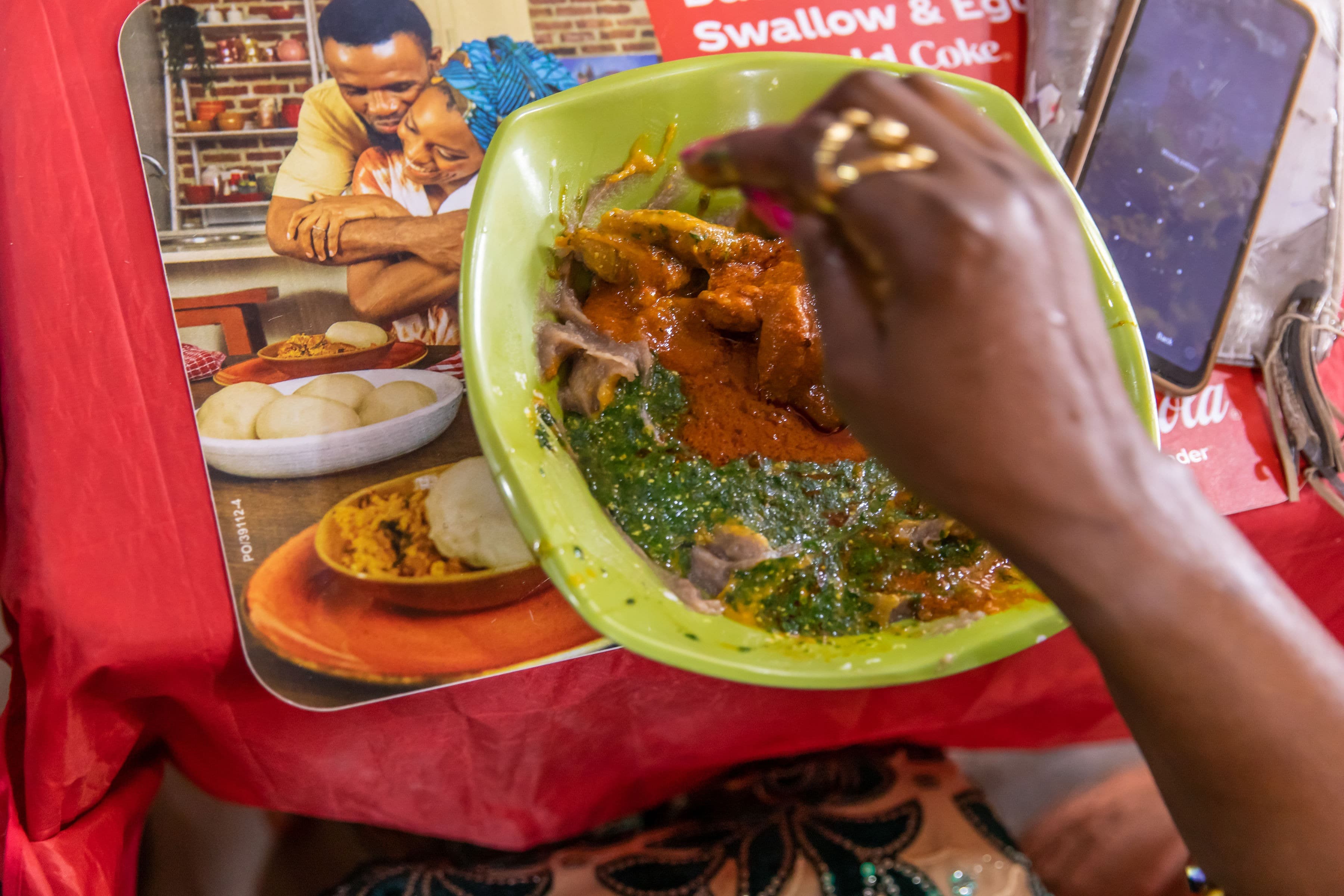
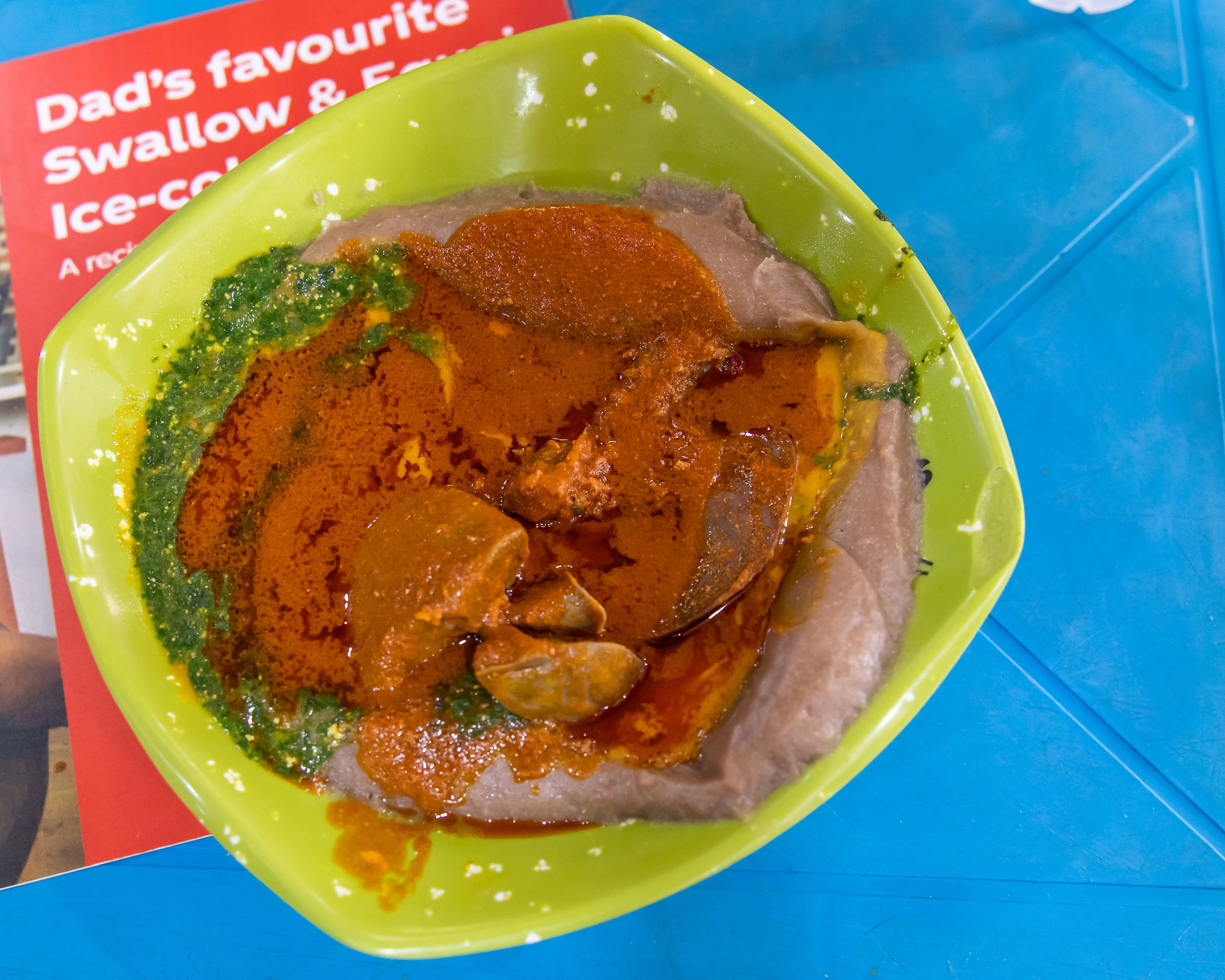
Oyo State had governors, Ibadan and other cities in the state had cultural rulers, but there was never any doubt as to who called the shots. Adedibu laid down the law, and his palace in Molete was the most supreme court in all of Oyo State. In those days, one merely needed to drive past his palace to witness the extent of Adedibu’s dominance; large crowds gathered in and around his house daily to eat free food. Not just any food, but specifically amala with ewédú, obẹ̀ ata and gbẹ̀gìrì soup, a combination known as àbùlà. Adedibu certainly believed that the way to the heart is through the stomach. He was able to leverage the mystical relationship between amala and Ibadan people to breed an army of staunch loyalists, many of whom were willing to take to the streets and draw blood at a mere snap of his finger. This approach to grassroots engagement, popularly referred to as ‘amala politics’, would go on to define the governance of Oyo for over a decade.
My friend, Uchenna, was born in Anambra but grew up in Bauchi. Uche, as he is called, never misses an opportunity to tell the story of his first time in Ibadan. In 2011, he arrived as part of a delegation for a medical conference on the outskirts of Ibadan, and upon realizing that he forgot to bring along a toothbrush, he set out to find a store close to his accommodation. Uche claims to have walked for up to an hour, before he found a store selling a toothbrush, despite coming across no less than 20 bukas selling amala. Having lived in Ibadan for most of my life, I believe only the latter part of his story. I can claim, with a reasonable degree of confidence, that there are more amala spots than schools in Ibadan.
In popular culture, amala is synonymous with Ibadan and is deeply ingrained in the identity of its indigenes. A few years ago, when there was a hike in prices of some foods due to intensified herder-farmer conflicts in the middle belt region, I recall one of my uncles saying, ‘Oyo is fine jare, we grow our own yams, ewédú is everywhere, we grow our own beans for gbẹ̀gìrì….the only problem is the tomatoes’.
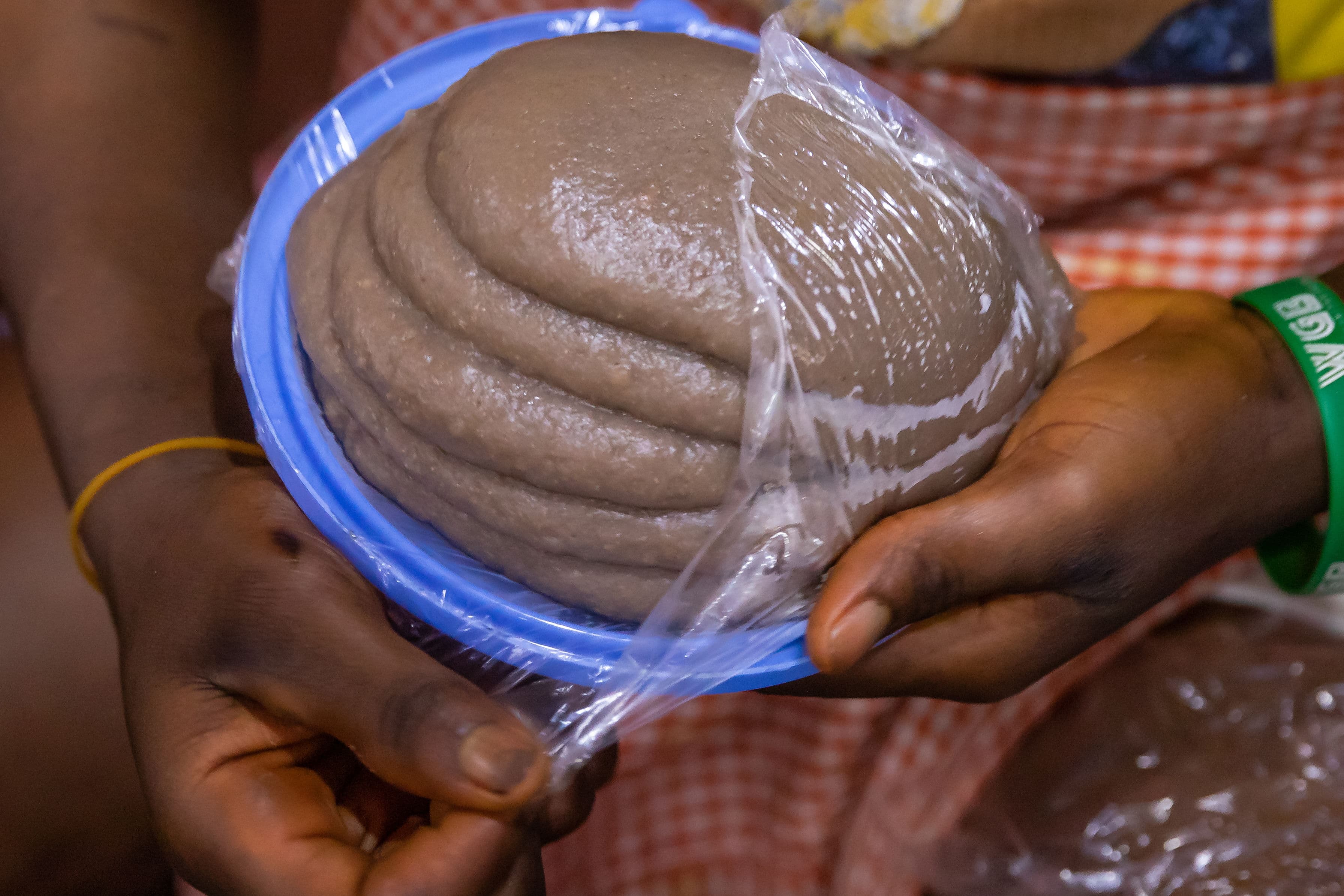
Like his opinion on several other issues, this was not entirely correct, but there might be a tinge of truth in there. The Yorubas have a saying, ‘iyán ni óúnje, ọkà ni ògùn’, pounded yam is food, ọkà is medicine. Amala is typically called ọkà by more native speakers of the Yoruba language. Much like a doctor might prescribe medicines, Ibadan people can eat amala for breakfast, lunch, and dinner. The delicacy is widely prepared across and beyond Nigeria today, but Ibadan remains its Mecca, where devoted pilgrims flock in pursuit of healing, and many believe this elixir is best enjoyed at one of the city’s foremost alchemists—Mama Adija’s Amala Spot.
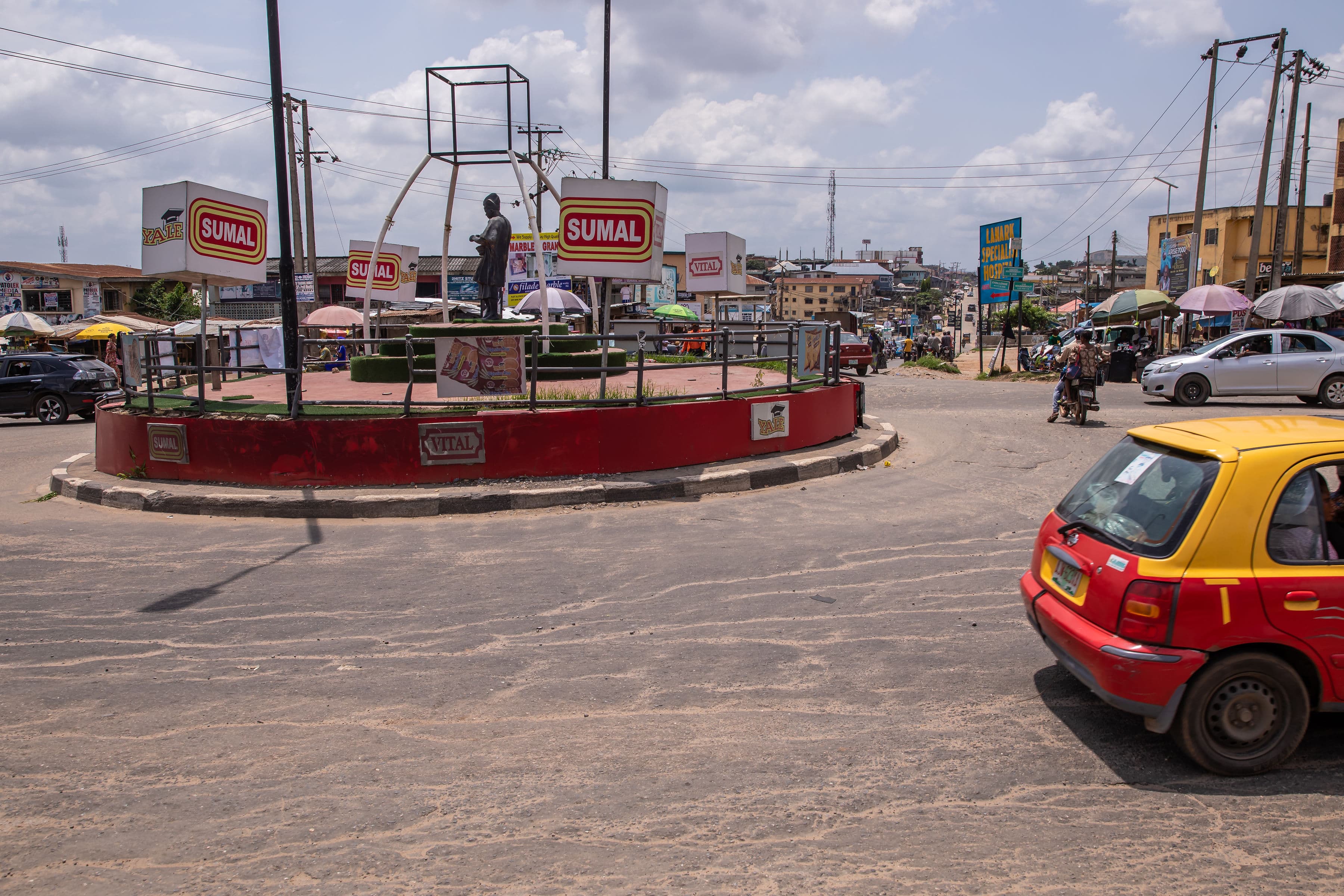
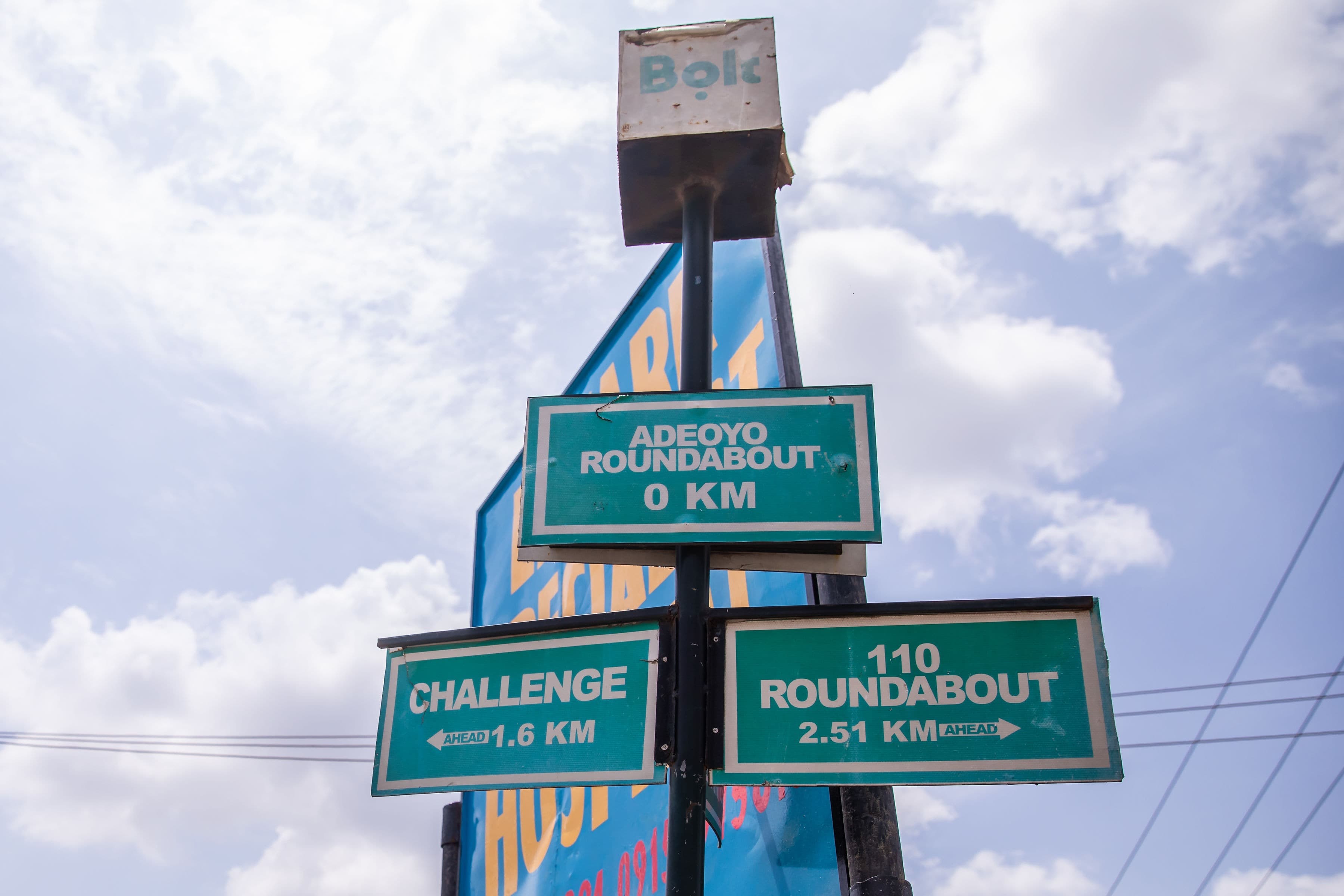
ADEOYO ROUNDABOUT, OFF RING ROAD, IBADAN
I grew up, with my family of eight, in an archetypal Ibadan neighbourhood; the kind where everyone knew more about their neighbour than their names; where the kids from different compounds came together to play football and other games after school. In our neighbourhood, the quiet of dawn was quickly broken by the calls of women hawking different types of foods—‘ẹ ra ọ̀gẹ̀dẹ̀, ẹ dín dòdò,’ was a daily favourite. My family bought bread from Iya Peteru and fish from Imam Maruf’s house.
When I was seven, we moved to Adeoyo Roundabout, close to one of the major commercial roads in Ibadan, Ring Road. This house was in a gated estate; although I find it hard to remember a time when both the handle and latch of the gate were functional. Our new home, then just a house to me, was in many ways different from what I was used to. Of these many ways, none stung as much as the quiet. Now a family of nine, our home had a constant buzz, the estate and its surrounding roads had none. Until that Saturday.
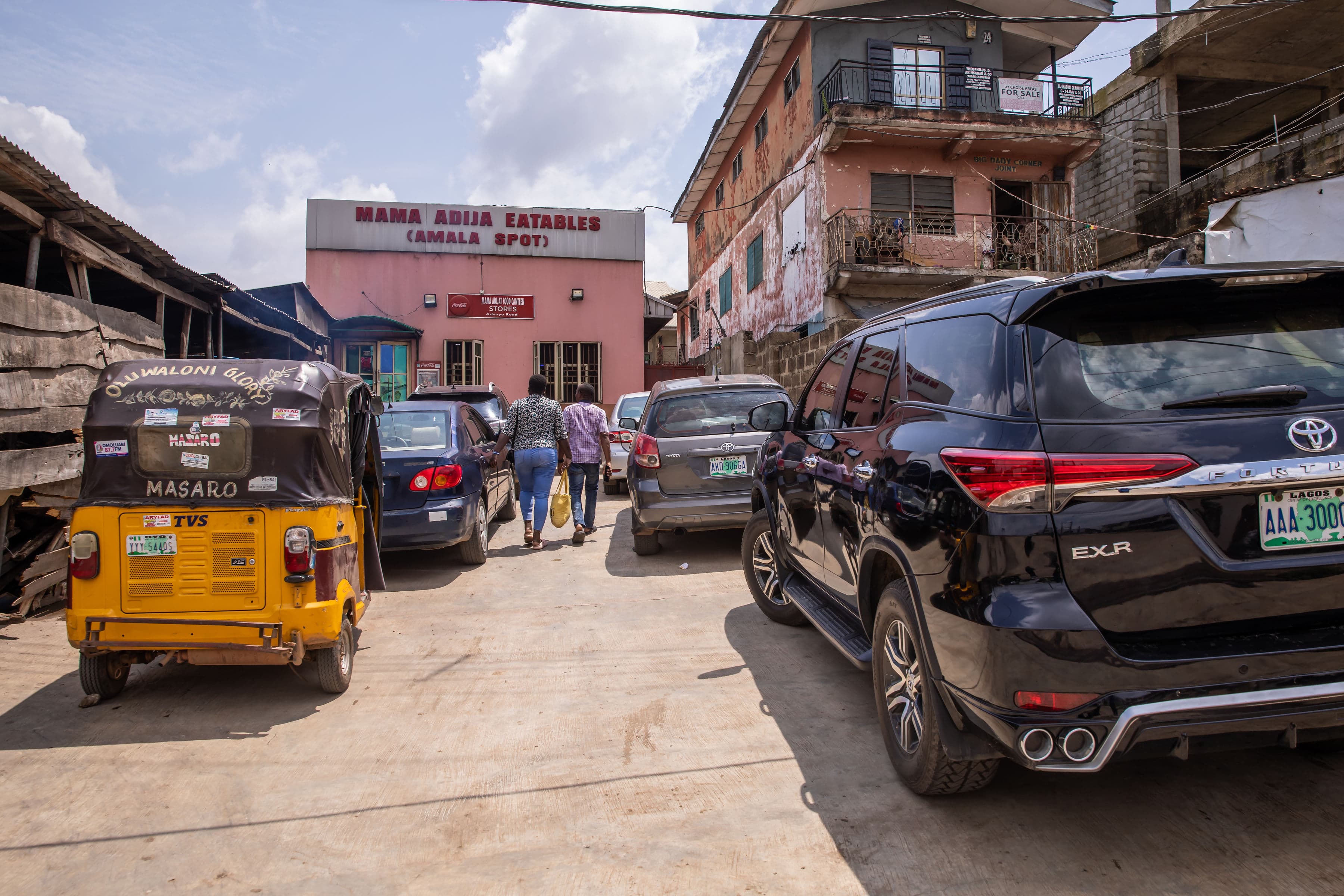
Like most urban households, we mostly ate amala with only ewedu and ọbẹ̀ ata, since gbẹ̀gìrì took a longer time to prepare. Years after we moved, on an otherwise unremarkable Saturday afternoon, my mum had a craving for àbùlà. She explained the process of making gbẹ̀gìrì to me and gave me some money to buy àbùlà from the buka down the road. An ordinary-looking building on an ordinary road, I thought as I walked. The first surprise Mama Adija’s Amala Spot greeted me with was two shiny black Range Rover cars almost completely blocking its narrow entrance. I have grown to find that this is common in Ibadan; unlike in some other cities, patronizing an amala spot has little to do with class here.
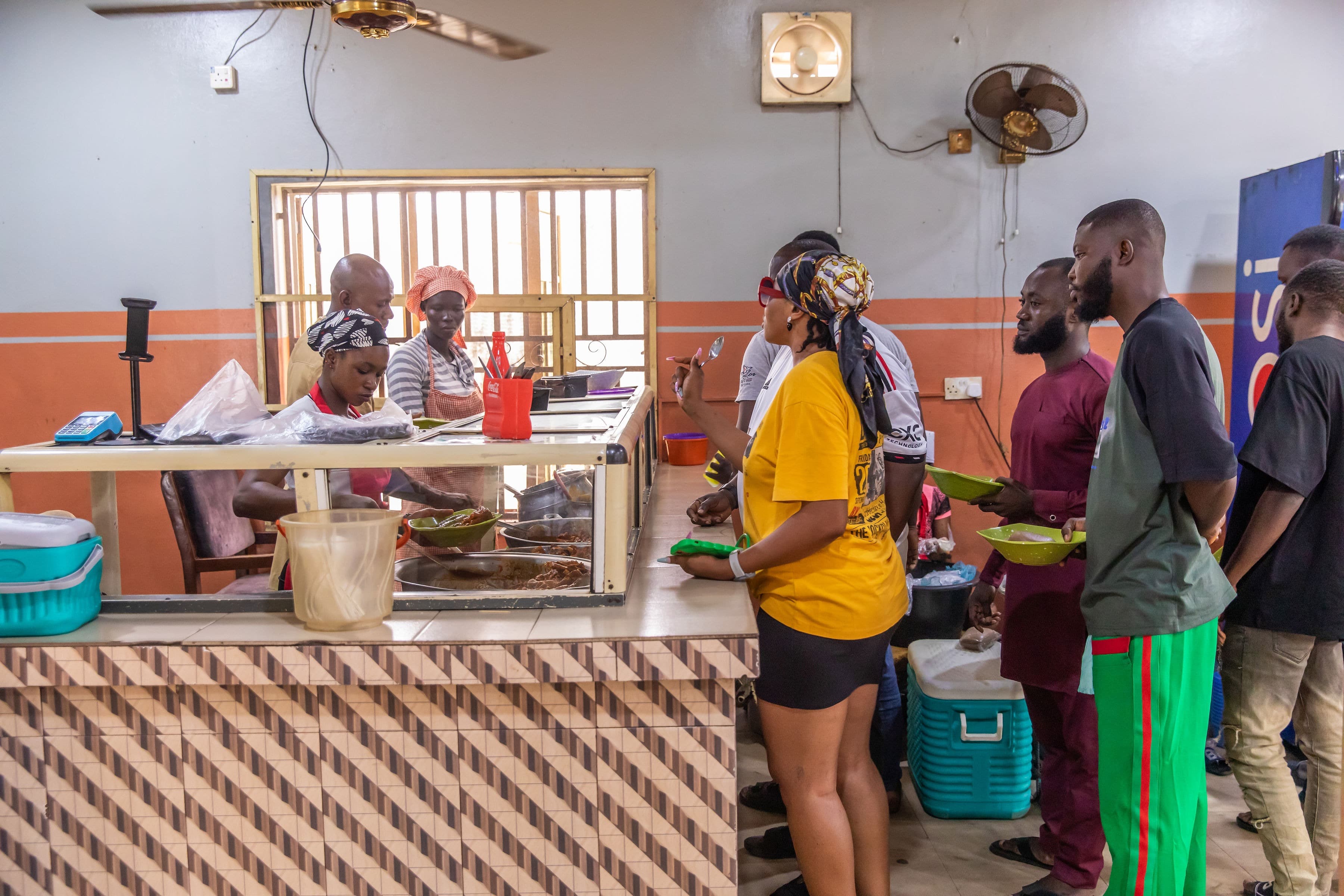
Nothing could have prepared me for the second surprise as I walked through an old rust-brown door; what seemed to me like a hundred people (although perhaps a slight exaggeration by a child’s mind) queueing for food, hands stretched holding their plastic and ceramic bowls, fervently begging to be the next customer served. I vividly remember my first thought: ‘which one of these people owns the cars outside’. Still new to the dynamics of amala spots in Ibadan, I was determined to move steadily in the queue and not beg for food I was paying for. It was until I realized, almost an hour later, that people who came much later were getting served before me that I too decided to join the fervent begging.
‘Mummy, please I’ve been waiting for an hour,’ I cried repeatedly until a woman who looked very visibly disgusted at my naivety decided to help me out. Anyone who has ever eaten at a buka in Ibadan knows that look, the same one the women at the counter give you for saying ‘hello’. Several years later, when a patient almost punched me in the face through the small window of the dispensary of the hospital which I was interning at, I would remember this scene at Mama Adija and understand that order and logic go out of the picture when one is queuing for life-saving medicine.
You’ve Reached Your Limit of Free Reading.
The Republic is a Nigerian media-tech company dedicated to explaining our time—through deeply reported journalism on power, culture and society.
Ad-Free Reading Experience
Focused consumption without interruptions.
Unlimited Access to Exclusive Archives
Years of reporting at your fingertips.
In-Depth Deep-Dive Reporting
Long-form journalism that matters.
Create a free account to continue reading this month and access more of our work.
You’ve Reached Your Limit of Free Reading.
The Republic is a Nigerian media-tech company dedicated to explaining our time—through deeply reported journalism on power, culture and society.
Ad-Free Reading Experience
Focused consumption without interruptions.
Unlimited Access to Exclusive Archives
Years of reporting at your fingertips.
In-Depth Deep-Dive Reporting
Long-form journalism that matters.
Create a free account to continue reading this month and access more of our work.
is a management consultant based in Lagos with a keen interest in food culture, studying the impact of colonization and neo-colonization on the interplay between food choices and identity. His writing has featured in Africa Is a Country and Nigeria Health Watch.






Comments
Sign in to comment.