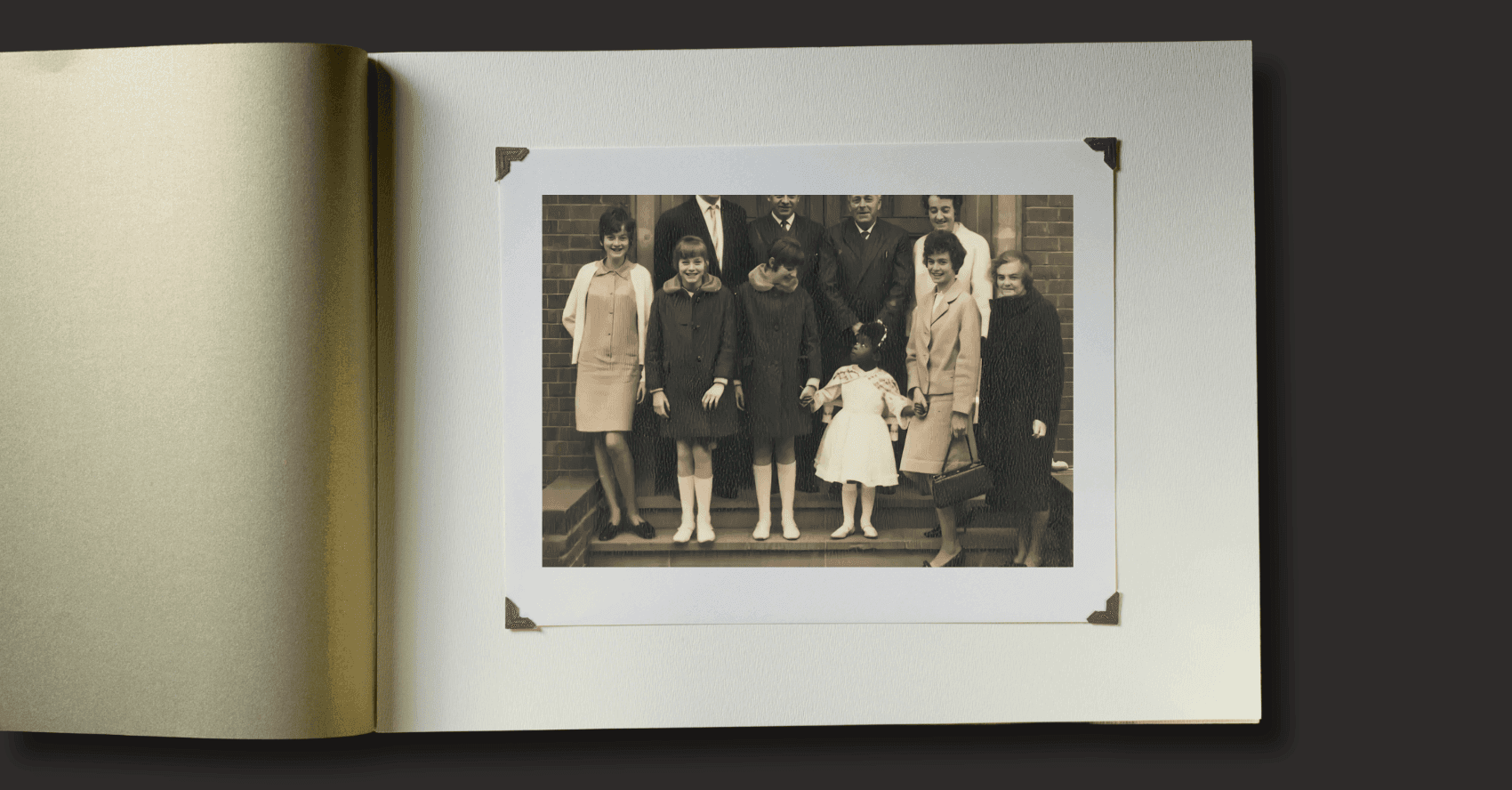

When the Windrush was celebrated last year, marking its
75 years, it showed the need to equally highlight the cultural and social contributions of West Africans and their offspring to Britain and how Britain has moulded these relationships today. Despite sitting amongst the shadows of migration stories, fostering of Black, African children by white Britons was a common and normalized practice in the UK for
almost 50 years. Over 70,000 West African children were taken into white, British, and most working-class families, on a practice known as ‘
farming’. Once adopted, many African children were forced into silence while coping with the everlasting scars of such a problematic and contentious policy.
EXPLORING THE PAST
Shortly before the independence of many African nations, under British rule, the colonial office introduced
a policy granting African married students the possibility to study in the UK—what they perceived as the ‘motherland’—alongside their spouses. Under the premise of a new life in the motherland, African students were often lured to the UK but instantly, fell in deep shock when understanding that their lives were heading to a foreign and unknown path.
With the pressure of studying, maintaining a household, without any family support and the rise of white supremacist groups such as the National Front, the UK eventually became known as a place where distressed African immigrants, particularly Nigerians, who aimed to study, found themselves trusting white families to raise their children. By this, I mean
privately fostered their children, as young as under-five, without adequate arrangements, while the students attended to lives that seemed somewhat difficult to pursue with a child under their belt.
As soon as the first advert was released, created by a Nigerian family, in the
Nursery World journal in 1955, the demand blew up and the practice became widely known in many British households. Not even a year later, the journal introduced a Homes Wanted section in their classified advertisements, which was predominantly dominated by Nigerian families, too.
According to 1991
research by Laurie Joshua and Hale G. Longtep, from 1956 to 1988, roughly 15,971 adverts were placed under that section. Still, Joshua claims that these statistics were perhaps solely a glimpse of the private fostering arrangements and emerging trends. Consequently, it also makes us wonder about the high probability of informal arrangements being dealt with through word of mouth.
Unexpectedly, many of these children grew up under a line of fire where racism, prejudice, abuse, extensive trauma and a sense of loss were all they came to know for a long time, without anywhere to turn to. Despite the belief that their parents had that British households could equate to the sense of ‘village’ they held dearly back home in West Africa.
Nonetheless,
not all stories resembled heartache and sorrow. While some experienced brief and joyful moments, now memories, under white foster families, others developed a wide and deep bond, almost impossible to cut, which unravelled a series of issues for the then-biological parents, who were often seen as strangers.
So, even though most children did get to return to their biological parents, and relocate to Nigeria, Ghana or any other parts of the UK, many children adamantly failed to do so, leading to
amendments in custody rights for foster parents on the Children’s Act 1975, such as the obligation to report if you intended to take someone under your care through the fostering route. Subsequently, many African parents never returned for their children, either.
Today, it is reported that
70,000 West Africans underwent the informal fostering practice, including celebrities like Seal, Kris Akabussi, Florence Olajide, Gina Yashere, Nelson Abbey, Adewale Akinnuoye-Agbaje, John Fashanu and Justin Fashanu. Although the practice wasn’t deemed unlawful, at the time, due to the lack of policies, definition of social work duties and obliviousness of the government to these unofficial caring arrangements, the practice was eventually brought to the public eye and widely scrutinized. Following the implementation of more safeguarding measures, it slowly died down by the 2000s.
FINALLY, UNDER BROAD DAYLIGHT
Now, intending to explore the depths of this practice, Andy Mundy-Castle brings us White Nanny, Black Child, a documentary widely acclaimed since its debut in 2023. Alongside Mundy-Castle, we meet nine contributors who’ve gone through their memories, experiences or wounds regarding farming. This film reiterates the need to have difficult conversations and recognize the complex relationship between Britain and its former colonies. It also unravels itself slowly into a moving, deep, and wholesome introspection where belonging, identity, and culture are heartfeltly shared within every story. Marking then, for some, the first time they’ve shared this experience with others who grew up into adulthood in identical circumstances.
As I scrolled through my social media, last year, on a late night in June, a particular post caught my eye. The release of a documentary announcement that until a couple of years ago would’ve not meant much to me: White Nanny, Black Child, a documentary about farming, an unusual practice of fostering, involving West Africans, most commonly Ghanaians and Nigerians, often hidden on the outskirts of British lives. Although I hesitated at first, it wasn’t before long I pushed myself to convince a friend to accompany me, and we bought tickets to the Sheffield Documentary Festival. Upon our arrival, a sudden warmth took over as I embraced the immense melanin that surrounded the showroom.
Still, it was only until the documentary started that I took a minute to digest that the majority weren’t simple spectators enjoying the documentary with me. They were also the storytellers and participants throughout the documentary. So, as the documentary unfolded, it was impossible to keep myself calm and collected. Naturally, emotions and tears felt part of the script for everyone present and an accessory to the documentary, too. By sitting still and taking in bit by bit the stories that every single participant shared, a sense of honour rose as well. The honour to wander my eyes across the room and be able to share that moment and my feelings with the participants and others who felt as privileged as me to be in that space. An emotional moment where a search for humanity and empathy took over the room.
Contrary to the mainstream documentaries, we’re often used to, White Nanny, Black Child brought us a heart-stopping, nuanced and extremely detailed notion of how farming branded these once-children and what would come to be their troubled adulthood as they juggled with all aspects of intersectionality and identity within their lives. Beyond its open wounds, broken hearts, or its scars. A story which felt as genuine and raw as it could because the story was told and unravelled by those who lived it, with full agency. Dismantling then the silence built around this matter.
Moreover, the beautifully shot scenes across the documentary didn’t only tell us the story of children who went through a poor and faulty fostering system. It also told us that as a country, Britain still has a lot of digging to do within its history and owes a lot to its African communities, beyond monetary value. Justice and accountability seem to be far more valuable in these circumstances but simply out of reach for all these survivors. So, although this documentary brings history and truth back to life, how will a journey towards mutual healing be granted to the survivors, if the state itself turns a blind eye to their experiences?
I decided to interview both the director, Mundy-Castle, the editor, Zeb Achonu and one of the participants, Ade Anifowose, for a deeper and more insightful overview of how this documentary came to be and its long-term mission.
‘YOUR AUTHENTIC STORY WILL SET YOU FREE’
Through wholesome giggles,
Mundy-Castle, director, filmmaker and producer, and
Achonu, film and TV editor, both of Nigerian-British heritage, take their time to consider what
White Nanny, Black Child truly means to them. Almost in unison, they both establish that the perfect words would be ‘enlightening’ and ‘healing’. Mundy-Castle explains:
Not only because of the feedback we’re getting but also through the widespread impact that it has had on an industry perspective and for the people who endured private fostering. There’s been a lot of feedback focused on how much of a catalyst this film has been for people’s discovery of self-identity. Hence, many are going on their journey after watching the film. And when you set out to make a film, you never expect that kind of feedback. It’s been healing for other filmmakers, but apparently for people who’ve also watched it.
Comments
Sign in to comment.