When I met the Angolan poet, Jos
é Lu
ís Mendon
ça, at his
book launch for
Angola, Me Diz Ainda, I had never before read his work. We were in Luanda, and it was early 2018; in fact, I was new to Angola after having spent three years in Mozambique, where I had become deeply accustomed to reading Mozambican literature. As a US-based Lusophone scholar for many years, I had always known Angola and Mozambique to be discussed in the same breath, as if two parts of the same whole. My experience on the continent proved nothing could be farther from the truth, as these two countries have staunch geopolitical differences that make them hard to compare.
My time in Luanda was an education in understanding the class and racial relationships that define both literature and literacy in what was—for decades—one of Africa’s most impenetrable sub-Saharan nations, both geographically and linguistically. Yet, Mendon
ça’s work resonated with the passion and furore I recalled from Mozambique’s own literary tradition of anti-colonial poet activists, like
Noémia de Sousa.
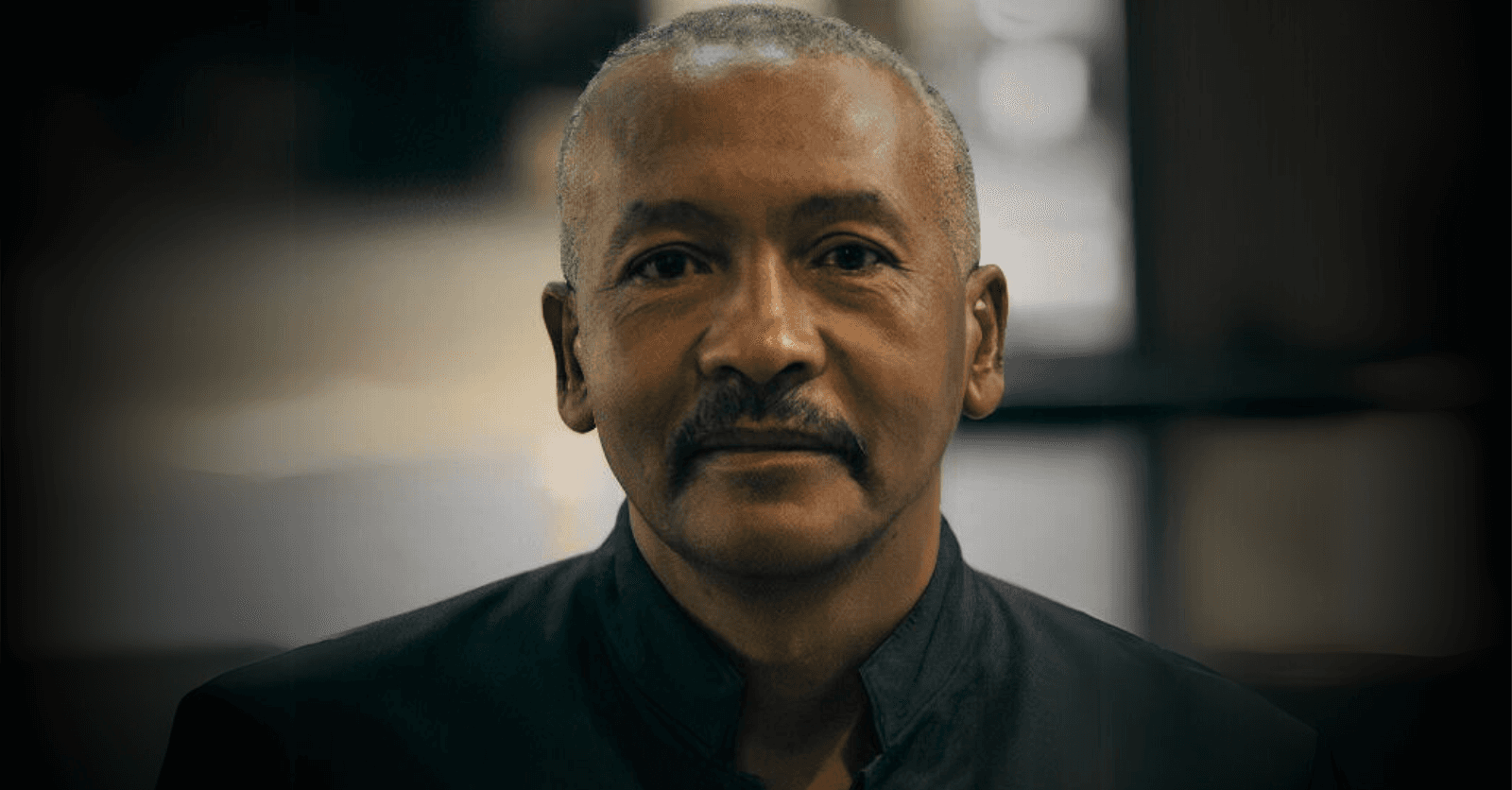
Like de Sousa, Mendonça is biracial but not white-passing. He traverses colour lines and, as a frequent speaker outside the country, casts a long shadow over what gets defined as top-tier Angolan literature to foreign audiences. Although his reported and op-ed columns keep local politicos on their toes, he is considered deeply integral to the national arts scene, too. Therefore, for both his presence and his production, Mendonça has a distinct way of integrating Angola within a wider world that might not understand the nuances of Angolan socio-political realities.
Simultaneously situated in southern, central and western Africa, Angola often feels like a crossroads. Rather, Mendonça depicts the country as an intersection. In this context, a crossroad often feels conflicted, like there are one-way roads headed in opposite directions and one must make a singular, decisive, life-altering choice to commit to one road, forsaking all others. An intersection, by contrast, is a meeting point where many different trajectories have the good fortune of converging on common ground. This is where agency and creativity align; paths aren’t unidirectional or static. They are as varied and compelling as human identity itself.
Therefore, when I requested to interview him, I sought less to understand his characters than to better grasp his context. In line with my other published interviews with contemporary African writers, this snapshot allows for a meta-conversation about the experience of writing as a profession on the continent. While Mendonça was happy to explore plot lines and meaning, here I was more preoccupied with how he’s managed a 40+ year career in what many would say is a dying—if not already dead—industry.
Here, his admission of privilege and frustration over time is raw. Yet, his negotiations with the audience and industry have yet to signal a compromise in his message. And for that, we—his fans—continue to (im)patiently await his next volume.
Born in 1955 in Cuanza Norte, Mendonça is widely revered for his prolific catalogue and international exposure. Although he studied law, at the age of 26, he won the Sagrada Esperança prize for his debut poetry volume, Chuva Novembrina. He has earned many awards since then and has previously served as the Angolan cultural attaché in Paris. In recent years, he has also written more on politics from his editorial role in Cultura magazine. In Aug 2021, he won the South African Development Community journalism award.
NAFEESAH ALLEN
What was the process of publishing your first book, Chuva Novembrina (November Rain)?
JOSÉ LUÍS MENDONÇA
Chuva Novembrina has a very particular story behind it. I had written a book of poetry prior to that one. After a critical reading, I found that it was not yet fit for publication. So, I tore it up and other poems accumulated in various drawers. One night, I gathered a huge box and burned them all in my backyard. After burning the past, I started to produce new things and I read a lot more. I was just 24 years old.
Of course, I read other works by other Angolan and global authors, which also contributed a lot to my personal style. For example, Walt Whitman from the US and Pablo Neruda from Chile, and many others. But
Chuva Novembrina would only come out in 1984. This book was a breath of fresh air to poetry that, with a few exceptions, such as
Ruy Duarte de Carvalho, came from a prosaic, pamphlet-like, politically engaged tradition.
NAFEESAH ALLEN
How did you know you wanted to be a writer? How did you start your career and how did it develop over time?
JOSÉ LUÍS MENDONÇA
I wanted to be a writer very young. I was still in high school, only 14 years old. Thanks to my father and an elementary school teacher, I had been reading a lot of adventure novels since I was eight years old. But of course, as a teenager, I was good at reading—not creative writing.
With the independence of Angola came an opportunity to show what I was worth. During colonial times, although my father was white, I suffered a lot of discrimination for the mere fact that I was a mestizo (‘mulatto’).
At the beginning of my career, I produced a book of short, intimate poems, in the manner of Sophia Andresen and Arlindo Barbeitos, full of Buddhist philosophy (I had just read the book Siddharta, by Hermann Hesse), and a great existential concern. That same year, I joined the Angolan Writer’s Union (UEA).
NAFEESAH ALLEN
You are part of Angola’s famous ‘novíssima geração’ (very new generation), the country’s first literary collective of young writers and journalists to emerge after Portuguese independence ended in 1975. Who did you work with most closely and how was your work influenced by the collective thinking of the time?
JOSÉ LUÍS MENDONÇA
The generation was divided. There was one group, formed by the Youth Literature Brigade, which included a large part of the then youthful elite of Luanda, children of the leaders, but also young commoners from the musseques (shantytowns), all of whom were enthusiastic about entering the world of writing.
And there was another dispersed group of people like me (I had just left the military) and other young intellectuals already discriminated against by the regime. Each was in their own corner producing literature, so I was not influenced by the concept of the new generation as a group concept. I was influenced by the readings I was doing and by the painful experience of independence itself being built under the effects of a war that seemed to go on forever and that worsened the suffering of the majority of the population.







Comments
Sign in to comment.