In 2000, historian, Adiele Afigbo, delivered a lecture at the Centre for Black and African Arts Civilization in Lagos, entitled ‘The Black Man, History, and Responsibility’. He remarked that ‘by its nature and the way it is practised, history is both science and ideology.’ However, in ‘the final construct,’ history is ‘more often ideology than science especially as it cannot be tested for being true or for the ability to produce any particular effect.’ Nevertheless, he asserts, it is a very important pursuit for it helps to create the environment of empowerment without which nothing can be achieved in the realm of social action.’ Similarly, almost 25 years earlier, historians, J. F. Ade. Ajayi and E. J. Alagoa, tell us in their 1974 article ‘
Black Africa: The Historians’ Perspective’, that the purpose of history in pre-colonial African societies, was to ‘provide a sense of continuity,’ for the purposes of explaining to, ‘each person and to each people where they fit into the scheme of things.’ This is important because a person’s ‘self-perception is vital to what [they] do,’ and their self-perception is still ‘largely the result’ of their ‘view of history.’ Note, they assert that the
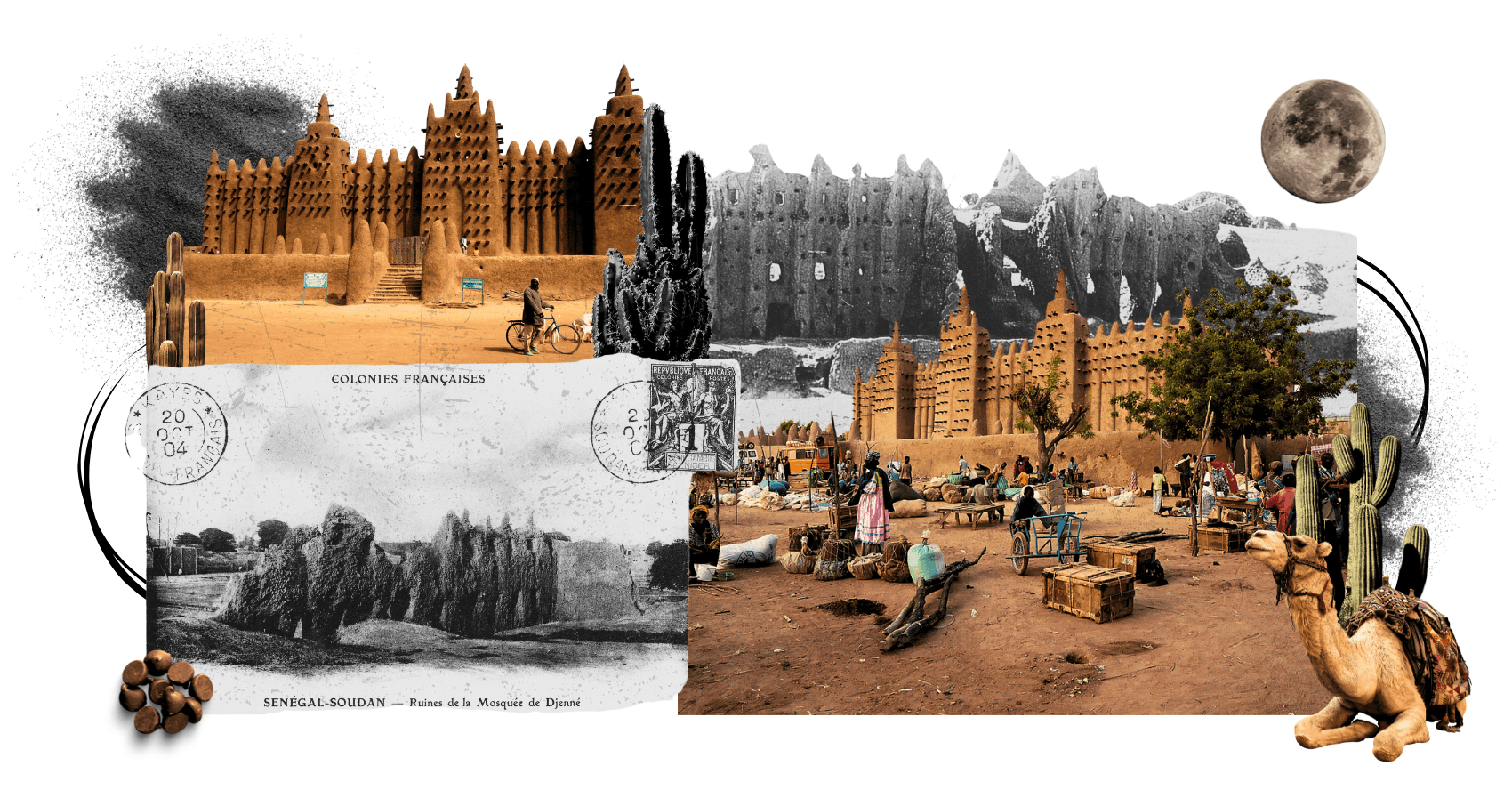
view of history, not simply the recounting of history, is directly related to self-perception and subsequently one’s actions. Such a qualifier is necessary because one, it reveals the human agency required in the processing of history. Two, it also challenges the Western approach to history which displays history as an objective, linear, sequenced recounting of ‘facts’, as its end, rather than understanding history as a social utility, or a means toward self and communal health. If one were to take the former approach, the genuineness of the modern-day Djenn
é Mosque can never realize its full glory of being one of the oldest world heritage sites. If one takes the latter approach, we find that the continuity which is sought in the name of ‘preservation’ exists among the Malians who actively engage as part of their daily lives, and certainly in the
fête de la crepissage.







Comments
Sign in to comment.