

Our new print issue, Africa’s Hustle Republics, is here! Subscribe for less than ₦1K/$1 a week for full access.
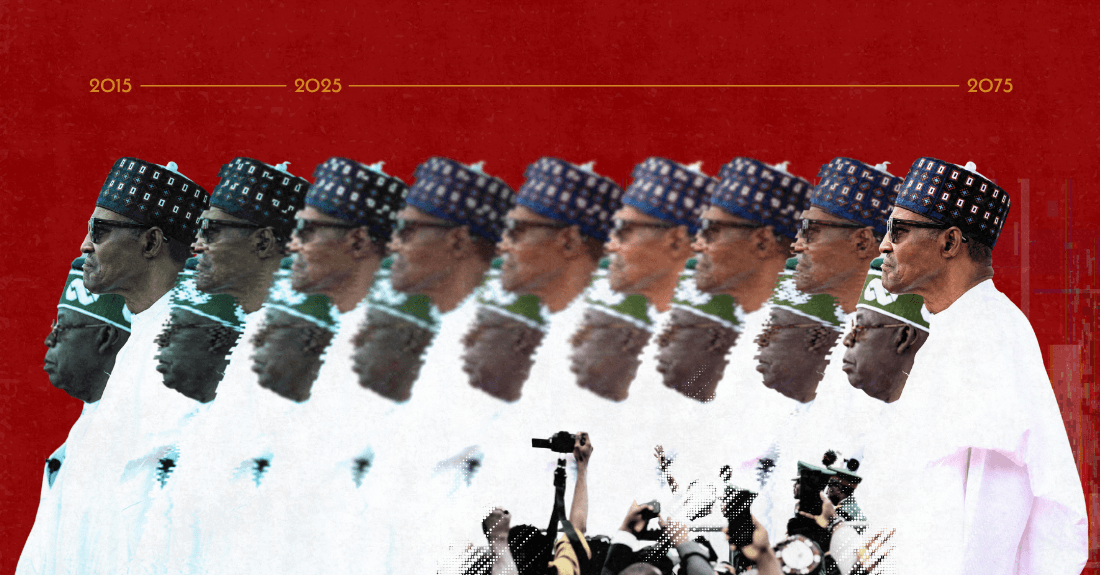
As Nigeria’s ruling party, All Progressives Congress, marks ten years in power, Nigerians should assess the performance of the party and decide the political trajectory of the nation.
Jun 8, 2025
Photo illustration by Dami Mojid / THE REPUBLIC. Source Ref: AfDB Group / FLICKR.
In 2008, a former national chairman of the Peoples Democratic Party (PDP), Vincent Ogbulafor, declared that PDP would rule Nigeria for 60 years. It was a bold statement flavoured with arrogance, but the pompousness that provoked such a statement was not built on wishful thinking. Then, PDP was the ‘largest party in Africa’. It had control of the presidency, the National Assembly and 31 of the 36 states in Nigeria. Everything pointed to the possibility of the party being in office for a very long time. After all, when Nigeria returned to democracy in 1999, PDP was already the party of choice for many political bigwigs and former top military personnel. The party was poised to control the reins of Nigeria for 60 years, or so it seemed.
Seven years after Ogbulafor made his boastful prediction, PDP lost its control of Nigeria to the All Progressives Congress (APC), a party that was a coalition of opposition parties formed in 2013. The campaign and election that brought APC into office was a memorable one, as Muhammadu Buhari, a former military head of state and three-time presidential candidate, became a symbol of change. Buhari rode on the promise that he was going to tackle the insecurity that was ravaging the country, while his running mate, Professor Yemi Osinbajo, was meant to manage the country’s economy. Before the Independent National Electoral Commission formally declared Buhari the winner of the election, Goodluck Jonathan took the high road and called Buhari to congratulate him on his victory in the election. Nigerians were ecstatic that change had finally come. Ten years later, has it?
The Republic is a Nigerian media-tech company dedicated to explaining our time—through deeply reported journalism on power, culture and society.
Focused consumption without interruptions.
Years of reporting at your fingertips.
Long-form journalism that matters.
Create a free account to continue reading this month and access more of our work.


Comments
Sign in to comment.