

Our new print issue, Africa’s Hustle Republics, is here! Subscribe for less than ₦1K/$1 a week for full access.
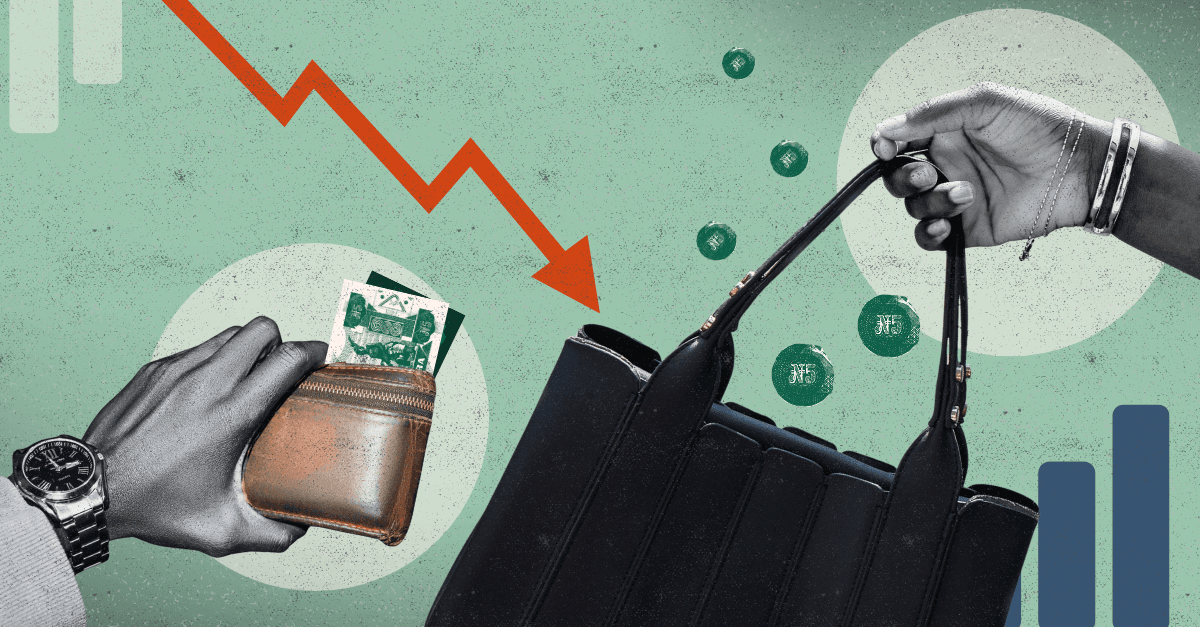
Young women, like most women in Nigeria, struggle to access credit. Expanding financial equity will require simpler systems, cultural change and support for women to take informed financial risks and build economic power.
Jul 20, 2025
Photo Illustration by Ezinne Osueke / THE REPUBLIC. Source Ref: Unsplash.
In a 2004 paper, Ugandan academic and activist, Silvia Tamale, aptly described the nature of gender disparity in access to resources. According to Tamale, ‘women’s access to resources is like their access to political fora, severely curtailed, thus calling into question the notion that women are full citizens.’
In March 2025, the ratio of male to female applicants for the Nigerian Education Loan Fund (NELFUND) student loans was 4:1 in favour of male students. This gap is stark: while male students outnumber female students in some tertiary institutions, the ratio is approximately 1.25:1. For instance, according to the National Bureau of Statistics, in the 2020/2021 academic session, female students accounted for 44.49 per cent of total enrolments in Nigerian universities. As an initiative of the federal government of Nigeria, NELFUND was established to provide interest-free loans and skill development opportunities to students in Nigerian tertiary institutions. According to its mandate, the primary benefits of this credit facility are to reduce the financial burden on students and their families and to promote equal access to higher education for all eligible candidates.
Even as a lecturer, I had been unaware of the details of the NELFUND application process, though I occasionally came across a little information about the scheme online. More recently, I took the opportunity to have a proper conversation with a university lecturer, who had been tasked with overseeing applications and disbursements. When I asked him what he thought accounted for the gender disparity, he burst into a deep belly laugh. ‘You women,’ he said, ‘you’re scared of debt. However, the guys somehow believe they can get away without ever repaying what they borrow.’ His response, though flippant, echoes findings in behavioural studies. In 2022, researchers, Caroline Perrin and Laurent Weill, found that women tend to be more risk-averse, while men are generally overly confident about borrowing but less reliable about repayment.

The Republic is a Nigerian media-tech company dedicated to explaining our time—through deeply reported journalism on power, culture and society.
Focused consumption without interruptions.
Years of reporting at your fingertips.
Long-form journalism that matters.
Create a free account to continue reading this month and access more of our work.
About the Author
is a lecturer, researcher and writer with expertise in gender accounting and development finance.


Comments
Sign in to comment.