

Our new print issue, Africa’s Hustle Republics, is here! Subscribe for less than ₦1K/$1 a week for full access.
Understanding the different responses to Buhari’s death helps us understand his legacy on a divided nation.
Jul 26, 2025
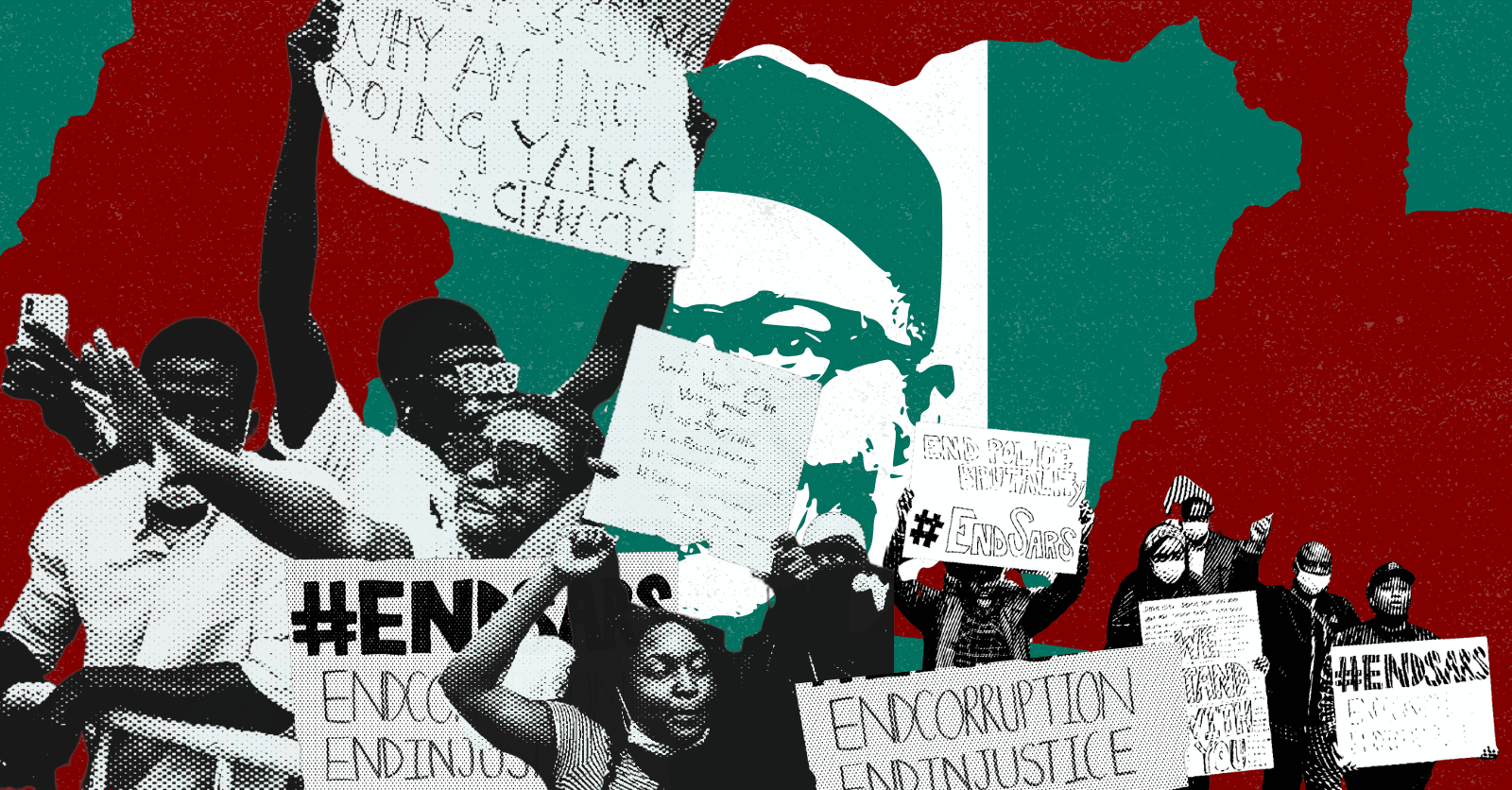
Photo Illustration by Ezinne Osueke / THE REPUBLIC. Source Ref: FLICKR, WIKIMEDIA.
On 17 July 2025, as part of events marking the national mourning period for former President Muhammadu Buhari, his successor, President Bola Tinubu, renamed the University of Maiduguri after him. The move was met with protests by some university alumni, and planned engagement s aimed at deterring the National Assembly from ratifying the change by amending the university’s establishment act. There is also the irony that Tinubu himself had led some opposition to Goodluck Jonathan's proposed renaming of the University of Lagos after the late Moshood Abiola, citing that the nation ‘must be careful not to localise or sectionalise MKO.’
Such moves and responses demonstrate how a society responds to the passing of political figures whose actions have a profound impact on the lives of many, for better or worse. After all, if these leaders are content with engaging in the business of carefully crafting narratives to achieve electoral power, surely, they must be content in understanding that at some point, they will cede control of this narrative to history.
Muhammadu Buhari’s death on 13 July 2025, at the age of 82, has ushered Nigerians to another moment in reconciling with a tenuous and divided society. To some, he was a man whose integrity and principled disposition endeared him to millions, allowing him to convince people to entrust him with responsibility. To others, he was seen as a poor administrator whose failure to acknowledge his shortcomings squandered the hopes and aspirations of a generation, setting Nigeria back on its quest for growth. Various reactions depict how different experiences can lead citizens of the same country to view the same leader differently. This division, regrettably, does not transcend the country’s well-laid fault lines along geography and ethnicity. It should force a sober reflection on the passing of a former president and the lessons of this period for Nigerians today and our interaction with memory.

The Republic is a Nigerian media-tech company dedicated to explaining our time—through deeply reported journalism on power, culture and society.
Focused consumption without interruptions.
Years of reporting at your fingertips.
Long-form journalism that matters.
Create a free account to continue reading this month and access more of our work.
About the Author
is a research analyst and a writer on the politics of policy, institutions, and governance.


Comments
Sign in to comment.