

Our new print issue, Africa’s Hustle Republics, is here! Subscribe for less than ₦1K/$1 a week for full access.
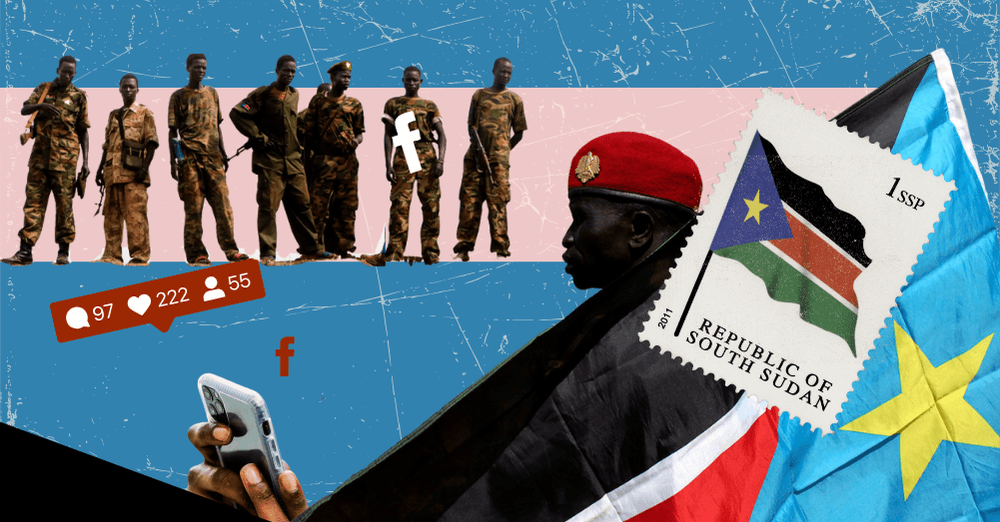
In a country failed by peace agreements, connection didn’t disappear—it went online. South Sudan’s digital diaspora challenges the glossy myths of Silicon Valley and insists that innovation thrives not only in wealth and infrastructure, but in resilience, memory, and connection across borders.
Aug 24, 2025
Photo illustration by Ezinne Osueke / THE REPUBLIC.Source Ref: FLICKR, SMITHSONIAN LEARNING LAB.
South Sudanese communities have long practised decentralized, relational governance. In the digital age, this model has morphed. Under-the-tree fellowships are now mediated through Facebook prophecies, while WhatsApp groups serve as crisis command centres and platforms like X and Telegram enable the flow of remittances. This alternative architecture of transnational governance is built within digital infrastructures and operationalized through kinship ties to fill the void left by the unrealized promise of political settlements and absent institutions.
Yet, like memory, money is double-edged and bears equal potential for sabotage as it does for sustenance. Dollars and pounds meant for water pumps are sometimes discreetly rerouted to bankroll local militias. The internet, too, has become a battlefield. Violence becomes more intimate and intrusive through the instant sharing of sensitive, graphic content depicting those who live in precarity and others in death, considered ‘ungrievable’. Fraught with tensions, digital belonging is a paradox; a medium of solidarity that is also a megaphone for rage. Rather than a clean break, diaspora politics is a caricature mimicking homeland relations—a re-(geo)location of governance by other means, a web entanglement of analogue politics and digital democracy.
While dominant discourses on Africa’s tech boom often privilege startup ecosystems in urban hubs and instrumentalize technology for development, this essay redirects attention to the lived and contested spaces where digital networks intersect with historical trauma, forced displacement, and citizen-led resistance. By drawing on sociologist Manuel Castells’ network society, it unpacks the limitations of liberal peacebuilding and highlights how digital tools are mobilized for resistance. Importantly, by centring the diasporic digital practices and speculative visions of belonging, it challenges reductive narratives of fragility and positions South Sudan as a generative site of networked identity-making.

The Republic is a Nigerian media-tech company dedicated to explaining our time—through deeply reported journalism on power, culture and society.
Focused consumption without interruptions.
Years of reporting at your fingertips.
Long-form journalism that matters.
This story features in our print issue, 'An African Manual For Debugging Empire'.
Create a free account to continue reading this month and access more of our work.
About the Author
is a gender, peace and security researcher and practitioner dedicated to reimagining peacebuilding through feminist, youth-led and community-driven approaches.


Comments
Sign in to comment.