

Our new print issue, Africa’s Hustle Republics, is here! Subscribe for less than ₦1K/$1 a week for full access.
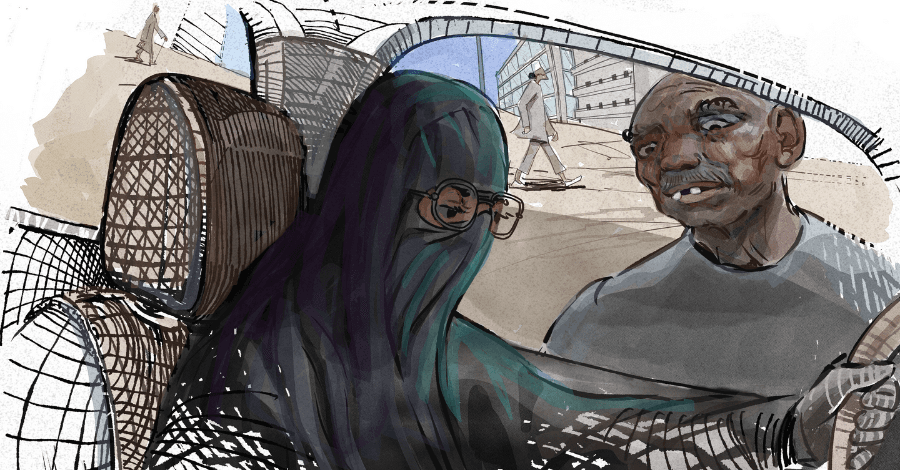
Mutia’ah Badrudeen documents how her decades of driving, as a fully veiled Muslim Yoruba woman across multiple countries, reveal prevailing social ideas about gender, identity and belonging.
My mother bought me my first car; I was 22. Growing up, I was one of those ajebutter kids who were chauffeured everywhere. I recognize now, well over another 22 years since, that there is a potential conversation lurking here about privilege, and how life’s most tenacious values are instilled in the formative home and family of your childhood. And maybe we will have that conversation. Someday.
At the time, though, all I knew was a lifetime of my parents’ ‘protective’ parenting that curtailed my teenage outings to only what a car and driver could be spared for. Which wasn’t particularly confining for the loner my teenage self was. As long as I had books, I was content to remain curled up within the gilded cage of my parents’ expectations. Which, of course, left me wholly unprepared to navigate the hellscape that was the Nigerian public transport system, a menace I suddenly found myself in, on my own, as a university student in the historic largest city in West Africa. What can be said about the experience of Ibadan buses and kabukabu, except that the gift of a car meant freedom in more ways than I could articulate. All I needed was to learn how to drive.
The Republic is a Nigerian media-tech company dedicated to explaining our time—through deeply reported journalism on power, culture and society.
Focused consumption without interruptions.
Years of reporting at your fingertips.
Long-form journalism that matters.
Create a free account to continue reading this month and access more of our work.
About the Author
writes fiction and creative nonfiction that centres the Nigerian (Yoruba) Muslim woman experience.




Comments
Sign in to comment.