

Our new print issue, Africa’s Hustle Republics, is here! Subscribe for less than ₦1K/$1 a week for full access.
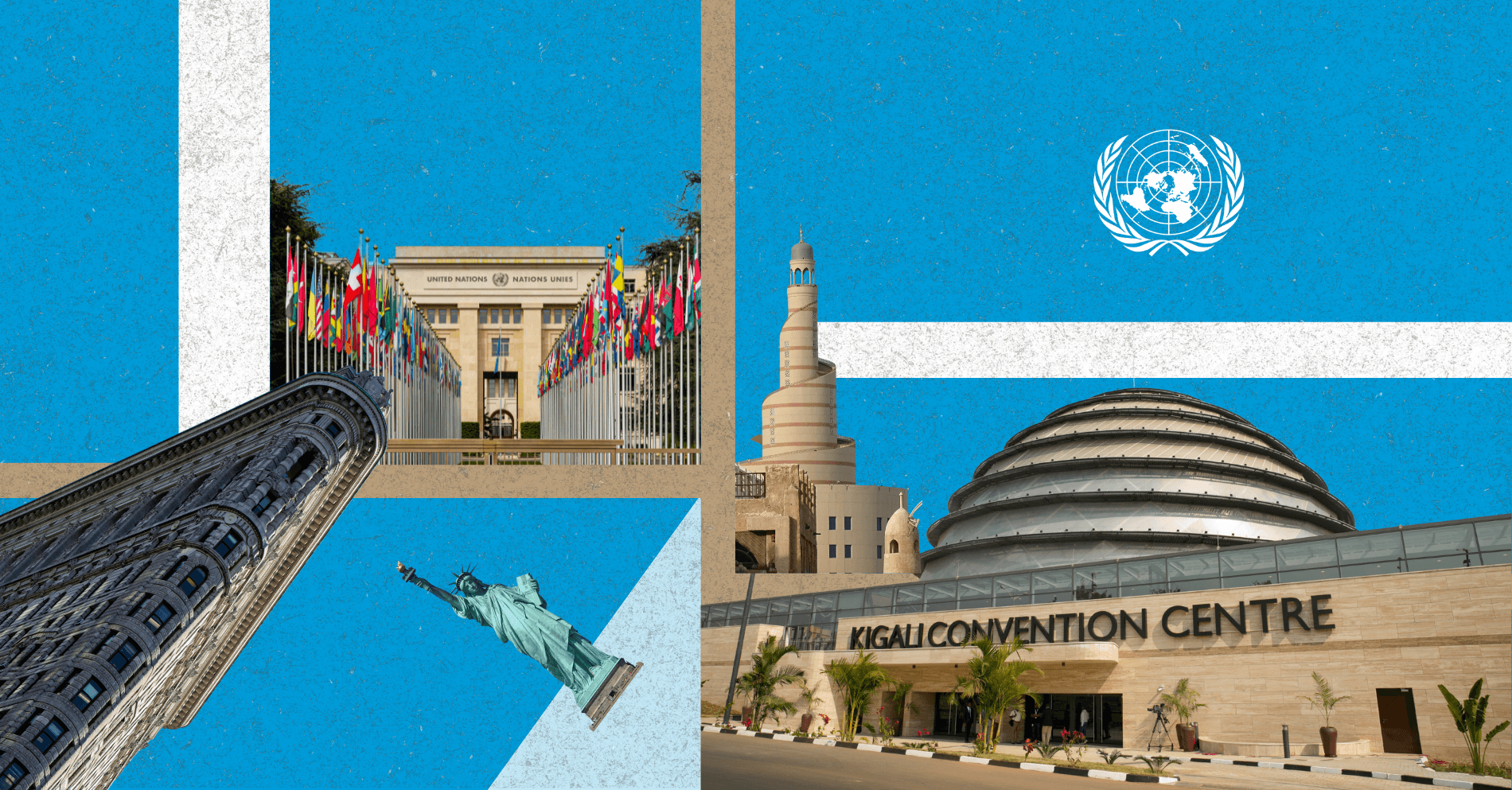
With waning multilateralism, the United Nations is experimenting with new geographies, relocating agencies to cities in the global South. Can a strategy born of austerity also reshape legitimacy and influence?
Few dispute that the United Nations embodies the promise of multilateral cooperation, however uneven its record. There is less certainty about its future, unsettled by political retreat, financial austerity and reform fatigue. What remains least clear is whether the UN’s emerging geography—marked by the shift of some programs to the global South—signals a new balance of voice in global governance or simply a bureaucratic reshuffle.
To see why this matters, it helps to recall how the UN came to command legitimacy in the first place. For much of the post–Second World War era, the institution rested on the power and patronage of the United States, which underwrote both its infrastructure and authority. Washington’s willingness to foot the bills and project leadership gave the UN stability, but it also left the institution vulnerable to shifts in American politics. This revealed a deeper truth. As Hedley Bull, an Australian scholar of international relations, observed in his 1977 book The Anarchical Society, rules and institutions alone cannot secure order in world politics. Order ultimately depends on the great powers willing to enforce it. The UN may fly the flag of multilateralism, but quite frankly its authority has always rested on the shoulders of the few willing to carry it.

The Republic is a Nigerian media-tech company dedicated to explaining our time—through deeply reported journalism on power, culture and society.
Focused consumption without interruptions.
Years of reporting at your fingertips.
Long-form journalism that matters.
Create a free account to continue reading this month and access more of our work.
About the Author
is a lawyer whose work focuses on development questions. He holds an LLM in Human Rights from the Central European University in Vienna and a Master’s in International and Development Studies from the Geneva Graduate Institute, Switzerland.


Comments
Sign in to comment.