

Our new print issue, Africa’s Hustle Republics, is here! Subscribe for less than ₦1K/$1 a week for full access.
Jul 6, 2017
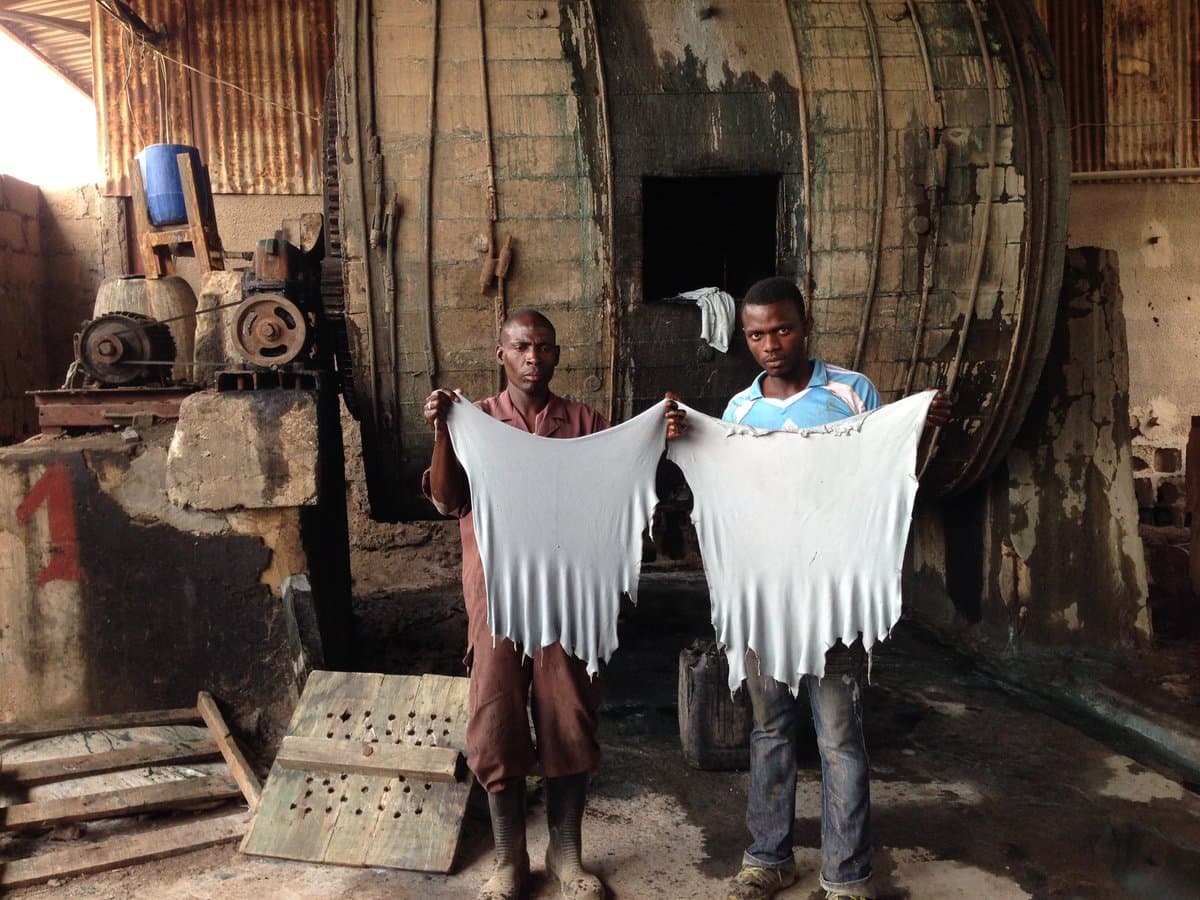
God's Little Tannery. One of the few remaining tanneries in Kano, Nigeria. 2016. ELEANOR WHITEHEAD
In the aftermath of the last US presidential election, I have been trying to re-understand America, a country that I have adopted as my own. Shocked and humbled by the outcome of the election, and as a lifelong student of the human condition, I’ve been trying to better comprehend the economic and cultural anxieties of the white working class, a group that assumed a mythical factor in pre- and post-election political prognostications and in new discussions about the vagaries of globalized neo-liberalism. Being a Nigerian, however, my frame of reference and comparison remains Nigerian workers, who, like their more venerated white American counterparts, have, in their own country, had to respond and adjust their lives to globalization.
I have enjoyed reading treatises on the growing discontent within the diminishing American industrial working class against the forces of neo-liberal globalization. Tomes such as Nancy Isenberg’s White Trash, and Andrew Levison’s The White Working Class Today have proved invaluable as referential materials for understanding the long-simmering economic and political anxieties that purportedly bubbled to the surface in the elections.
The majority of these new working class narratives take an expository approach, supplying a folk history of working class identity formation in America and Europe. Other pre- and post-election commentaries have critiqued the outsized deterministic role assigned to white working class aspirations and fears in the outcome of the elections. Notably, a study conducted by Professor Eric Kaufmann of the University of London debunked the theory that a revolt against neo-liberal globalization by economically disenfranchised white workers propelled Donald Trump to the US presidency and that its trans-Atlantic expression produced Brexit.
Yet studies and commentaries that privilege the narrative of white working class backlash against the ravages and disproportionate benefits of neo-liberal globalization continue to hold significant sway over how the election’s outcome is interpreted; over analysis of the apparent anger of some white voters; and—crucially for the purpose of this essay—over how the rewards and damages of globalization are assessed. Members of the white American working class, undifferentiated and ennobled, emerge in these commentaries as peculiar victims of a globalization that is robbing them to pay workers and capitalists elsewhere. It is this group of studies and commentaries that serves as a foil for my analysis; for their claim is simultaneously steeped in navel-gazing and the cultural economy of American exceptionalism.

The Republic is a Nigerian media-tech company dedicated to explaining our time—through deeply reported journalism on power, culture and society.
Focused consumption without interruptions.
Years of reporting at your fingertips.
Long-form journalism that matters.
Create a free account to continue reading this month and access more of our work.
About the Author
is Cornelius Vanderbilt Chair in History and professor of African History at Vanderbilt University. He is author of the recently published book, Boko Haram: The Past of the Present Upheaval (University of California Press, 2026).




Comments
Sign in to comment.