

Our new print issue, Africa’s Hustle Republics, is here! Subscribe for less than ₦1K/$1 a week for full access.
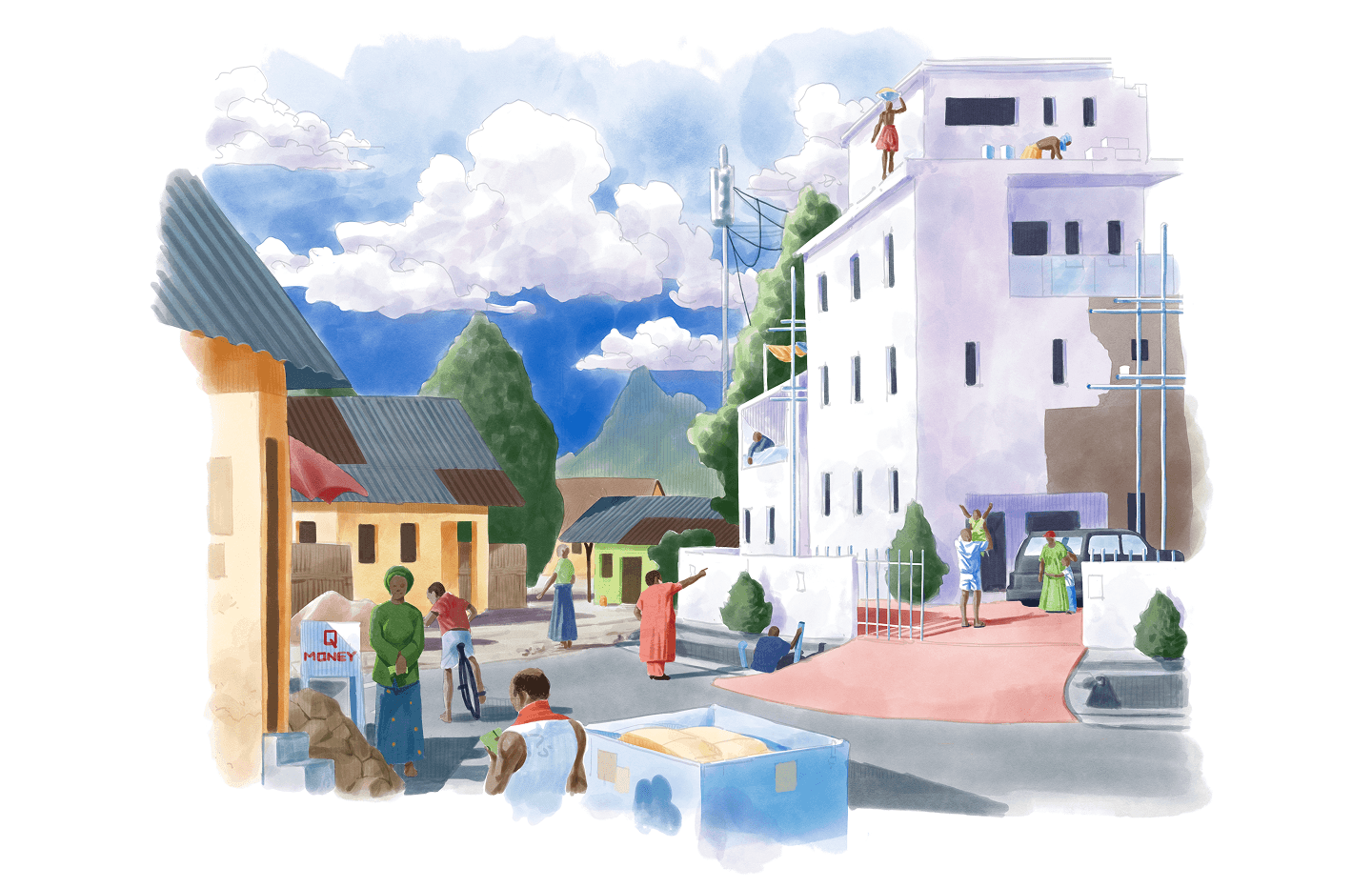
In The Gambia, migration and remittances have become society’s measure of success and failure. Through the lives of young people, we see the emotional and financial costs of staying behind, the expectations placed on those who leave, and what it means to return home after an unsuccessful attempt to migrate.
LISTEN TO THIS ARTICLE

For many young Gambians, migration is not simply an ambition. It is increasingly perceived as a rational economic calculation. Abdoulie Sonko understands that calculation intimately. On paper, he is a plumber. In reality, employment offers him little certainty. Some days he earns enough to support his family. On other days, he earns almost nothing. His income rises and falls with the availability of jobs, leaving it unpredictable every month. ‘Sometimes I can make D2,500, sometimes more, sometimes less,’ he said. By the time that money reaches Sonko’s pocket, it already belongs elsewhere. Food, rent, school fees, electricity, and medical expenses. In one way or the other, nine people depend on what he brings home. ‘My current living condition is from hand to mouth,’ he revealed. ‘When I work, I get little money, and I spend it all because the problems are more than what I earn,’ Sonko’s frustration is not merely financial. It is social.
For many young Gambians, migration is not simply an ambition. It is increasingly perceived as a rational economic calculation. Abdoulie Sonko understands that calculation intimately. On paper, he is a plumber. In reality, employment offers him little certainty. Some days he earns enough to support his family. On other days, he earns almost nothing. His income rises and falls with the availability of jobs, leaving it unpredictable every month. ‘Sometimes I can make D2,500, sometimes more, sometimes less,’ he said. By the time that money reaches Sonko’s pocket, it already belongs elsewhere. Food, rent, school fees, electricity, and medical expenses. In one way or the other, nine people depend on what he brings home. ‘My current living condition is from hand to mouth,’ he revealed. ‘When I work, I get little money, and I spend it all because the problems are more than what I earn,’ Sonko’s frustration is not merely financial. It is social.
The Republic is a Nigerian media-tech company dedicated to explaining our time—through deeply reported journalism on power, culture and society.
Focused consumption without interruptions.
Years of reporting at your fingertips.
Long-form journalism that matters.
This story features in our print issue, 'Africa’s Hustle Republics'.
Create a free account to continue reading this month and access more of our work.
About the Author
is a Gambian journalist based in Banjul, The Gambia. Bah has nine years of journalism experience. His work has been featured on Nigeria Health Watch, Social Voices in Nigeria, Mansa Banko Online, Expresso Lisbon, Portugal, Connecting Africa in South Africa, and Africa Press Agency in Dakar, Senegal.




Comments
Sign in to comment.