Editor’s note: This essay is available in our print issue,
A New Chapter for African Artefacts?. Buy the issue
here.
The movement to reclaim Africa’s stolen art and cultural artefacts is constantly evolving. Requests for reparations have been repressed by European museums and governments since the early stages of post-colonial political independence played out across Africa. Over the years, Western countries have suggested their reluctance to return these artefacts is driven by a lack of suitable storage facilities on the continent. To which, visual artist Victor Ehikhamenor, wrote via email, ‘who told them all of the works were supposed to be “looked after”?’
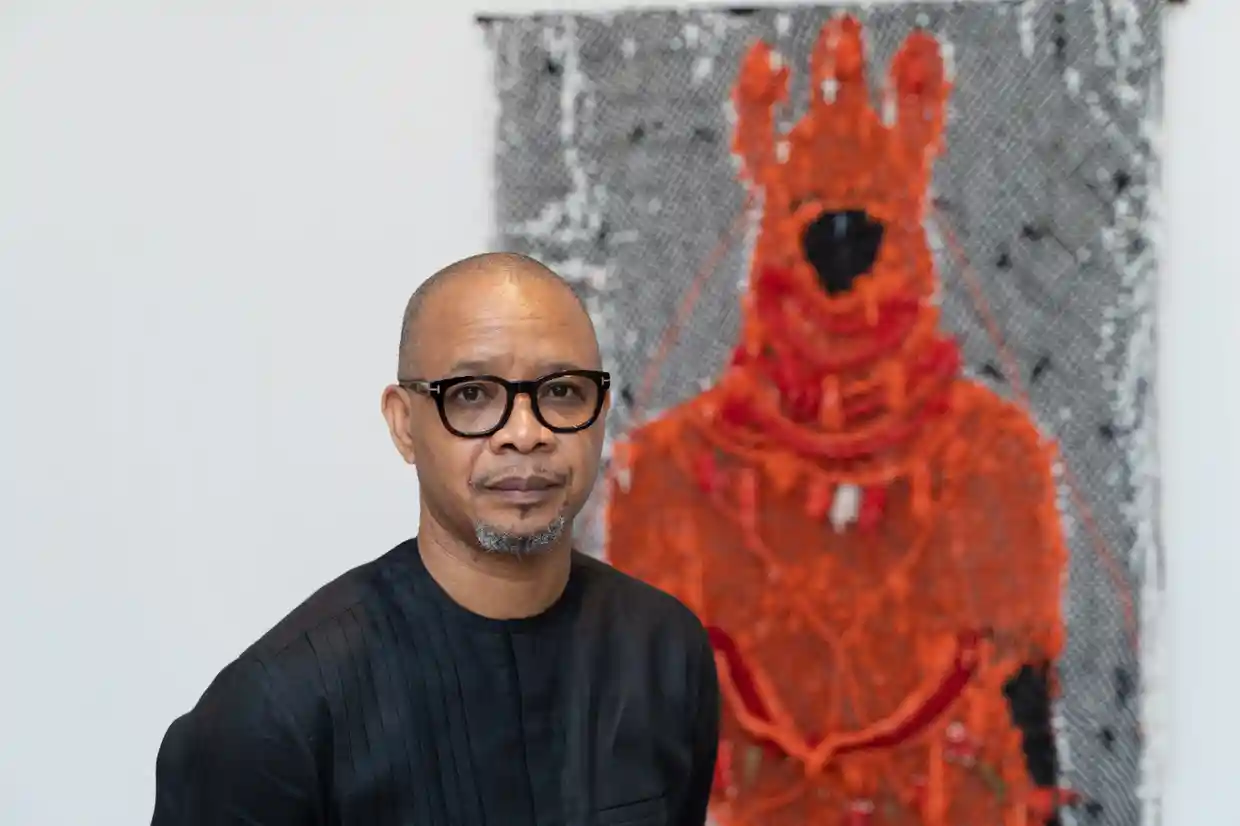
Ehikhamenor’s recent work includes a 12-foot installation he staged at St. Paul’s Cathedral in the United Kingdom earlier this year, to commemorate the victims of Britain’s 1897 raid on the ancient Benin Kingdom. During the raid, British soldiers burned ruler, Oba Ovonramwen’s palace and looted thousands of Benin royal objects. Ehikhamenor, who hails from Edo State and whose ancestral community is the Benin Kingdom, explained that the West’s storage argument for withholding African artefacts is flawed because not all objects were meant to be stored. ‘Many of the works created by our ancestors were supposed to be ephemeral,’ he said. ‘They served the immediate purpose and were meant to return to the earth and regenerate afterwards. Why would anybody want to preserve a certain wooden funerary mask meant for burying a dead person?’
European attitudes towards repatriation requests from African governments and other African stakeholders in the cultural landscape may have changed in recent years.
However, the restitution conversation is still often presented from the perspective of Western museums being ‘forced’ to return plundered artefacts. According to Ehikhamenor, ‘the West have a tendency to dwell in their colonial hangovers when it comes to creative endeavours in their former colonies.’ Despite the debilitating impacts of colonial plunder on the cultural heritage of African societies, Ehikhamenor felt it was important to stress that African creativity never stopped. Like many contemporary artists, he benefitted from the resilience of post-colonial artists and artistry. ‘Growing up,’ he explained, ‘I was surrounded by all forms of art that inspired me and influenced me. Then encountering the works of Nigerian modernists like Bruce Onobrakpeya, Uche Okeke, Demas Nwoko, I always felt I had more than enough to feed on.’
Still, in mainstream discourse, little is typically mentioned about those on the continent who are clamouring to receive the returned artefacts or the local artists who have been denied significant artistic and cultural reference due to unavailability of these artefacts. ‘The symbolic importance of their return to the rightful owners, beside the artists, is immeasurable,’ Ehikhamenor said. ‘Can you imagine looting the religious artefacts that helps strengthen the Christian faith from the Vatican?’
Our full interview continues below.
THE REPUBLIC
There is an ongoing debate about whether African artefacts should be returned to local museums or local communities. In your view, where exactly do African artefacts belong?
VICTOR EHIKHAMENOR
This debate has spanned decades, even during the days of active colonialism, African communities have one way or the other asked for some of their very significant works of art looted or forcefully taken from them without adequate negotiations or compensations to be returned. However, in the past four years or so, restitution requests have surged due to multiple factors. African artefacts looted, stolen, forcefully taken or however you want to put it belong to the African communities they were taken from in the Africa continent.
THE REPUBLIC
As a Nigerian visual artist known for works that engage with cultural heritage, why do you think it’s important that African artists are involved in the movement to return stolen/looted African artefacts?
VICTOR EHIKHAMENOR
A ladder that has missing steps is a dangerous means of climbing a rooftop. Works of art created by our ancestors are important foundation for the contemporary African artist, either as a point of inspiration or a source of influence. If these looted works have influenced some of the old and even new canons of western artists, you can imagine the importance of the artefacts to generations of African artists who have been denied access for centuries. Also, the symbolic importance of their return to the rightful owners, beside the artists, is immeasurable. Many communities wrap their entire cultural cosmology around these works that were stolen. Can you imagine looting the religious artefacts that helps strengthen the Christian faith from the Vatican?







Comments
Sign in to comment.