An Art Exhibition Speaks to History and Nigeria’s Multifaceted Reality | The Republic
An Art Exhibition Speaks to History and Nigeria’s Multifaceted Reality
Image Impressions, an exhibition of photographs, paintings, and collages curated by Faridah Folawiyo, aims to trace Nigeria’s visual history and embrace the multitudinous aspects of the country’s reality.
Written by Joseph Omoh Ndukwu
Dec 16, 2023
Image Impressions Exhibition, 2023. An exhibition by FF Projects.
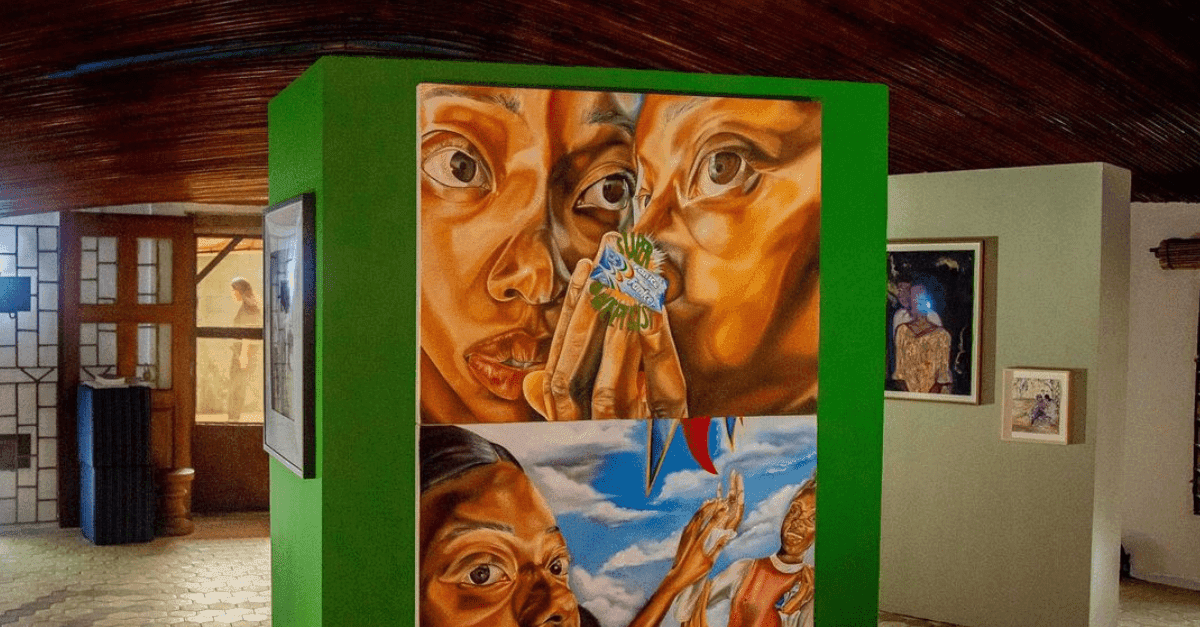
The works hang in a small round house with a reed ceiling. The dome-shaped coffee-brown ceiling, an inner ring of regularly spaced white walls, a green four-walled block at their centre, and the low louvered windows with rolled-up slats overlooking the trees outside give the house an air of quaint sophistication. The house sits, close to the entrance gate, in the compound of the Vaughan-Richards House, in Ikoyi, Lagos.
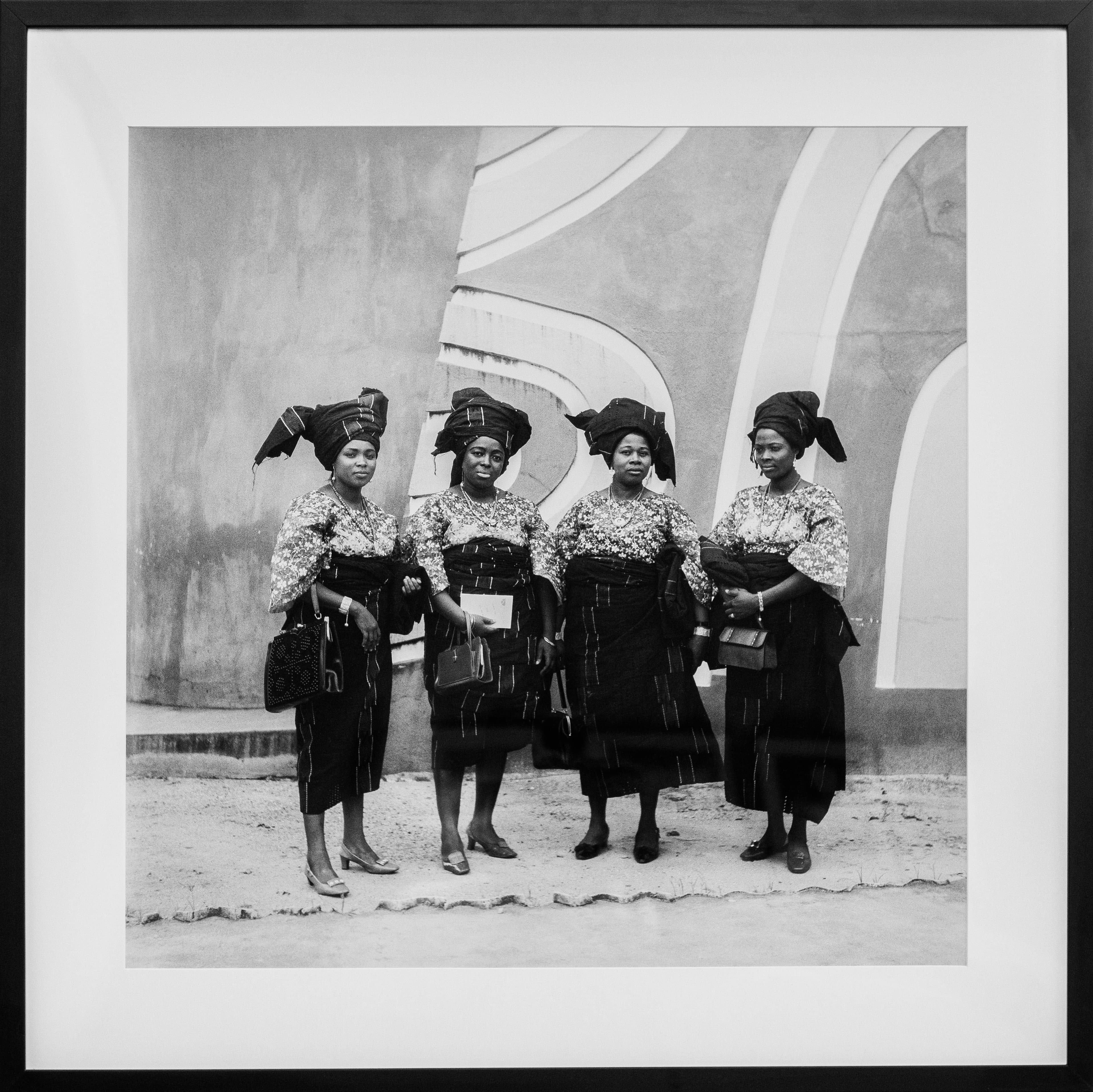
The photographs of Nigerian photographer, J.D. ‘Okhai Ojeikere, hanging on one face of the green block, are the first things one sees on entering the round house. Their positioning marks them out as the centrepieces of Image Impressions, an exhibition of photographs, paintings, and collages by twelve artists curated by Faridah Folawiyo. Ojeikere’s photographs, four fairly small pieces in glass frames, are portraits of people posing in pairs, totalling six women and two men.
The men, wearing traditional clothes and sandals, are holding hands. One has a small smile while the other holds his face in serious focus. The women are dressed in independence-era style clothes, all of them smiling. The good mood and optimism of the period are ostensible. Almost all the photos were taken shortly after or just before Nigeria’s independence in 1960. Ojeikere’s photos make clear that these are not simply models, but people who actually know each other and are happy to be photographed together.
J. D. ‘Okhai Ojeikere, PORT 1304, 1968.
OJEIKERE AND THE ARTISTS AFTER HIM
Ojeikere did much of his important work after Nigeria’s independence. A new wave of optimism and national pride was sweeping across the country and the continent. People were taken by a fervour for African ways and a need to define, as markedly as possible, a new African identity—an identity that would announce modern Africa to the world. This identity, reflected in fashion, architecture, music, literature, and art, shaped up to be an amalgam of everything they had been as Africans as well as all they currently were and aspired to be. Ojeikere chose documentary photography to make a record of his people at this time. Among his extensive body of work are portraits (the only ones included in this exhibition), photographs of colonial architecture, and an impressive collection of hairstyles worn by Nigerian women.
From when Ojeikere got his Brownie D camera in 1950 to when he began working at the Ministry of Information in Ibadan in 1957 to his work with a division of Western Nigeria Broadcasting Council in 1961 and Nigerian Arts Council in 1967, his work kept in rhythm with the ebb and flow of Nigerian society. The other artists in the show, all of whom are Nigerian, take over from him. Like him, they document Nigerian people and the cultural cum social climate of the country.
Shining through the exhibition is the flair with which they do this. Nowhere is this more pointedly seen than in Lakin Ogunbanwo’s photographs in the show, luminous portraits with blazing colours and flamboyant, richly patterned fabrics. Born in Lagos in 1987, Ogunbanwo studied law in Nigeria and the UK before becoming a fashion photographer in 2012. Since then, he has photographed international models and notable figures like spoken word poet, Wana Udobang and novelist, Chimamanda Ngozi Adichie. His work is full of lustre and self-possession and ensouled by an unassailable interiority.
In …what would bragging look like (2022), a man wearing a glossy agbada and a flattened cylindrical cap, both elaborately patterned with flowers, has his back turned to us. His head is trained forwards, but with a gaze slightly averted to the side. His hands, almost entirely swallowed up in the folds of the fabric, are clutching behind him a bouquet of flowers. It is a photograph of irresistible visual appeal with the texture of something palpable yet not quite graspable.
Working toward a similar end of fashioning a new African identity, Ogunbanwo puts a spin on the traditional styles and formal techniques of Ojeikere and other pioneers of modern African photography like Seydou Keïta and Mama Casset. Through the generations, their work is poised, carefully arranged, and ennobling. These larger points got down, the other things are a variation on the theme, affording ample opportunities for aesthetic plenitude.
A RADICAL SHIFT
For everything one can say about Nigerian art, both laudable and unflattering, one thing not in question is that there’s a great deal of artistic talent across the country. With the passing of the years since independence, this abundance of talent has become more apparent, with more artists gaining greater visibility and recognition for their work. In the work of this new generation of artists, one notices a shift, an irreverent boldness and freedom not quite found in the work of artists just after independence.
A radical post-colonial mindset and a keen focus on personhood and identity are the forces animating their work. Their creations reveal a sense of freedom and a potent mind, a mind capable of forging new expressions, beholden first to itself and its own unique perception of things. Joy Labinjo, Chigozie Obi, Olayemi Fagbohungbe, and Frida Orupabo are among the artists doing this kind of work.
Chinaza Agbor, one of the exhibiting artists in the show, paints with a similar radicality. Born in 1998 in Dallas, Texas, to Nigerian parents, she obtained an MA in painting from the Royal College of Art, London in 2021. Her style is sensual and transfixing, characterized by surreal atmospheres peopled by umber figures with skins of neon glow. She blends realism and fantasy to create pieces set in entrancing psychological spaces.
Almost everything she paints is sad, no matter how ostensibly happy or satisfied some of her figures may appear. It is sadness that seems to flow beneath the paint like an undercurrent. An Unrequited Fantasy (2021-2023), her only work in the exhibition, shows lovers, a man and a woman, in sad embrace. They are standing in a dreamlike place as if to underscore the point that everything is an illusion. Across the top right of the painting are the words, Greetings from. It’s a painting about the sadness of parting, and the sometimes illusory promise of love.
An exhibition, like a work of art, if it is well conceived and executed, refers to itself as well as to things larger and more varied than itself. It is an entry point for reflections and remembrances of various kinds, bearing witness to and offering some kind of handle on reality. Image Impressions proves to be a microcosm of some of the multitudinous aspects of Nigerian reality.





Comments
Sign in to comment.