

Earn from the writing you have already published. List your work on Atlas today!
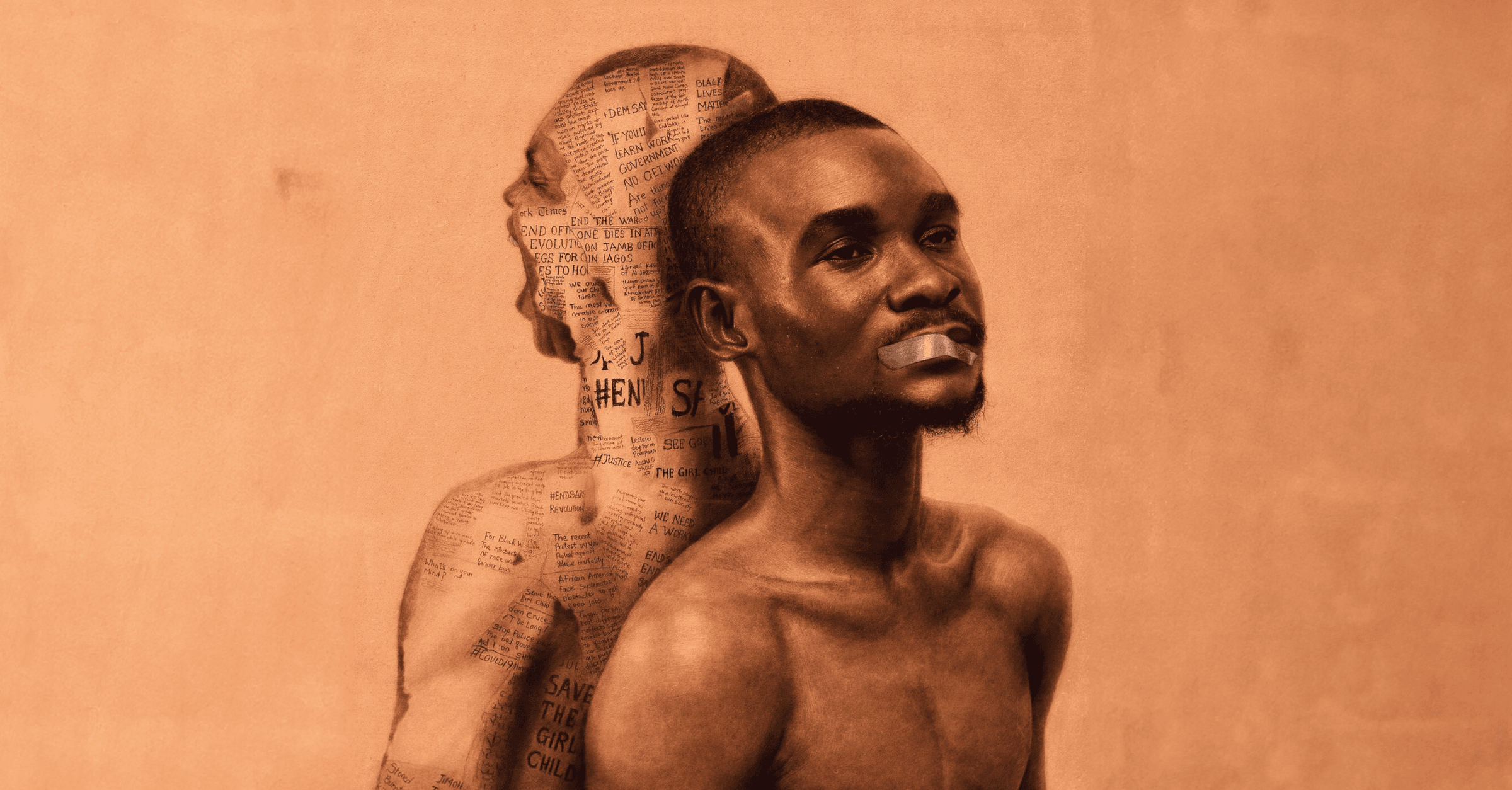
The Gathering of Bastards by Romeo Oriogun is an urgent and immersive book, ushering readers into a contemplative experience on belonging to self, community, and the ecosystem of the world.
Aug 4, 2024
‘The Gathering of Bastards’ cover illustration. Romeo Oriogun / THE REPUBLIC.
‘The Gathering of Bastards’ cover illustration. Romeo Oriogun / THE REPUBLIC.
The poems in Romeo Oriogun’s sophomore poetry collection, The Gathering of Bastards, build their worlds from the sea, a now recurring motif in Oriogun’s work, evident in his past collection, Nomad, which won the 2022 Nigeria Prize for Literature. Following in the footsteps of Nomad, The Gathering of Bastards has been shortlisted for the 2024 Derek Walcott Prize for Poetry. In this collection, Oriogun and his speakers serve as witnesses, traversing corporeal, sexual, mental, spiritual and political borders to explore themes of departure, remembrance and wandering. Everything in the collection migrates through borders, invisible or visible. Every boundary beckons to be crossed, abolished, or established. Oriogun achieves this through poetics that wrestle with the definition of home, centering the meaning of belonging around the concept of communalism—a conflict between self-ownership and societal ownership.
Interestingly, with the opening poem, ‘It Begins with Love’, Oriogun initiates the collection into a correspondence between borders. Here, the speaker’s opening dialogue is an incantation that sheds light on the border between living and dying. He writes: ‘Let no body, / bloated and gone, find its way to my boat’. The speaker is a witness to a reimagination of nirvana, before the plague of the drowning seasons, catastrophe and deaths. Similar to Derek Walcott’s ‘Love After Love’, published in Walcott’s collection, Sea Grapes, ‘It Begins with Love’ romanticizes itself on the possibilities of a life defiant of loneliness and ache, saturated with pleasure and joy. This is also the focal point of catharsis initiated by a progressing spell of incantatory declarations reflected in the poems: ‘Migrant by the Sea’ (‘now it is my turn: I must dare the ocean; I must move into the hands of time’); and ‘Waiting for Rain’ (‘and before the night/ comes I will walk down the riverbank; I will see/ the rain’). With precision in diction and philosophical depth, Oriogun invokes the use of language as both prayer and sacrament.

Focused consumption without interruptions.
Decades of reporting at your fingertips.
Long-form journalism that matters.
About the Author
is a medical student, poet, and essayist. He is a poetry editor at Fiery Scribe Review.




Comments
Sign in to comment.