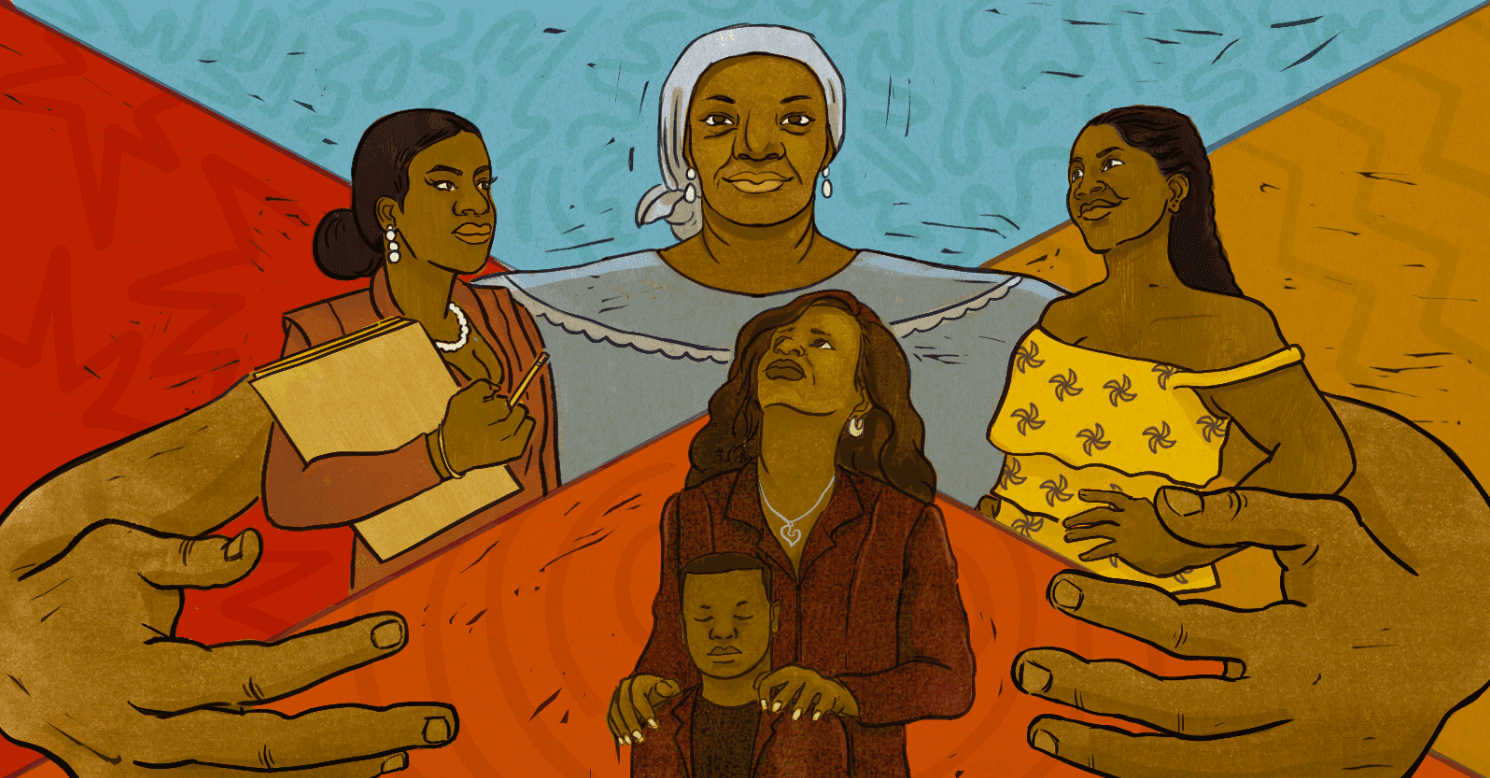
Dream Count tells the story of four women. In using the cardinal four, it joins a tradition of writing that brings together four points of narrative into a meaningful whole—in literature,
T. S. Eliot’s ‘Four Quartets’ and
Wole Soyinka’s ‘Four Archetypes’ are prominent examples. Soyinka uses his four (male) archetypes—Joseph, Hamlet, Gulliver, Ulysses—as allusions to his experiences of imprisonment, wandering and isolation. Of the four, ‘Ulysses’, narrated in first-person, is the most lyrical rendering of the
poet’s personal voice. An even closer model to Adichie’s female quartet, is Nina Simone’s song, ‘Four Women’. As her band plays the opening instrumentals in
a 1965 live performance, Simone introduces the song in her characteristic hoarse and melancholic voice: ‘Four women… Each one with a different colour, each one with a different grade of hair and one them’s hair is like mine.’ Simone’s archetypes are Black women who have lived through the horrors of American slavery, survived it by different means. By highlighting the difference in their colours (as both skin and metaphor for being) and her personal affinity with at least one of the women, Simone offers a sharp commentary on the varied but familiar experience of Black womanhood, a commentary that
Dream Count makes afresh for our current epoch.







Comments
Sign in to comment.