Africans are sometimes like ships that pass by each other at night. We barely know much about other Africans. It is often interesting when you tell an American that you are from Nigeria, and he says to you that he went to college with a guy from Eritrea. Like him, you may not be able to identify the location of Eritrea on a map.
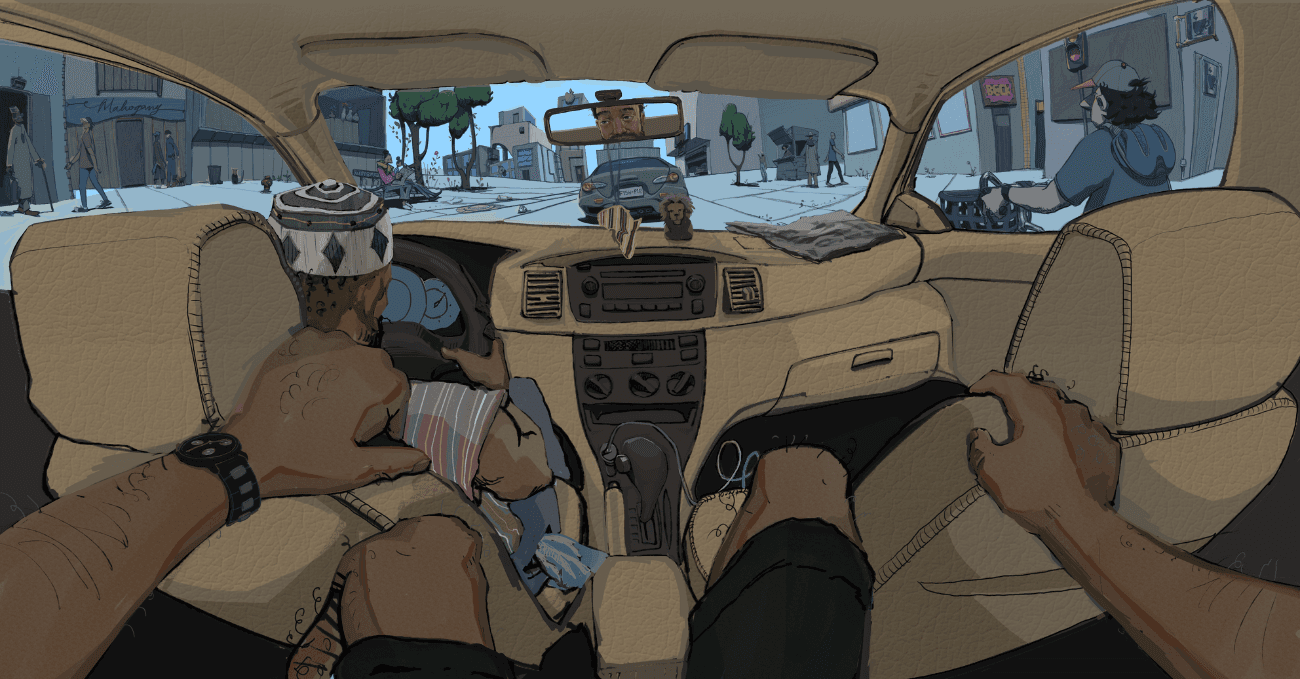
When I boarded the Uber, my driver immediately identified me as African—specifically Nigerian.
‘You know, we know ourselves. We can tell when we see each other that we are from the same Africa,’ he said.
‘I am not too sure of that, unless there’s something in your vehicle that announces it, like a flag,’ I said.
‘You are just messing with me. You know immediately you see someone from Africa here in this country you can tell. You Nigerians are even easier to pick out.’
I know that a common conversation thread among Africans on social media is the fact that they can tell if someone is Nigerian before the person opens their mouth. According to them, Nigerians tended to walk with a certain swagger and when they opened their mouths, they had a tendency to be loud. I did not see anything in my sartorial choice, walk or carriage that may have marked me as Nigerian to the driver—but as they say in America—you never can tell.
I took the initiative and asked him where he was from.
‘I am from Guinea,’ he said.
He could not have given a more confusing response. There are a lot of Guineas. In my mind I tried to untangle them. I remembered something from my high school geography class on how to distinguish one Guinea from the other. The rule of thumb was to use the capital city of each country. There was Guinea Conakry, Guinea Bissau, Equatorial Guinea and Papua New Guinea. The Guineas in Africa had been severally colonized by the French, the Spanish and the Portuguese—this added more to the confusion.
‘Ahmadou Diallo,’ I said.
‘Ah that’s my brother,’ he said.
I was African enough to know what he meant by this. Diallo could not have been his literal brother, but the notion of fictive kinship is universally African. It did strike me once that there were only two words in my native language Igbo for kinship—brother or sister. There were no words for cousin, uncle, nephews. Everyone who was related to one was either a brother or a sister.
I recalled following the story of Diallo as it unspooled on television. He was only reaching for his wallet when the cops shot him again and again until they ran out of bullets. What was in his wallet? Not much. Among the contents was a protective prayer talisman. It failed to protect him.
He had merely been getting by on odd jobs as he waited for his asylum application to go through. In the application he had claimed to be from Mauritania—this was a lie—but that was not why the cops shot him. In America people are not likely to get shot for lying in their asylum application. Their chances of being shot were higher if they reached for an innocuous wallet.
‘How long have you been living in this state?’ he asked.
I told him. This was the first time someone was asking me this—usually, it was about how long I’d been living in America.
‘I like it here. This state is very peaceful,’ he said.
‘Yes. It is generally quiet here,’ I said.
‘The state where I lived before I moved here was not peaceful at all. Shootings and robbery and violence all the time,’ he said.
‘Even this driving job is so dangerous over there.’
‘This state well, you may be right. I have never heard that a taxi driver was robbed here. It may happen but I have not heard of it. It is a small state anyway,’ I said.





Comments
Sign in to comment.