

Our new print issue, Africa’s Hustle Republics, is here! Subscribe for less than ₦1K/$1 a week for full access.
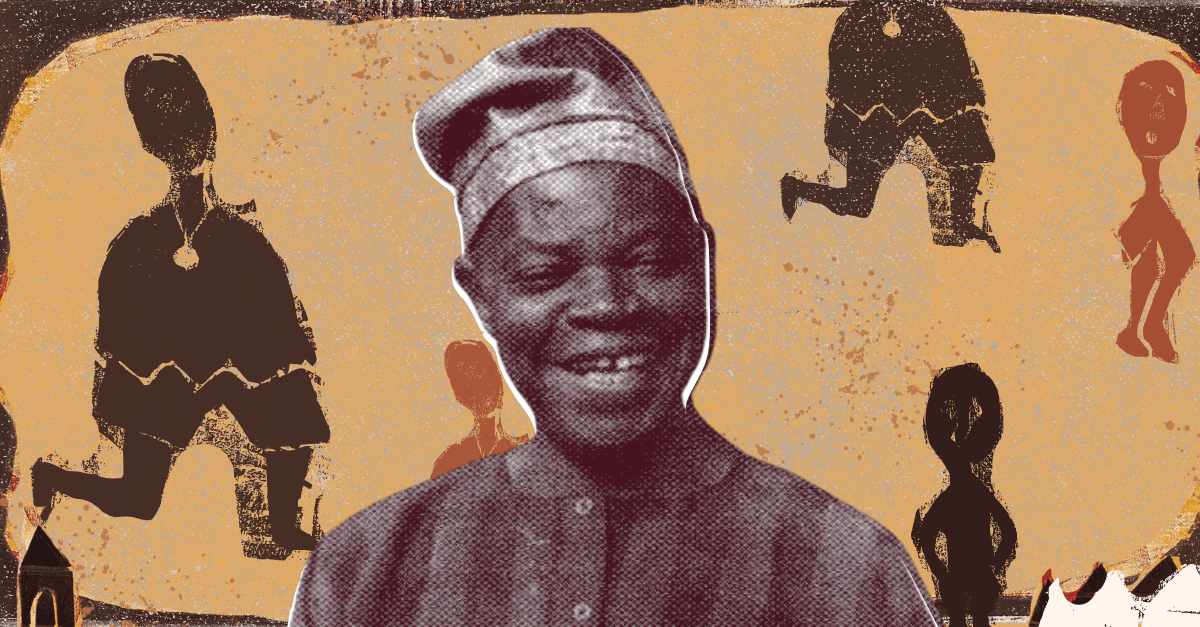
For the late Nigerian writer, Amos Tutuola, death is not the end. His regeneration lives on in the surreal and fantastic landscapes of African literature. With overlapping influence across the arts, music and literature, Tutuola still journeys.
Aug 3, 2025
Photo Illustration by Ezinne Osueke / THE REPUBLIC. Source Ref: SMITHSONIAN LEARNING LAB, WIKIMEDIA.
1952 and 1954 were pivotal years in the history of African literature. Amos Tutuola had released The Palm-Wine Drinkard and My Life in the Bush of Ghosts consecutively, unleashing ghostly adventures to plague and astonish readers, some of which were European literary critics. These literary critics, having experienced Tutuola’s otherworldly ‘bizarre’ narratives, were petrified by its ‘bad grammar’ and ‘ineptness of method’. Schools of literary thought in Africa and the West analysed Tutuola’s episodic narratives with the fervour of scorn or admiration. The early reviews from writers such as Eric Robinson described My Life in the Bush of Ghosts as ‘the same mixture of devilishness, grotesque adventure and naive storytelling.’
The reviews, some of which, emblematic of what Chinua Achebe termed ‘colonialist criticism’, bolstered the classic trope of primitivity. A derogatory term representing the homogenizing epistemology of Eurocentric modernity. African writers were expected to echo the literary prestige, style and education of Western writers, or else their works were discarded in the bin of literary savagery. Earlier reviews, which dismissed Tutuola’s works as a badly written concoction of bizarre nightmares devoid of earnest symbolism, often overlooked what Afolabi Afolayan described as ‘a temporary intermediate point in the bilingual evolution of a dialect—the dialect being the rather undefined abstraction “Nigerian English” or at least “Yorùbá English.”’ Not often mentioned were its foundational folkloric framework, drenched in the culture and traditions of a people. This gulf in the epistemology of Western and African traditions led some critics to compare the attention and enthusiasm The Palm-Wine Drinkard garnered from European readers to the way figurative African art captivated European artists like Pablo Picasso—a literary form of ‘noble savage’ idealization.

The Republic is a Nigerian media-tech company dedicated to explaining our time—through deeply reported journalism on power, culture and society.
Focused consumption without interruptions.
Years of reporting at your fingertips.
Long-form journalism that matters.
Create a free account to continue reading this month and access more of our work.
About the Author
is a writer, literary critic and archivist based in Abuja.


Comments
Sign in to comment.