

Our new print issue, Africa’s Hustle Republics, is here! Subscribe for less than ₦1K/$1 a week for full access.
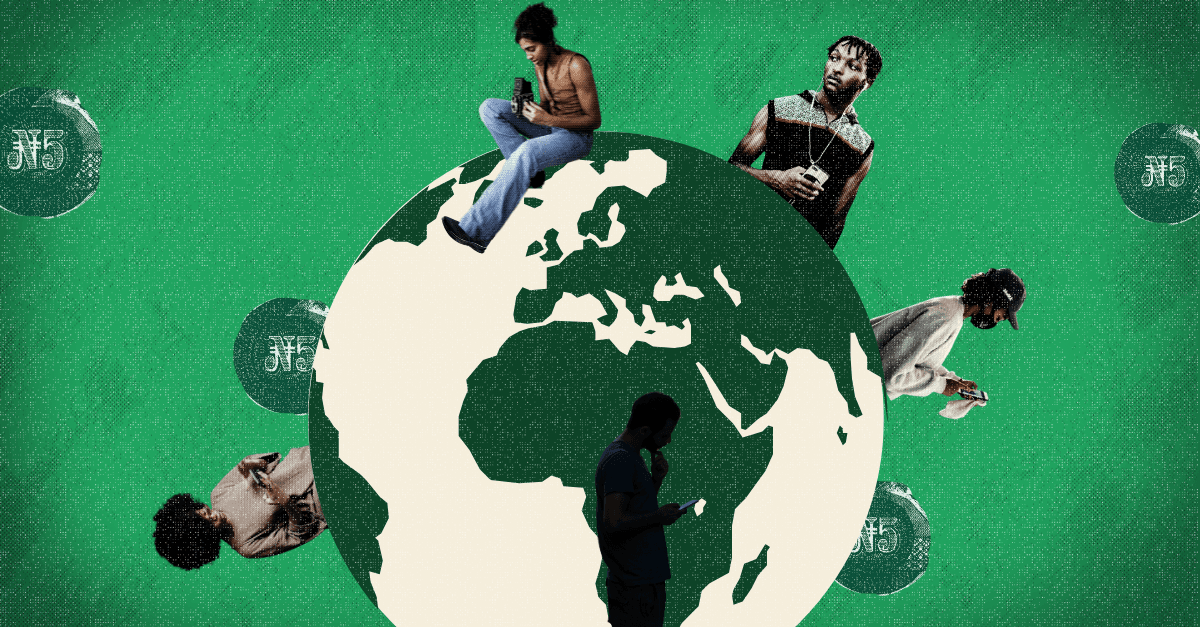
Nigeria’s restrictive financial policy is hindering payments for its rising digital workforce, keeping many locked out of the global economy.
Aug 3, 2025
Photo Illustration by Ezinne Osueke / THE REPUBLIC. Source Ref: UNSPLASH.
Nigeria’s digitally skilled youth serve global clients, yet payment restrictions block them from reaping the rewards of their labour. Despite the country’s digitally savvy and entrepreneurially driven youth population, many young Nigerians remain locked out of global financial systems thanks to systemic exclusion. This exclusion is a serious policy oversight and a structural threat to national and international development, which has turned Nigeria into a modern economy struggling under an outdated monetary policy.
Nigeria’s financial system was built for a time when trade was mostly local and global transactions were rare and slow. Today, it struggles to meet the demands of a digital, borderless economy. In 2023, the Central Bank of Nigeria (CBN) took steps to modernize its monetary and foreign exchange (forex) policies, most notably by unifying exchange rates and pledging greater transparency. While this reform marked major progress in liberalizing Nigeria’s forex system, it has not translated into meaningful access to foreign exchange for individuals or small businesses. In theory, exchange rate unification should reduce the need for capital controls (government restrictions that aim to limit exchange rate fluctuations caused by volatile flows) by allowing foreign exchange to flow more freely through market mechanisms. However, capital controls remain in place for the Nigerian market due to a deep-rooted culture of regulatory gatekeeping, a lack of political will to fully liberalize access, and an outdated institutional mindset that treats individuals and small businesses as forex risks rather than economic opportunity drivers.
When Nigeria unified exchange rates in June 2023, allowing the naira to devalue by over 36 per cent, it marked a dramatic pivot from the previous multi-rate regime. As Reuters noted, despite this high-profile reform, foreign currency shortages and distortions remained. Proving that rate unification alone does not automatically dismantle capital controls.
Most international transactions in Nigeria still route through traditional banks or CBN-approved operators. These channels impose practical access restrictions such as blocking platform payouts, enforcing strict capital flow rules, applying poor forex conversion rates, and delaying fund transfers into domiciliary accounts. Many of the restrictions Nigerians encounter when trying to access forex arise directly from the formal regulatory measures implemented by the CBN. The CBN caps individual transactions at $5,000 quarterly, mainly restricted to travel, tuition and medical payments and limits Bureau de Change (BDC) operators to $25,000 in weekly foreign currency sales. While these rules apply formally to BDCs and certain types of forex usage, individuals with domiciliary accounts can withdraw their foreign currency inflows in full, subject to bank liquidity and verification. Cumulatively, these restrictions contribute to a broader risk-averse environment, where banks, facing compliance uncertainty, often delay or reject inflows to individuals whose earnings are not clearly defined under approved categories.
The overall policy environment and these layered restrictions signal a reluctance to fully liberalize forex access. For Nigerian freelancers, remote workers and entrepreneurs whose livelihoods depend on smooth access to international payments, these structural barriers significantly hinder their ability to participate fully in the global economy. The global freelance economy is a multi-trillion-dollar market, with freelancers and remote digital workers contributing an estimated $1.3 to $1.5 trillion annually and growing at a projected rate of 15 per cent per year, it represents one of the fastest-expanding sectors of the global economy. Without key financial reforms, Nigeria risks being locked out of this dynamic opportunity.
The Republic is a Nigerian media-tech company dedicated to explaining our time—through deeply reported journalism on power, culture and society.
Focused consumption without interruptions.
Years of reporting at your fingertips.
Long-form journalism that matters.
Create a free account to continue reading this month and access more of our work.
About the Author
is a policy communications specialist and writer, with bylines in AfricanLiberty.org, Modern Ghana, and elsewhere. I typically write on skilled labour mobility, governance, international development, gender economics, and the role of markets in shaping inclusive, prosperous societies.


Comments
Sign in to comment.