

Our new print issue, Africa’s Hustle Republics, is here! Subscribe for less than ₦1K/$1 a week for full access.
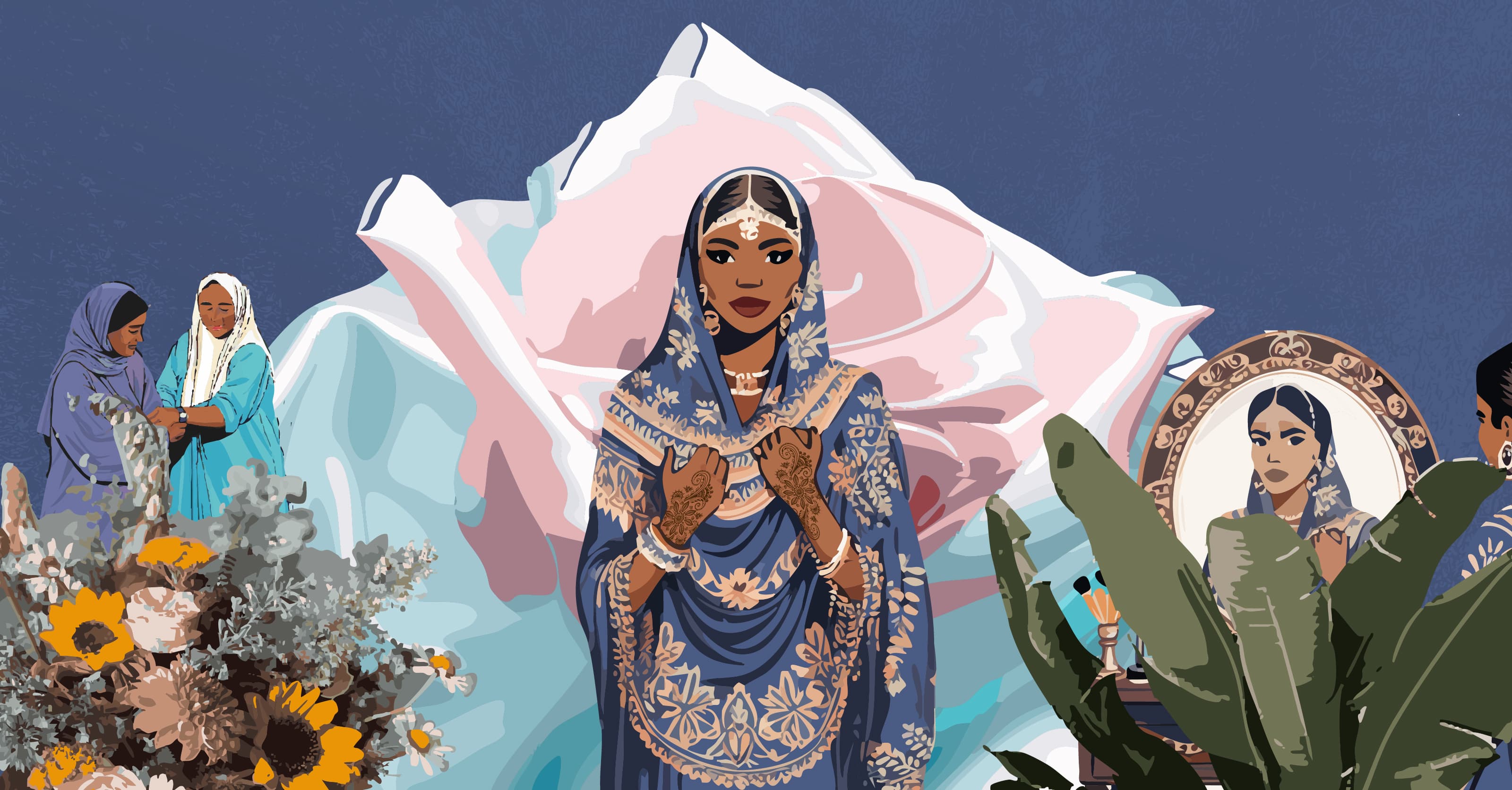
‘The laffaya is elegant, but it is also instructive. It teaches you how to move, how to hold your head high. There is a sensuality in the way it wraps the body, not in the Western sense, but in the quiet power it gives.
I was twelve when I first fell in love with a piece of fabric—the laffaya. Five yards of soft, patterned cloth, draped across my shoulders and wrapped around my body, made me feel more like myself than anything else in my wardrobe. It wasn’t just clothing. It was identity. Comfort. Quiet confidence.
In northern Nigeria, especially among Arewa women, the laffaya or mehlfa carries symbolic meaning that shifts with context. For Hausa-Fulani women, the laffaya—wrapped as a skirt and draped over the shoulders like a hijab, paired with a blouse—is both a bold fashion choice and a quiet badge of modesty, while the mehlfa, nearly identical to its Sudanese cousin—wrapped under the arms and knotted around the chest before being draped over the head as a veil—becomes a whispered announcement of religious devotion for those who use it as their hijab and a reminder of how it was the only appropriate and affordable covering for them.
In Arewa, bridal laffaya shimmers with elaborate embroidery and metallic threads, while everyday wear is made of soft, simple cotton or cheap chiffon. There are rules, unspoken but heard. The intricate, heavy patterns belong to wealthy older matriarchs, the lighter touches to young women or bridesmaids, but each fabric hints at status, family ties and the quiet pride of an Arewa woman who wants her clothing to speak before she does. The night before an important event, she perfumes the cloth with turaren wuta—a northern incense blend of sandalwood and resin—folds it delicately and chooses accessories that are just enough to show her status: not too much, but especially not too little. The ritual and intention begin before the fabric ever touches her skin.
The Republic is a Nigerian media-tech company dedicated to explaining our time—through deeply reported journalism on power, culture and society.
Focused consumption without interruptions.
Years of reporting at your fingertips.
Long-form journalism that matters.
Create a free account to continue reading this month and access more of our work.
About the Author
is a Nigerian writer who explores identity, memory and the beauty of womanhood through personal and cultural storytelling.


Comments
Sign in to comment.