For more than 60 years, African governments have treated colonial borders as untouchable. But as conflict, economic fragmentation and shifting global power expose the limits of that decision, is it time to imagine a different map of Africa?
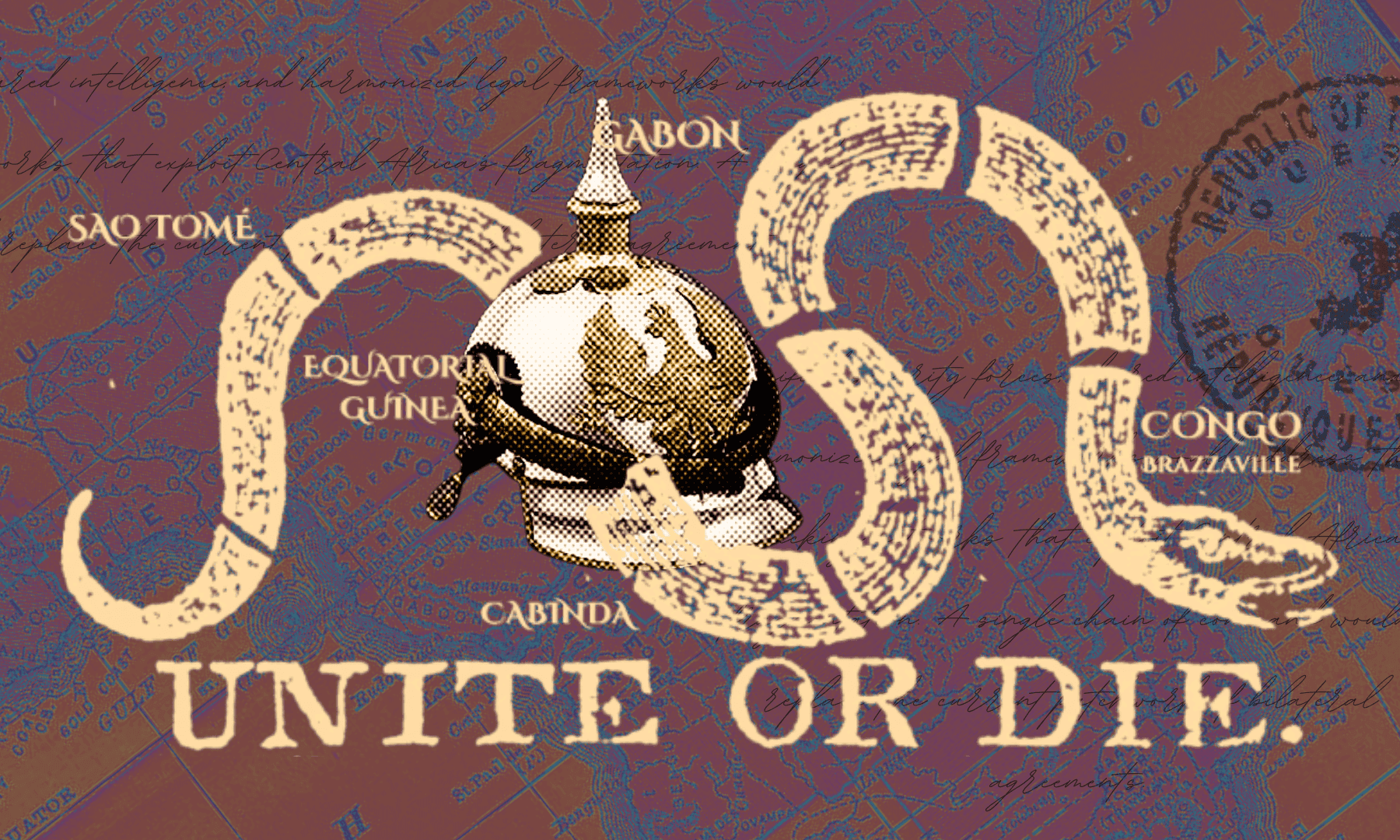
Photo Illustration by Toluwalase Onilede / THE REPUBLIC.
When African states emerged from colonial domination in the late 1950s and early 1960s, they inherited a map mostly drawn for imperial ends. The scramble for Africa (1884–1885), formalized at the Berlin Conference, produced borders that cut across deserts, forests, rivers and ridges without regard for local political realities. Many new leaders recognized that these borders were neither natural nor just; they also feared that redrawing them would unleash endless conflict. The newly independent countries thus adopted a powerful consensus: the colonial borders must remain inviolable. This principle was viewed through the prism of uti possidetis juris—the doctrine, first applied in Latin America, that colonial administrative borders become international borders upon independence. The International Court of Justice (ICJ), notably in the 1986 Burkina Faso/Mali case, explicitly linked the 1964 Cairo Resolution to uti possidetis, grounding African borders in colonial law, a jurisprudence that still shapes the African Union Border Programme (AUBP), which aims to delimit 80 per cent of African boundaries by 2027.
Yet, conflating Africa’s principle with uti possidetis obscures important differences. The African principle is broader and more political: it prescribes neither how a border must be drawn nor how disputes should be resolved; it simply forbids the forcible alteration of borders and obliges states to settle disagreements peacefully. Moreover, only a minority of African borders resulted from a single colonial power’s internal administrative line; many were products of bilateral treaties between rival empires. In Central Africa, French, Belgian, German, British, Spanish and Portuguese claims intersected and overlapped.
The practical effect, nonetheless, was to freeze the colonial map. Stability was purchased at an exorbitant price: 54 dysfunctional rump states. Borders that split ethnic groups created permanent minorities whose loyalty was always suspect; landlocked states depend on the goodwill of neighbours for port access; and infrastructure networks designed to extract resources toward imperial metropoles (with Beijing supplanting Paris and London) run parallel to borders rather than across them, fragmenting regional economies. From 2009 to 2011, according to the World Bank, these divisions cost Africa up to two per cent of annual growth, a figure magnified by climate shocks and migratory pressures.
To grasp possible paths toward reconfiguration, let us examine the process that unified the German states in the 19th century. This comparison is not trivial. Collectively, the five Central African territories—Congo-Brazzaville, Gabon, Equatorial Guinea, São Tomé and Príncipe and Cabinda—encompass approximately 645,000 km², larger than modern Germany and comparable to the 1871 German Empire, though their combined population of roughly ten million falls far short of the approximately 41 million unified by the German chancellor Otto von Bismarck. Like the 39-state German confederation, these are small, individually fragile polities. Additionally, the Economic and Monetary Community of Central Africa (CEMAC) bloc and the shared CFA franc already provide an economic integration framework analogous to the Zollverein customs union that preceded German unification.
BISMARCK, THE ZOLLVEREIN AND THE POLICY OF ‘BLOOD AND IRON’
The German case is not a model to be mechanically replicated in Africa. Still, it shows how economic integration, diplomatic manoeuvres, and ultimately war can combine to transform a fragmented political landscape into a single state. Before unification on 8 January 1871, in the Hall of Mirrors at the Palace of Versailles, the German world comprised 39 states, from kingdoms like Prussia and Bavaria to tiny principalities and free cities, sharing a language and culture but divided by tariffs, currencies, legal systems and dynastic loyalties. The first step toward unity came not through political revolution but through economic integration: the Zollverein of 1834, a Prussian-initiated customs union that abolished internal trade barriers and established a common external tariff. Crucially, most German states joined, but Austria, the dominant German-speaking power, remained apart to protect its markets. Over three decades, the Zollverein wove the German economies together, spurring industrial growth, railways and a single market, and bred a bourgeois nationalism—its merchants seeing themselves as actors in one German economy rather than subjects of separate princes.
In Central Africa, CEMAC, with its CFA franc and shared infrastructure projects, could play a similar role; yet its sluggish progress, with GDP growth of only 2.8 per cent in 2025, underscores the challenges of coordination. The Zollverein laid the groundwork for the political steps that followed: commerce preceding and facilitating unity. In Africa, the African Continental Free Trade Area (AfCFTA), operational since 2021, aims to raise intra-African trade from 18 per cent to 52 per cent by 2040, but non-tariff barriers persist.
The decisive figure in the German saga was Bismarck, who became Prussian minister-president in 1862, the very man who would later convene the imperial powers in Berlin to partition Africa. Bismarck famously declared that the great questions of his time would not be decided by ‘speeches and majority decisions’ but by ‘blood and iron’. His strategy was threefold: isolate Prussia’s enemies diplomatically, modernize the Prussian army and wage short, decisive wars against carefully chosen adversaries. This unsentimental realpolitik, pragmatism without scruples, should resonate with African realities. Herein lies a central paradox: Bismarck, who convened the Berlin Conference to partition Africa, simultaneously provides, through his unificatory statecraft, a blueprint for reassembling fragments of the continent; the architect of African division thus becomes an unexpected intellectual instrument for its potential restoration.
What face can I give to an ‘African Bismarck’? What obsession might he have? The challenge, by the Ethiopian leader Abiy Ahmed Ali, to the Anglo-Egyptian Treaty of 1929, which granted Egypt a veto over the Nile’s waters and any upstream construction, was a profoundly Bismarckian moment. Through this act, materialized by the Grand Ethiopian Renaissance Dam (GERD), whose construction began in 2011 and whose reservoir began filling in July 2020 despite Egyptian protests, Ethiopia chose, at the risk of war, the supreme interest of its nation. Thanks to this dam, more than to any heartfelt charity pop song, Ethiopia may finally overcome the droughts that have caused terrible famines, even at the expense of Egypt, which, now in a position of need, may come to see greater value in cooperation and, perhaps one day, even a commonwealth with Ethiopia.
Bismarckian, but not all the way: in signing the peace agreement with Eritrea in Asmara on 9 July 2018, Ali did not go so far as demanding Eritrea’s demilitarization or democratization, missing an opportunity to pursue a political union with Eritrea, the rump state of Djibouti, and perhaps even Somaliland, which lacks international recognition. Such a union could have restored Ethiopia’s access to the sea. Still, Ali’s January 2024 agreement with Somaliland for access to the port of Berbera is an encouraging first step toward an East African Zollverein under Ethiopian hegemony. By holding back, Ali left the field open for the rearmament of the Tigray People’s Liberation Front (TPLF) rebels. By failing to fully export the polemos, he was forced to confront war at home when the Tigray conflict erupted on 3 November 2020, following the TPLF’s attack on the northern command of the Ethiopian army. As suspicion deepened, Tigrayans increasingly came to be treated as collective suspects. A regime change in Asmara, followed by union with Eritrea, could have saved thousands of lives.
Bismarck achieved the unification of Germany through three wars within a decade. In 1864, Prussia and Austria jointly defeated Denmark over Schleswig and Holstein. In 1866, Bismarck provoked a crisis over the duchies, secured Italian support by promising Venetia and left Austria isolated against a rearmed Prussian army. The victory at Königgrätz, achieved in seven weeks, redrew the map of Central Europe, a rapid outcome that contrasts with the prolonged conflicts in Cabinda or the Democratic Republic of Congo (DRC), which continue to drain resources and claim lives. Bismarck then established the North German Confederation under Prussian leadership, binding the independent southern states through military alliances and the Zollverein. The final stage was the Franco-Prussian War of 1870–71. By editing the ‘Ems Dispatch’ to provoke Napoleon III into declaring war, Bismarck positioned France as the aggressor. The German states united, France was swiftly defeated and the southern states joined the German Empire, proclaimed at Versailles in January 1871.
The primary distinction with Central Africa lies in historical depth: the German states were centuries-old entities with established ethnolinguistic identities, whereas ours are young post-colonial states (gaining independence between 1960 and 1975) with externally imposed borders, multiple colonial languages and no dominant state similar to Prussia to facilitate consolidation. Congo-Brazzaville appears to be the most likely candidate for regional hegemony, drawing on its legacy as the capital of the French colonial equatorial empire, the historical memory of the Kongo empire and its demography as the most populous of the five entities.
PARTITION AND STRATEGIC HORIZONS
What emerges from the history of the unification of Germany is a pattern: economic integration created shared structures and interests; diplomacy ensured each enemy was isolated before conflict; and war removed the remaining political obstacles. Unification was the product not of nationalism or abstract pan-Germanism alone, but of a strategic combination of market-building, alliance management and force. In Africa, the AfCFTA could serve as an African Zollverein, but its slow implementation—by 2026, only 47 per cent of eligible states had submitted tariff-reduction offers—limits its potential.
For Central Africa, the lesson is twofold: functional integration through trade, infrastructure and monetary policy can establish the foundation for political union without directly challenging the legal complexities of border revision. If resistance from regional or external actors cannot be resolved through negotiation, then the use of force may become a strategic necessity, however uncomfortable that prospect may be. Let’s apply this lens to Congo-Brazzaville’s borders.
THE CASE FOR A CENTRAL AFRICAN UNION LED BY CONGO-BRAZZAVILLE
From the standpoint of Congo-Brazzaville’s national interest, its only viable strategic objective is the establishment of a larger Central African state. Such a union would externalize internal conflicts, converting the risk of civil war and fratricidal division into a collective responsibility for defending a new shared home against external threats. A merged state incorporating Congo-Brazzaville, Gabon, Equatorial Guinea, São Tomé and Príncipe and Cabinda would control vast oil and gas reserves, significant forest resources and a large chunk of the Gulf of Guinea coastline. Under threat from giants like Cameroon, Angola and the DRC, it would gain, through immediate external pressure, the cohesion of Greek city-states facing the perils of the Persian Empire. With a combined Gross Domestic Product (GDP) of around $50 billion, it could diversify beyond oil into a global agro-industrial and technological powerhouse.
Congo-Brazzaville aims to increase its oil production from 260,000–280,000 barrels per day to 500,000 barrels per day by 2027–2030. Collectively, the region’s energy resources could enable investments in infrastructure, refining and petrochemicals that would be unattainable for individual states. This would also provide the union with greater bargaining power with multinational oil companies and decreased resilience on commodity price fluctuations. It is conceivable to establish a Gulf of Guinea oil price index independent of Brent or Persian Gulf benchmarks.
Unified security forces, shared intelligence, and harmonized legal frameworks would address the trafficking networks that exploit Central Africa’s fragmentation. A single chain of command would replace the current patchwork of bilateral agreements. A union comprising eight to ten million inhabitants and substantial oil production would possess greater influence in international forums than any individual member, enhancing its capacity to resist external pressures and negotiate on more equitable terms. Such a union could become the nucleus of a sovereign Equatorial Africa, with Congo reestablishing regional leadership.
THE COMPLICATED HISTORY OF BORDERS IN CONGO-BRAZZAVILLE
The history of Congo-Brazzaville’s boundaries shows how colonial competition and metropolitan priorities, rather than local preferences, created the territorial framework within which its subjugation still unfolds. France secured the right bank of the Congo River through treaties negotiated by Pierre Savorgnan de Brazza with local rulers in the early 1880s, establishing ‘protectorates’ over what became French Congo and, later, Middle Congo. Leopold II of Belgium, acting through the International Association of the Congo, staked claim to the left bank and much of the interior, recognized at Berlin as the Congo Free State, his personal fiefdom. Portugal retained Cabinda thanks to treaties such as the 1885 Treaty of Simulambuco, signed between Portuguese representatives and the ‘princes and notables’ of Cabinda. These colonial treaties still undergird the claims of Cabinda’s separatist movement, the Front for the Liberation of the Enclave of Cabinda (FLEC). The Berlin Conference of 1884, convened by Bismarck to regulate the scramble for Africa, ratified these arrangements and extended Leopold’s territory along the Congo River to its mouth, cutting Cabinda off from the rest of Angola and making it an exclave—an exclave rich in petroleum that today produces 60–70 per cent of Angola’s oil. This partition, driven by economic interests, ignored the ethnic Kongo ties that transcended those borders and fuel separatist tensions today.
In 1910, France reorganized its Central African possessions into French Equatorial Africa (AEF), a federation comprising Middle Congo, Gabon, Oubangui-Chari (today’s Central African Republic) and Chad. Brazzaville was the federal capital, and the Congo–Ocean Railway, completed in the 1930s, linked it to the Atlantic port of Pointe-Noire, making Middle Congo the federation’s transit corridor. During the Second World War, the AEF rallied to General de Gaulle and became the anchor of Free France in Africa; the Brazzaville conference of 1944 marked the beginning of the end of the colonial empire. For Congolese political actors, this era reinforced a sense of their territory’s regional and even global centrality.
The Loi-cadre of 1956 devolved power to territorial assemblies, and the 1958 referendum on the French community dissolved the AEF. Middle Congo became an autonomous republic and, on 15 August 1960, the fully independent Republic of Congo. The borders inherited at independence were largely the federation’s internal administrative lines, together with the colonial boundaries with the Belgian Congo, Cabinda and Portuguese Angola. In this carve-up, Middle Congo lost the mineral-rich Haut-Ogooué (with Franceville) to the new nation of Gabon, and former German Cameroon lost the Sangha corridor that had given it access to the Congo River. Four years later, the Cairo Resolution of 1964 transformed those contingent lines into sacrosanct borders under African international law. Congo-Brazzaville, like its neighbours, accepted the compromise: borders arbitrarily drawn in the 1880s would become the non-negotiable framework of the new nation’s existence.
Congo-Brazzaville now belongs to two overlapping regional bodies: CEMAC, encompassing Cameroon, the Central African Republic, Chad, Gabon, Equatorial Guinea and Congo-Brazzaville, all sharing the CFA franc, pegged to the euro and guaranteed by the French Treasury; and the broader Economic Community of Central African States (ECCAS), extending to Angola, the DRC, Burundi, Rwanda and São Tomé and Príncipe. In theory, these organizations promote economic integration, peace and security and free movement; in practice, integration has been slower and more uneven than elsewhere. Cameroon, the regional heavyweight with 28 million people and a GDP of around $58 billion in 2025, has not consistently led, partly due to internal conflicts. Equatorial Guinea and Gabon have at times prioritized national control of oil wealth and strict immigration policies over regional obligations, frequently expelling citizens of neighbouring countries despite treaty commitments.
Still, the region is crisscrossed by potential vectors of integration. Congo-Brazzaville, Gabon and Equatorial Guinea are all members of the Organization of the Petroleum Exporting Countries (OPEC), with significant reserves and shared offshore basins. Platforms like the CEMAC business and energy forum have encouraged cross-border energy projects and shared infrastructure. São Tomé and Príncipe holds observer status in CEMAC and full membership in ECCAS. Yet, these threads are threatened by global dynamics that exacerbate the vulnerability of fragmented states: the 2026 projected regional growth of around three per cent, according to the World Bank and the International Monetary Fund (IMF), is hindered by high debt and external shocks.
THE WEAPONIZATION OF MOBILITY
Upheavals in global governance are now undermining this CEMAC regional order. Development assistance comes with stricter conditionalities (a new form of vassalization and diplomatic allegiance, notably vis-à-vis Beijing’s revisionism on Taiwan, Tibet, Uyghurs and Inner Mongolia), migration controls and security cooperation requirements. Travel bans and visa restrictions have been deployed as instruments of foreign policy. On 16 December 2025, the Trump administration extended its travel ban to 20 additional countries, including Mali, Burkina Faso, Niger, South Sudan and Congo-Brazzaville, part of an expansion covering 75 countries. Mali, Burkina Faso and Niger announced they would apply the same measures to the citizens of the United States of America in reciprocity, hailed by some as an assertion of dignity and sovereignty, but in reality, a bravura gesture akin to a clay pot challenging an iron pot.
For small resource-dependent states like Congo-Brazzaville, these dynamics lay bare a structural vulnerability. With populations between two and five million, narrow oil-dependent economies and currencies tied to the euro through arrangements contingent on French goodwill, such countries have limited leverage: they can be punished but cannot credibly punish in return. Their borders are tight enough to confine their own citizens, yet too porous to shield them from financial shocks and external political pressures.
Positioning major global capitals within the range of annihilation by nuclear missiles launched from an African nation represents a significant and long-overdue strategic imperative. This context clarifies why the apartheid regime in South Africa dismantled its six nuclear weapons between 1989 and 1991 under President F. W. de Klerk, prior to the transfer of power to the African National Congress-led government in 1994. Similarly, after Algeria’s independence in 1962, France retained its Saharan nuclear test sites under the Evian Accords, conducting 13 further underground tests until 1966 and evacuating the Hammaguir rocket launch site in 1967, without transferring any nuclear or missile technology to the National Liberation Front (FLN) government. The prospect of Paris falling within range of an Algerian nuclear arsenal was clearly unacceptable to French authorities. Researching and owning a doomsday power is the condition of equality and mutual respect that will permit the success of any diplomatic resolutions.
This is where the German analogy acquires real force. Just as the pre-1871 German states could not individually shape a European order dominated by Austria, France and Russia, today’s Central African states are caught in a system where decisions made in Washington, Brussels, Beijing or Paris critically shape their fate. The unity of all the Germans transformed a collection of objects in European diplomacy into a single powerful subject. For Central Africa, political union is likewise the only path from vulnerability to real sovereignty. The call to ‘unite or perish’ will thus cease to be mere rhetoric. It will reflect a pragmatic assessment of power in a world of large blocs, the European Union, an ascendant Eurasia, a continental China and the North American market, where small states survive mainly as appendages and clients unless they integrate into larger political projects. In 2026, with the AfCFTA beginning to boost intra-African trade, such unity could counterweight post-Trump American tariffs.
CABINDA: OIL, LAW AND THE LIMITS OF THE STATUS QUO
No discussion of Central African borders can avoid Cabinda. Cabinda is an exclave province of Angola, separated from the rest of that country by the mouth of the Congo River and a narrow strip of the DRC territory. Under the 1885 Treaty of Simulambuco, the Kongo chiefs of Cabinda accepted Portuguese protection, but the territory was legally distinct from Angola, which had been a Portuguese colony for centuries. When Portugal withdrew in 1975, Cabinda was effectively incorporated into independent Angola without a separate act of self-determination, a move long contested by Cabindan separatists. Various factions of the FLEC have fought for independence or autonomy, waging a low-intensity insurgency with a government-in-exile presence in Europe. International recognition of Cabinda as part of Angola remains firm, but legal and moral ambiguities persist: the FLEC has called upon the African Union (AU) to denounce Angola’s ‘colonial policies’ and clashes reported in 2025 have resulted in dozens of deaths.
For Congo-Brazzaville, Cabinda poses both historical and strategic stakes. The exclave borders Congo’s Kouilou region and ethnic and cultural bonds, rooted in the precolonial kingdoms of Loango and Kakongo, link populations on either side. Cabinda’s exclavement was a decision made by European powers, not African communities. From an African perspective, it is unfinished business in the decolonization of Central Africa.
In June 1997, leveraging his marital alliance with Gabon’s president, Omar Bongo, and his friendship with Angola’s president, Eduardo dos Santos, Congolese president Denis Sassou-Nguesso ignited a civil war against his rival, the democratically elected President Pascal Lissouba. In October of that same year, the Angolan army invaded Congo-Brazzaville from Cabinda, tipping the civil war in favour of Sassou-Nguesso’s faction. Angola became a de facto occupying force in Congo for nearly five years. This painful episode underscored how Cabinda can be a fulcrum of regional power dynamics.
The imperative of unity among Central Africa’s small states thus demands that the Cabinda question be addressed: only a consolidated union could begin to rival a neighbour like Angola.
Any claim to Cabinda by Congo-Brazzaville or a future Central African union would face significant obstacles. The African doctrine of respect for borders at independence would immediately be invoked against any territorial revision. Angola, a regional power with a battle-hardened army, would fiercely resist any loss of sovereignty over the exclave and external powers with oil interests in Cabinda, especially the United States, France and China, would oppose instability in such a crucial production zone. The AUBP could step in as facilitator, though its limited success to date—only about 20 per cent of African borders are formally demarcated—highlights the magnitude of the challenge.
Yet, these obstacles are not insurmountable: the inviolability principle is not absolute and envisions a peaceful resolution between the parties concerned. A new Central African union, incorporating Congo-Brazzaville, Gabon, Equatorial Guinea and São Tomé, with genuine regional legitimacy and significant economic clout, might negotiate a settlement with Angola: shared development zones, revenue-sharing agreements, demilitarization of the enclave or even an auto-determination referendum for Cabinda’s inhabitants. The AU has facilitated similar agreements before with the Ethiopia–Eritrea peace deal and the creation of South Sudan. If diplomacy were to fail, however, the Bismarckian option remains.
PEACE AND WAR
The preferred path to a Central African union is, of course, diplomatic. Economic integration within CEMAC can be deepened, with Congo-Brazzaville taking the initiative to propose a political federation. Shared infrastructure, pipelines, railways and power grids would create interdependence, making political union feel like a natural progression rather than a forced imposition. Harmonizing laws on citizenship, residency and labour would allow populations to circulate freely, building the social foundations of a common identity.
São Tomé and Príncipe could be integrated through negotiation: the archipelago’s small population of Kongos’ descendants (about 220,000) and limited economy (one of the smallest in Africa, according to the World Bank) make it dependent on external support, and a larger bloc would offer security guarantees and development opportunities. Gabon and Equatorial Guinea present more complex challenges: both enjoy higher per capita incomes than Congo-Brazzaville and have pursued autonomous development strategies; their elites may resist any arrangement that dilutes their sovereignty or redistributes their oil wealth. Diplomatic persuasion would need to be paired with economic incentives and, if necessary, political and military pressure.
If diplomacy fails, the Bismarckian lesson is that war might be necessary to overcome the resistance of rival powers or reluctant states. Three wars over seven years, against Denmark (1864), Austria (1866) and France (1870–71), each short, decisive, and designed to isolate the adversary before striking.
For Congo-Brazzaville, the principal obstacle to union is neither Gabon nor Equatorial Guinea, but Angola—more specifically, Angola’s control of Cabinda. A war to reclaim Cabinda would be the Central African equivalent of Bismarck’s war against Denmark: a limited conflict over a specific territory, designed to demonstrate resolve and reconfigure the regional balance of power. Such a conflict would necessitate thorough preparation. Even the possibility of war would demand rapid modernization of the military, including advancements in nuclear, space and cyber capabilities, as well as improvements in governance and the formation of new external alliances. Although undesirable, war can catalyse innovation and drive efficiency in public service.
The risks would be very real. Angola is a larger and more powerful state, its military honed by decades of civil war and regional interventions and external powers, particularly the US and China, have substantial investments in Cabinda’s oil industry and would vehemently oppose instability. Yet the risks of inaction are also stark. Without Cabinda, a Central African union would lack the economic heft needed to survive. It would remain dependent on the goodwill of external powers and be vulnerable to pressures such as travel bans, cuts to American aid, economic coercion, unequal contracts and odious debts that currently afflict African states individually. The choice may ultimately be between calculated risk and permanent marginalization.
BEYOND THE COLONIAL MAP
Africa’s borders have largely been drawn by others, for purposes other than our own. In the early 1960s, African elites chose to stabilize those borders because the alternative seemed like chaos. Six decades on, major interstate wars over territory have been rare, but internal wars, fragmentation and vulnerability remain defining features of the continent’s place in the world.
The unification of Germany shows that fragmented political entities can transform into a single state capable of shaping its environment rather than being shaped by it, and that such a transformation is rarely the fruit of good intentions alone. Economic integration, adroit diplomacy, and, in the last resort, war all played a role. The map of Germany in 1815 did not dictate the map of 1871—it was a starting point; not a destiny.
For Congo-Brazzaville and its neighbours, the colonial map should likewise be seen as a starting point: it structured decades of politics and law but need not determine the future indefinitely. External pressures such as US aid, travel bans, odious debts, unequal contracts, and great-power rivalries, together with internal challenges, economic vulnerabilities, security threats and demographic shifts all call for bold strategic rethinking.
The strategy here is making Congo-Brazzaville the leader of a Central African union that includes Gabon, Equatorial Guinea, São Tomé and Príncipe, and ultimately, Cabinda. The road would ideally be diplomatic, gradual and consensual. Still, preparation for a high-intensity conflict must linger in the background, just as it did in nineteenth-century Europe. Whether the region chooses speeches and resolutions, blood and iron, or some combination of the two will determine not only the fate of its borders but also the extent of its sovereignty in a world where power is increasingly exercised on a continental scale.
For now, the principle of the inviolability of inherited borders remains in force and any deviation would be fiercely contested. But principles in international life endure only as long as they serve the interests of those who uphold them. The profound question is no longer whether Central Africa’s colonial borders are arbitrary, but whether clinging to them as unalterable still serves the long-term interests of its peoples. For Congo-Brazzaville, the experience of the Angolan invasion of October 1997 inclines me to answer in the negative.
Central Africa is at a Bismarckian juncture. Unity will not arise solely from determination or rhetoric. It will emerge, if at all, through sustained economic integration, effective diplomacy, and, if required, through conflict. The alternative is fragmentation, ongoing subordination and the gradual loss of genuine sovereignty, a reversion to colonial status and a passive role in history. Such a union would not exist independently of the broader pan-African project; rather, it would constitute a stage in its realization. Barthélemy Boganda, the first president of the Central African Republic, recognized this dynamic. Before his sudden death in a plane crash at the age of 49 in 1959, Boganda proposed uniting the territories of French and Belgian Equatorial Africa into a United States of Latin Africa, envisioned as the nucleus of a larger continental federation.
Léopold Sédar Senghor adopted a similar approach in West Africa, criticizing the balkanization of French Africa and advocating for a federation, as exemplified by the short-lived Mali Federation. Both leaders recognized that African unity could not be imposed from above. Instead, it would be constructed region by region, through blocs strong enough to federate. A Central African union led by Congo-Brazzaville would represent a continuation of this unfinished work and serve as a foundational element of the united Africa they envisioned, a vision that must be our task to realize. We need the unity of all Africans!⎈
Andrea Ngombet is a civil society leader and founder of the Sassoufit Collective, which advocates for democracy and the rule of law in the Republic of the Congo. He is a member of the International Coalition for Democratic Renewal and has been recognized as both a Reagan-Fascell Fellow and a Stanford Draper Hill Fellow. He is a finalist for the 2025 Allard Prize for International Integrity, honoring his work against corruption. Ngombet holds a bachelor's degree in history from Sorbonne Paris IV University and has written various works, including a book on how China facilitates Congo-Brazzaville's kleptocratic regime.








Comments
Sign in to comment.