

Our new print issue, Africa’s Hustle Republics, is here! Subscribe for less than ₦1K/$1 a week for full access.
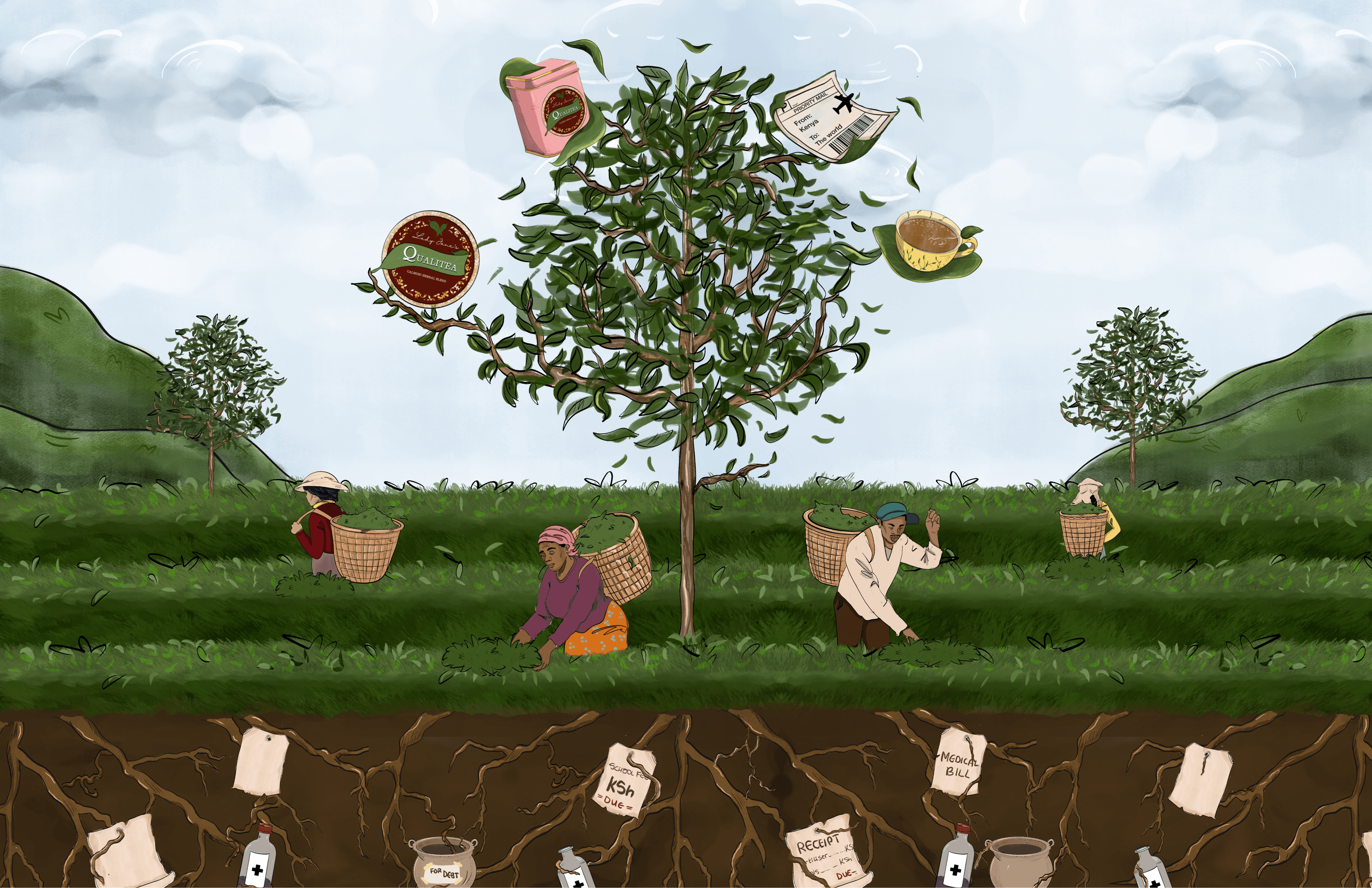
If Kenya is the world’s leading exporter of black tea, how come the 834,000 smallholder farmers growing tea across Kenya’s highland counties still cannot meet the country’s poverty threshold? This is the story of what happens to tea money after the digital scale beeps.
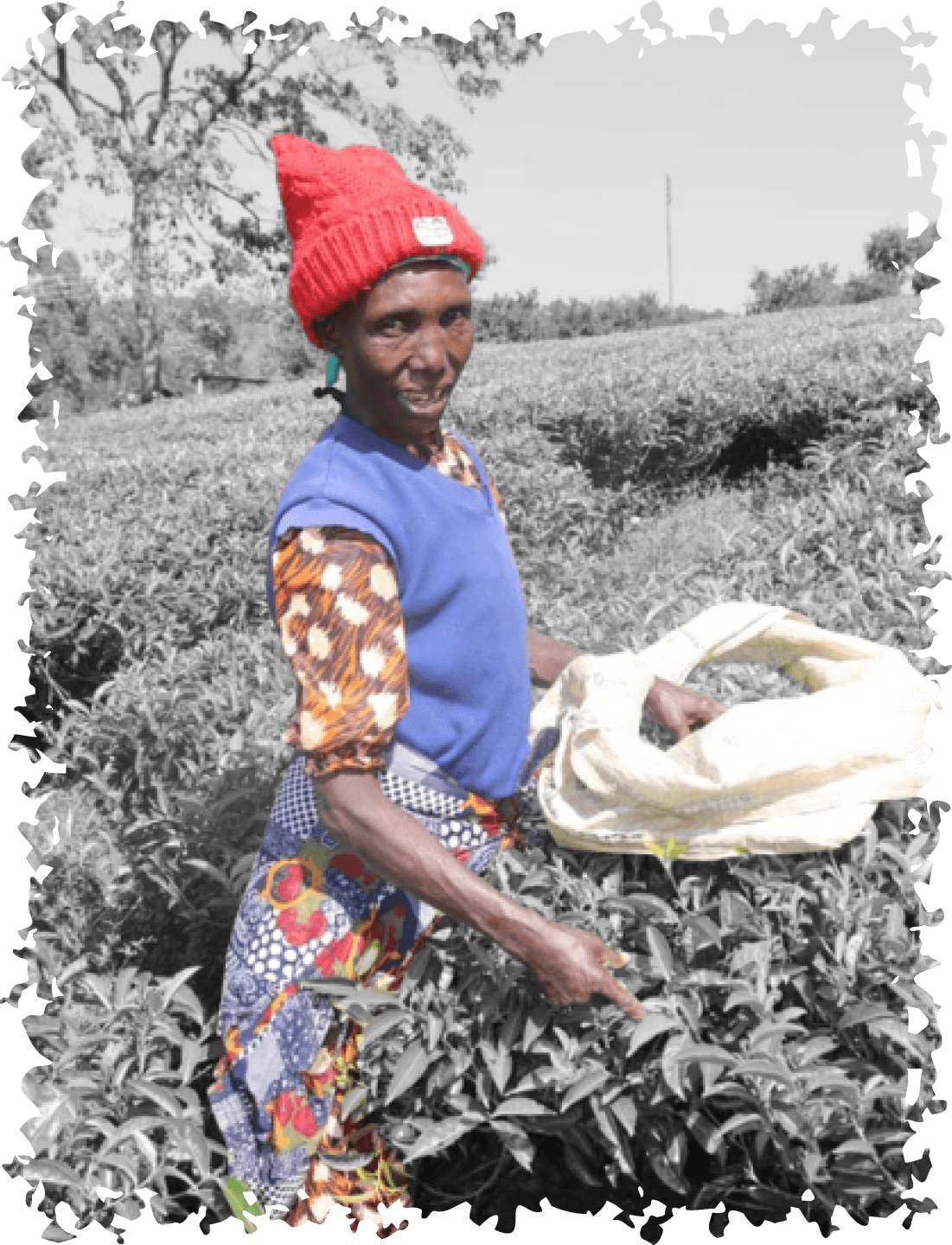
Joyce Mutai’s on her smallholder farm in Nandi County. Photo courtesy of the author.
This video captures a field labourer hanging a nylon sack of green leaf on a tripod-mounted digital scale as the clerk confirms the reading and logs the kilos into a handheld terminal, bringing the opening scene’s transition from physical labour to digital data entry to life. Video courtesy of the author.

Digital Collection Log (July 2026): A mobile app interface screenshot tracking ‘Daily Green Leaf (Kgs) Deliveries’ for a grower named Stephen (KR0240667) at the Kiroone collection point. It lists exact weights per day (e.g., 46.70 kg on July 08; 23.50 kg on July 14), totaling 215.90 kg for the month. This highlights the precise digital tracking systems implemented by factories. Image provided by the author.
Joyce doesn’t write the number down; she knows it will arrive later as an SMS; alongside hundreds of similar messages she has accumulated over the years. For decades, these rooms used manual dial scales that were famous for weight fraud, as a quick flick of a clerk’s wrist could easily steal kilograms from a full day of hard labour. Digital scales were officially introduced in Kenya’s smallholder tea sector in December 2020 to reduce disputes over weighing and restore confidence in the buying centres. By the time the monthly payment reaches her account, part of it belongs to the women and men who plucked the leaves, another part is automatically deducted by the factory that supplied fertilizer on credit, and another part to the village shop where maize flour, sugar and cooking oil have been bought on promise rather than cash.
Although the fertilizer that feeds the tea bush is partly government-funded and the weighing scale is digital, neither guarantees that the money reaching Joyce’s account will be enough to live on. The number on the screen is where the accounting begins

The Republic is a Nigerian media-tech company dedicated to explaining our time—through deeply reported journalism on power, culture and society.
Focused consumption without interruptions.
Years of reporting at your fingertips.
Long-form journalism that matters.
This story features in our print issue, 'Africa’s Hustle Republics'.
Create a free account to continue reading this month and access more of our work.
About the Author
is a Nairobi-based independent journalist and researcher covering the intersection of technology infrastructure, geopolitics and economic networks across Africa. She the founder and chief editor of https://www.voxilens.com/work-with-me/, a platform for independent research, and specializes in long-form, human-centered investigative reporting.




Comments
Sign in to comment.