‘I Don’t Write Without Looking Back’
Lawyer, writer and author of ‘Muslim Feminism is Here to Stay’, Wardah Abbas’ writing process is not linear. ‘It comes with my mood and whatever emotion I feel at the moment goes into my work… I also do not follow any writing rules.’
By Wardah Abbas
August 26, 2020
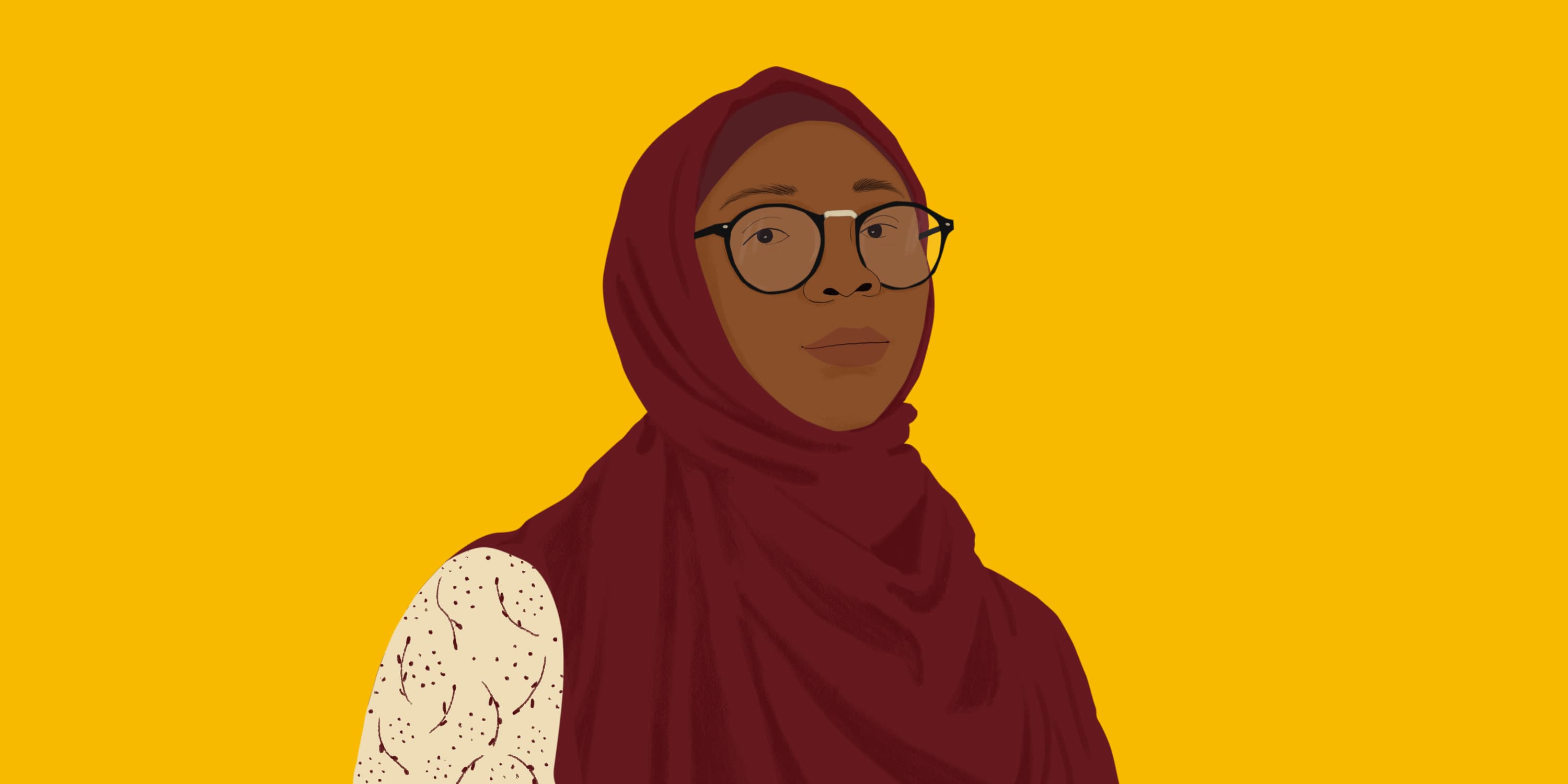
Wardah Abbas. OJIMA ABALAKA
Our questions are italicized.
What books or kinds of books did you read growing up?
I inherited the tradition of reading from my father who himself is a journalist and an avid reader. Growing up, I was always drawn to his library, scanning through the countless rows and columns of books that sat gracefully on his brown ornate bookshelves.
My mother also instilled in me the tradition of reading. Occasionally, she would buy us storybooks, the covers of which were as colourful as the chocolate wraps that accompanied them. In the pages of those books, I found myself either flying on Aladdin’s magical carpets or wearing the emperor’s new clothes, wanting to be there every time I read them again. I read
Alice in Wonderland,
Cinderella,
Puss in Boots and
Wizard of Oz. My elder sister introduced me to Kola Onadipe’s
Koku Baboni and
Sugar Girl as well as Enid Blyton’s
Famous Five series.
By the age of 12, it became tradition to visit the bookstore with my father who invested in lots of African literature. I read Kola Onadipe’s
The Boy Slave, Cyprian Ekwensi’s
Beautiful Feathers, Ken Saro-Wiwa’s
A Forest of Flowers, Chukwuemeka Ike’s
The Bottled Leopard, Elechi Amadi’s
The Concubine, Ola Rotimi’s
The Gods Are Not to Blame, Chinua Achebe’s
Things Fall Apart and
Arrow of God amongst others. I also found a collection of English classics like Robert Louis Stevenson’s
Treasure Island, Wilkie Collins’
The Woman in White, Charles Dickens’
Oliver Twist and Jane Austen’s
Emma. My father had an archive of newspapers—
The Vanguard,
Tribune,
The Guardian and many others, which were more than enough for me to read. I read dictionaries and thesauruses, learning new words and putting them to use in the weekly essays my father encouraged me to write.
All these were books I either found on my fathers’ bookshelves or the ones he bought for me. When I was in Senior Secondary School, I would save my pocket money to buy books written by a variety of American authors—all the rave at that time among my friends. I bought and read books written by Stephen King, Nora Roberts, Sidney Sheldon, Danielle Steele, John Grisham and a host of others. As part of the WASSCE curriculum in school, I read Shakespeare’s
Hamlet and
Romeo and Juliet, Richard Wright’s
Black Boy, Athol Fugard’s
Sizwe Bansi Is Dead, Ola Rotimi’s
Our Husband Has Gone Mad Again and Buchi Emecheta’s
The Joys of Motherhood.
I had a rich literary upbringing. Realizing that I wasn’t mature enough to understand some of the messages in those books while growing up, I’ve gotten back to reading most of them over again. And today, I would rather curl up with a good book than watch most of the drivel that pass for entertainment on the TV these days!
What book from your childhood would you pass on to someone younger?
Kola Onadipe’s The Boy Slave was an all-time favourite for me, growing up. Something about the storyline made it stand out from everything else I read. Perhaps it was the vivid detail of how an eight-year-old Shettima was captured from his village and sold into slavery. It awakened my curiosity and broadened my understanding of how slavery was once a big part of Africa’s economic life, increasing the levels of inequality—between men and women, rich and poor, free and servile. It’s historical fiction that afforded me the privilege of travelling into the past and seeing the people that lived in it. The Boy Slave uncovered a very important aspect of Africa’s history that’s very rare to find in other books—exposing the Nigerian child to literature that reflects the truth about Africa.





Comments
Sign in to comment.