

Earn from the writing you have already published. List your work on Atlas today!
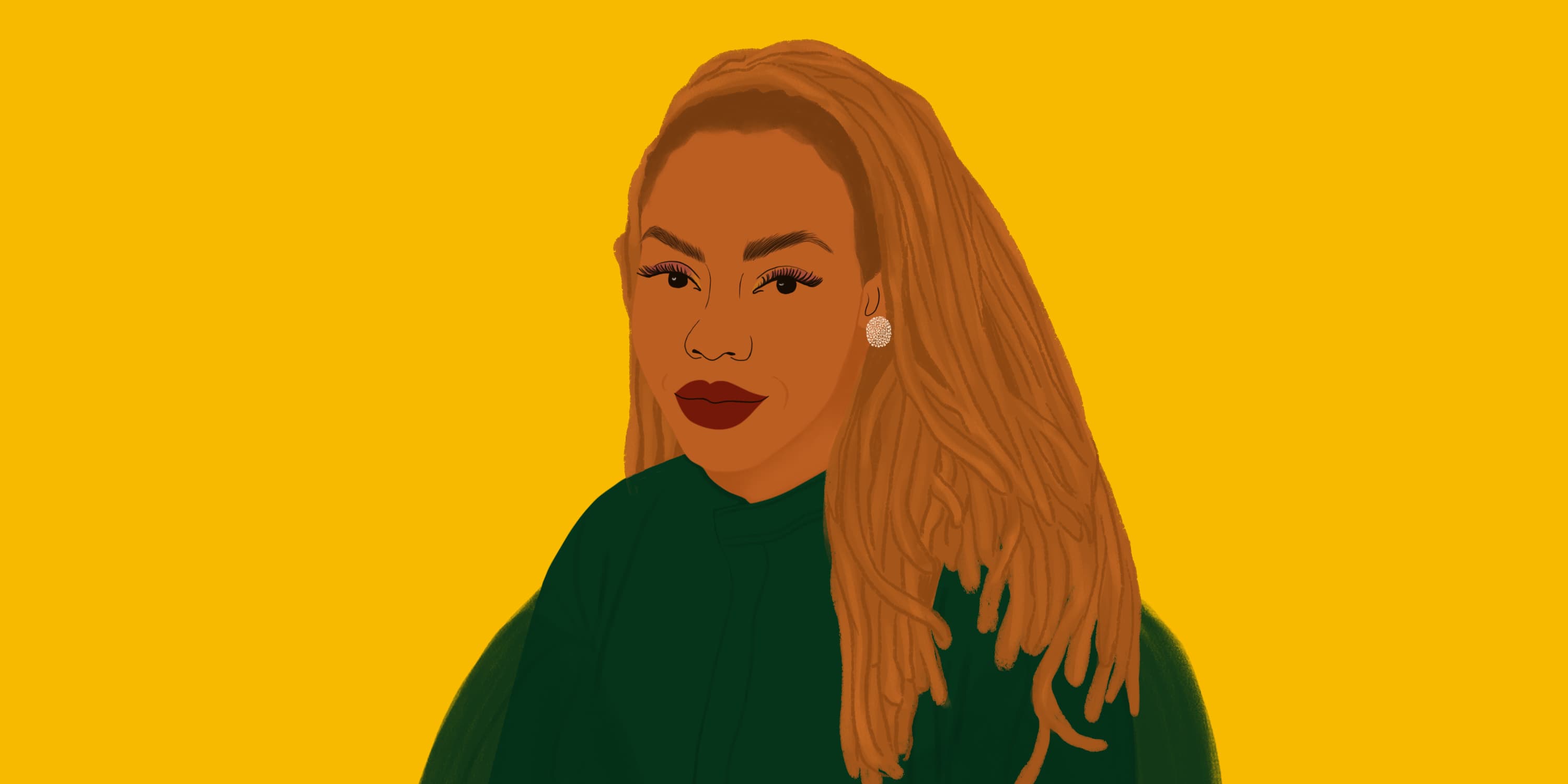
Author of ‘Books as Ammunition: How I Found Solace in Rereading Buchi Emecheta’s Second Class Citizen’, Ope Adedeji, believes a common misconception about African writing is that it is only writing that explores heavy themes through a limited set of genres: ‘This misconception attempts to streamline what African writers can write and publish. It’s a Western definition, which amounts to gatekeeping, and is often held by people with publishing power.’
First Draft is our interview column, featuring authors and other prominent figures on books, reading, and writing.
Our questions are italicized.
What books or kinds of books did you read growing up?
I read all kinds of things growing up. Because I was born in a Christian home, it started with Christian comic books and Bible stories. Then there were magazines which I loved staring at even when I couldn’t read. My father is an avid reader and buys all kinds of books. Between the time I was three and six, I read Ladybird classics like The Gingerbread Man, Snow White and The Seven Dwarfs, Chicken Licken (a personal favourite). I would save up money in primary school—gifts from uncles and grandparents—to buy Enid Blyton titles at book fairs because everyone was talking about them.
I was in the art club of my primary school, so it was essential to have read the cool books. My primary school also had a library where I first discovered Koku Baboni and Sugar Girl by Kola Onadipe. I never finished Koku Baboni, though, because we were never allowed to take books out of the library.
2005, when I was in secondary school, was a defining year for me, because it was the first time I tried reading my father’s books. I remember that he had a table full of books in the parlour. I randomly picked one up and it happened to be The Street Lawyer by John Grisham. I finished it in a few days. While I was reading literature texts like Agbo Areo’s Mother’s Choice for English classes in school, at home, I was exploring thriller novels that my father kept lying around. I discovered Sidney Sheldon, whose books my father loved, Jeffery Archer, Robert Ludlum, and Nora Roberts.
At this point, I knew there was no actual limit to the kind of books I was interested in; as long as it was fiction and I could afford it or could find it in my father’s library, I would read it. From Chronicles of Narnia to Harlequin and Mills and Boon romances, I read everything.
How old were you when you first read Buchi Emecheta and what was that first encounter like?
In 2011—my first year in university—I discovered a table full of African literature behind my faculty at the University of Lagos. A man and woman sat at the table selling these second-hand, and sometimes pirated copies of African novels and stationary, mostly for the students in the art faculty. I had been a student for a few months before coming across them one evening as I tried to find an alternative route home. To use a cliché, I felt I had struck gold.
Because I’d already discovered Flora Nwapa’s Efuru, randomly tucked inside my desk, Buchi Emecheta was the obvious choice for me to buy with my limited funds. I remember spending a hot Saturday reading Bride Price, stopping only to drink bottles of cold water. Her words fed me.

Focused consumption without interruptions.
Decades of reporting at your fingertips.
Long-form journalism that matters.
About the Author
is an editor and writer. She is currently the Booker prize scholar at the University of East Anglia.



Nigerian novelist, poet and author of Graceland, Chris Abani, does not believe ‘Nigerian literature’ exists as a category: ‘It is a common misconception that there is a fixed category that can be read as essentially “Nigerian literature”. Nigeria has 500 nations, 500 languages and about 2,000 dialects. While culture and language can overlap, the level of diversity is such that Nigerian literature cannot be easily narrowed down.’

For the co-founder and publishing director, of Cassava Republic Press, which marks its 20th anniversary this year, Bibi Bakare-Yusuf, it is telling that African literature is often pronounced dead in recent years, when more women and queer voices are becoming more prominent: ‘The loudest obituary writers about African literature tend to be men. These elegies seem to come from a tacit sense of personal or generational displacement rather than from the actual state of the field.’

Nigerian poet, novelist and author of Madame Sosostris and the Festival for the Broken-Hearted, Ben Okri, argues that Nigerian literature doesn’t always have to be about Nigeria: ‘Nigerian literature limits itself to Nigeria and then limits even the ways in which the country can be written about. What we want is a vast literature, a great literature…that speaks to all humanity.’


Comments
Sign in to comment.